If You're Curious About These Questions...
You should listen to this audiobook
- Have you ever wondered how a company that started by making video games run faster became the indispensable engine powering the entire AI revolution?
- What’s the secret behind the strategic gamble that turned a niche hardware manufacturer into the world’s most valuable business?
- Did you know that the same technology once used for digital graphics is now the hidden force driving everything from cryptocurrency to the future of human thought?
Listen to The Thinking Machine — Cinematic Audio Edition
Loading player...
Key Takeaways from The Thinking Machine
- Discover how a niche focus on video game graphics processors unexpectedly unlocked the massive computing power driving today’s AI and machine learning revolutions.
- Understand how overcoming severe adversity and bullying as an immigrant forged the relentless grit and preternatural self-confidence Jensen Huang needed to conquer Silicon Valley.
- Learn why successful startups require complementary talents by examining how Nvidia's founding trio perfectly combined visionary design, practical building, and manufacturing expertise.
- Find out why creating cutting-edge technology isn't enough to guarantee success if it fails to align with sweeping industry standards, as seen with the NV1 chip disaster.
- Explore how a radically transparent and intense leadership style can act as a catalyst for rapid adaptation when a company faces an existential threat and must pivot to survive.
Learning Tools
Reinforce what you learned from The Thinking Machine
Mind Map
The Thinking Machine
Jensen Huang's Origins+
Founding Nvidia+
Early Crises & Triumphs+
The Pivot to AI+
Powering the AI Revolution+
Unprecedented Success+
Vulnerabilities & Threats+
Quiz — Test Your Understanding
Question 1 of 10
How did Jensen Huang's early experience at a rough boarding school in rural Kentucky influence his character?
Question 2 of 10
What market opportunity originally prompted Jensen Huang, Curtis Priem, and Chris Malachowsky to found Nvidia?
Question 3 of 10
Why did Nvidia's first chip, the NV1, quickly become outdated and threaten the company's survival?
Question 4 of 10
How did Jensen Huang manage the development of the Riva 128 chip when Nvidia was on the brink of bankruptcy with a skeleton crew?
Question 5 of 10
What unintended consequence arose from Nvidia's success in solving the parallel computing challenge for 3D graphics?
Question 6 of 10
What was the primary purpose of Nvidia's CUDA (Compute Unified Domain Architecture) project?
Question 7 of 10
How did Nvidia sustain the CUDA project during its early years when it was operating at a financial loss?
Question 8 of 10
According to the text, what represents a major geopolitical vulnerability for Nvidia's continued dominance?
Question 9 of 10
What is one of the very real, immediate global threats caused by the rise of Nvidia's AI chips mentioned in the text?
Question 10 of 10
How does Jensen Huang view the concerns held by some experts regarding the existential threat AI poses to humanity?
The Thinking Machine — Full Chapter Overview
- 1Recommendation
- 2A new home in Kentucky
- 3The trio's first chip
- 4The NV1 fails
- 5The gamble pays off
- 6Successes in parallel
- 7Huang's investment bears fruit
- 8Good news and bad news
- 9Future threats or boundless hope?
- 10Final summary
The Thinking Machine Summary & Overview
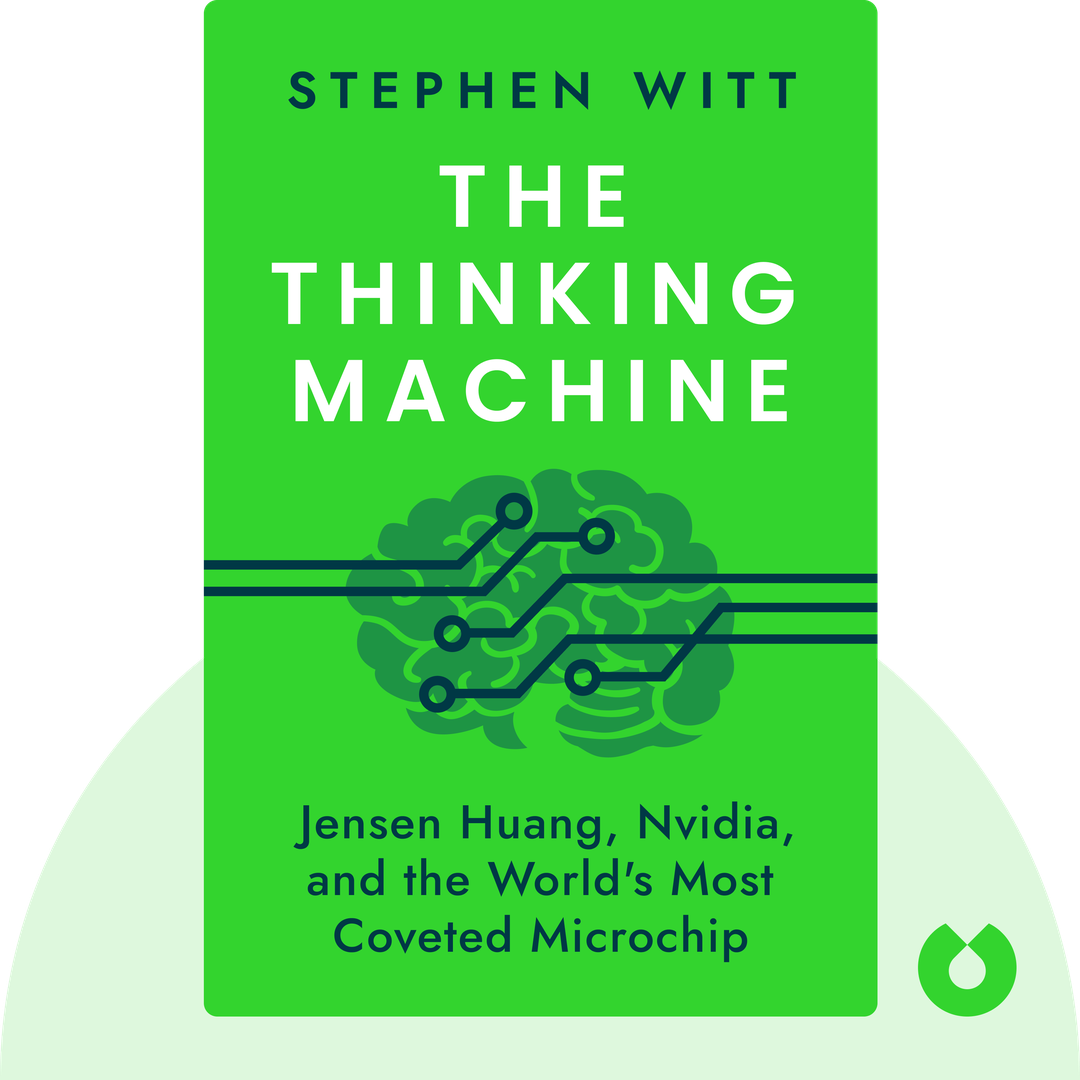
The Thinking Machine (2025) pulls back the curtain on the company that is powering the current revolution in AI, cloud computing, cryptocurrency and more. It’s the unlikely story of a company that made its name in PC gaming chips, only to turn itself into the most valuable business in the world.
Who Should Listen to The Thinking Machine?
- Tech enthusiasts
- People interested in ethics and philosophy
- Business leaders and entrepreneurs
Books Similar to The Thinking Machine
Readers who enjoyed this also liked these titles.