If You're Curious About These Questions...
You should listen to this audiobook
- Did you know that the race to build the world’s most powerful AI is actually a high-stakes, personal rivalry between two visionary leaders and their corporate backers?
- Have you ever wondered how the pursuit of a technological utopia might be creating an unbreakable monopoly over the future of human intelligence?
- Are you curious about the hidden trade-offs being made behind closed doors as tech giants race to achieve AI supremacy at any cost?
Listen to Supremacy — Free Audiobook
Loading player...
Key Takeaways from Supremacy
- Discover how the immense computing power required to build Artificial General Intelligence forced visionary startups to compromise their ethics and partner with big tech giants.
- Learn how the diverse backgrounds of Sam Altman and Demis Hassabis—ranging from startup investments to video game development—sparked a fiercely competitive race to create human-level AI.
- Understand why Google’s acquisition of DeepMind ultimately eroded the startup's altruistic mission, shifting its focus from global problem-solving to optimizing ad revenue.
- Find out how Elon Musk's departure and withdrawn funding transformed OpenAI from a cautious, altruistic lab into a high-stakes, aggressively innovative enterprise.
- Explore the inherent tension between building AI to solve humanity's greatest challenges and the corporate reality of using these breakthroughs to maximize tech industry profits.
Learning Tools
Reinforce what you learned from Supremacy
Mind Map
Supremacy
The Visionaries+
The Utopian Promise+
The Big Tech Takeover+
The Turning Points+
Ethical Collapses & Red Flags+
The Loss of Control+
Quiz — Test Your Understanding
Question 1 of 10
Why did visionaries like Sam Altman and Demis Hassabis ultimately compromise their independent, utopian ideals for AI?
Question 2 of 10
How did Demis Hassabis's background in video game development influence his approach to AI at DeepMind?
Question 3 of 10
What was a major condition of DeepMind's $650 million sale to Google that Google eventually abandoned?
Question 4 of 10
What was Elon Musk's primary motivation for co-founding OpenAI in 2015?
Question 5 of 10
Why did Google hesitate to fully capitalize on its own 2017 'transformer' breakthrough?
Question 6 of 10
What structural change did OpenAI undergo to secure its crucial $1 billion partnership with Microsoft?
Question 7 of 10
Why did leading researcher Dario Amodei leave OpenAI to found the competitor Anthropic?
Question 8 of 10
What happened to researchers Timnit Gebru and Margaret Mitchell after they co-authored the 'Stochastic Parrots' paper?
Question 9 of 10
What ideological conflict was at the center of the late 2023 crisis where Sam Altman was temporarily fired by OpenAI's board?
Question 10 of 10
How does the 'effective altruism' movement relate to the current landscape of AI development in Silicon Valley?
Supremacy — Full Chapter Overview
- 1Recommendation
- 2The beginnings of Sam Altman and Demis Hassabis
- 3Big ideas and utopian visions
- 4DeepMind meets Google
- 5Warning signs everywhere
- 6OpenAI picks up the ball and runs with it
- 7Shutting out dissenting voices
- 8In the name of effective altruism
- 9Can’t stop, or won’t stop?
- 10Final summary
Supremacy Summary & Overview
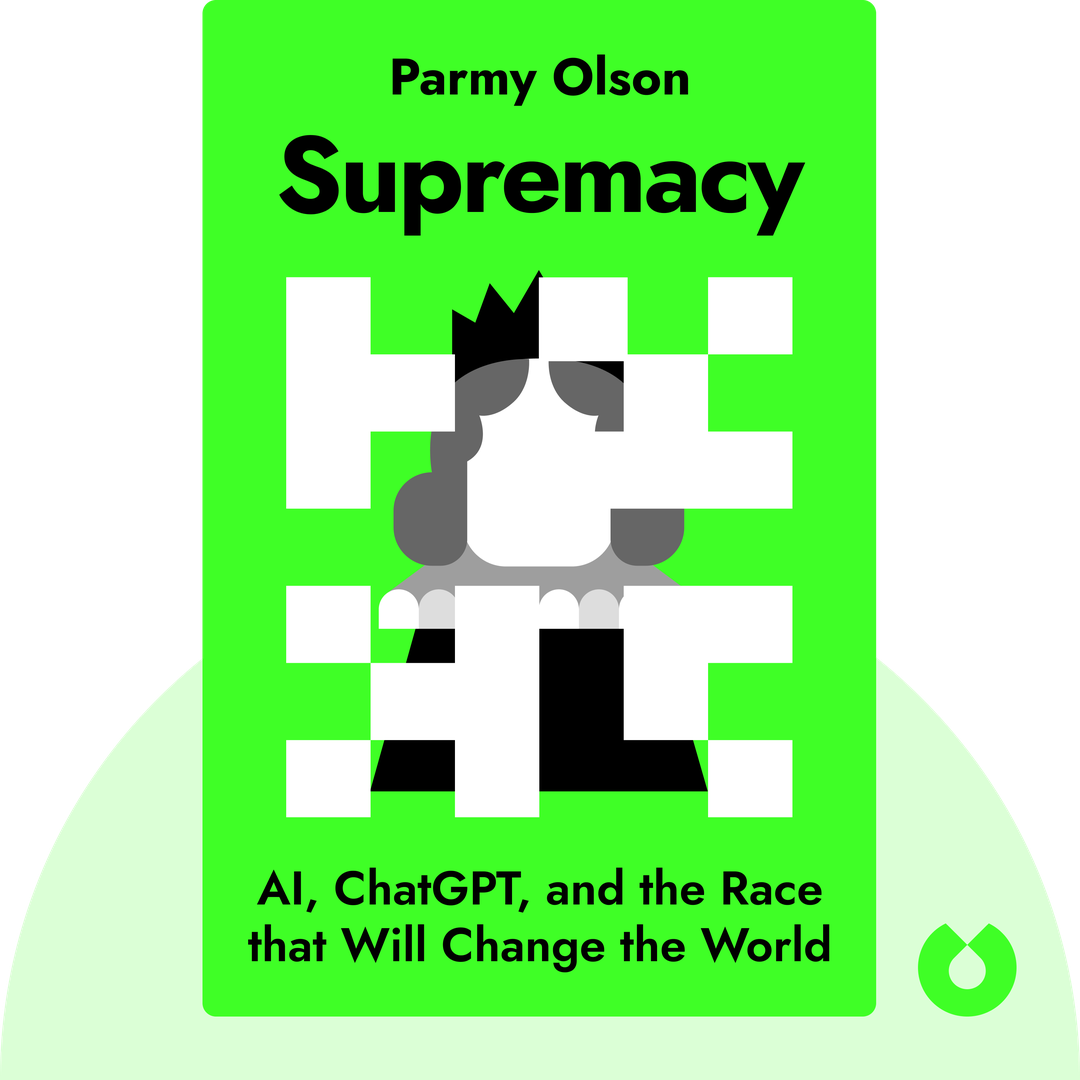
Supremacy (2024) takes you inside the high-stakes race to build Artificial General Intelligence. From groundbreaking innovations to the hidden dangers of AI monopolies, you can see how the quest for smarter machines can reshape the world – for better or worse. It raises the important question, are we on the verge of a technological utopia, or heading toward a future full of unforeseen risks?
Who Should Listen to Supremacy?
- Tech enthusiasts
- Business leaders and investors
- Anyone curious about the future
Books Similar to Supremacy
Readers who enjoyed this also liked these titles.