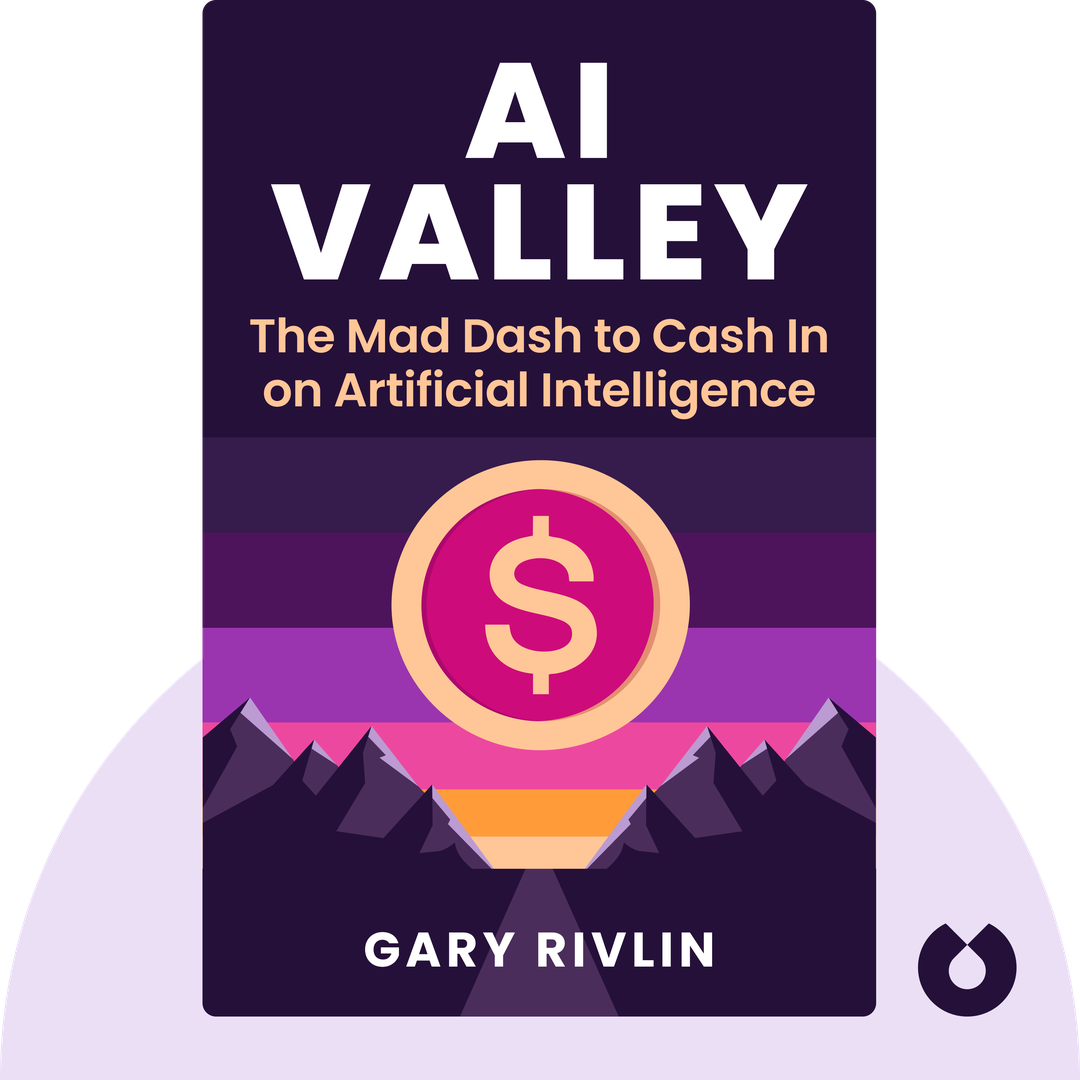
If You're Curious About These Questions...
You should listen to this audiobook
- Have you ever wondered why the AI revolution is shifting power back to tech giants instead of disrupting them like we expected?
- What’s the secret behind Reid Hoffman and Mustafa Suleyman’s high-stakes gamble to redefine Silicon Valley’s startup culture?
- Are you curious about how the race for AI dominance will fundamentally change the way you interact with technology forever?
Listen to AI Valley — Free Audiobook
Loading player...
Key Takeaways from AI Valley
- Discover how DeepMind revolutionized the tech landscape by shifting AI development from rigid rule-based systems to models that mimic human brain learning.
- Learn how the future of personal computing is being reshaped by AI companions designed to understand natural human language and genuine emotion.
- Understand why ChatGPT’s simple conversational interface triggered an 'iPhone moment' for AI, making it the fastest-adopted consumer technology in history.
- Find out how the immense computing costs of artificial intelligence favor established tech giants, driving massive power plays like Microsoft's $10 billion investment in OpenAI.
- Explore how ambitious AI founders attempt to balance the trillion-dollar profit race with social responsibility by demanding ethics boards and utilizing public benefit corporate structures.
Learning Tools
Reinforce what you learned from AI Valley
Mind Map
AI Valley
Origins of the AI Race+
The ChatGPT Disruption+
Clash of the Tech Giants+
Inflection AI & The Personal Bot+
The Brutal Economics of AI+
Quiz — Test Your Understanding
Question 1 of 7
According to the book, what is the primary reason the economics of modern AI favor established tech giants over smaller startups?
Question 2 of 7
Why did DeepMind's founders choose to be acquired by Google rather than accepting a higher offer from Facebook?
Question 3 of 7
What was Mustafa Suleyman's primary vision for Inflection AI's chatbot, Pi, compared to other AI models on the market?
Question 4 of 7
How did OpenAI's team initially view ChatGPT right before its launch in late 2022?
Question 5 of 7
What strategic misstep caused Google to lose $100 billion in market value during the AI race in early 2023?
Question 6 of 7
How did Inflection AI's approach to training its chatbot, Pi, differ from many of its competitors?
Question 7 of 7
How did Microsoft ultimately absorb Inflection AI's talent and technology without an outright acquisition?
AI Valley — Full Chapter Overview
- 1Recommendation
- 2AI’s First Real Success Story
- 3The Vision of a Personal AI
- 4How ChatGPT Changed Everything
- 5Microsoft Outmaneuvers Google in the AI Race
- 6Pi: Building an AI That Feels Like a Friend
- 7The Economics of AI Dreams Clash with Reality
- 8The Giants Win Silicon Valley’s AI War
- 9Final summary
AI Valley Summary & Overview
AI Valley (2025) chronicles the high-stakes race to capitalize on artificial intelligence following ChatGPT’s explosive debut, focusing on LinkedIn founder Reid Hoffman and DeepMind cofounder Mustafa Suleyman as they build an AI startup amid fierce competition from tech giants. It reveals how the economics of AI shifted power back to established companies, threatening Silicon Valley’s startup culture while promising to fundamentally reshape human-computer interaction.
Who Should Listen to AI Valley?
- Tech entrepreneurs exploring AI startup opportunities
- Curious investors evaluating artificial intelligence markets
- People interested in Silicon Valley power dynamics
Books Similar to AI Valley
Readers who enjoyed this also liked these titles.