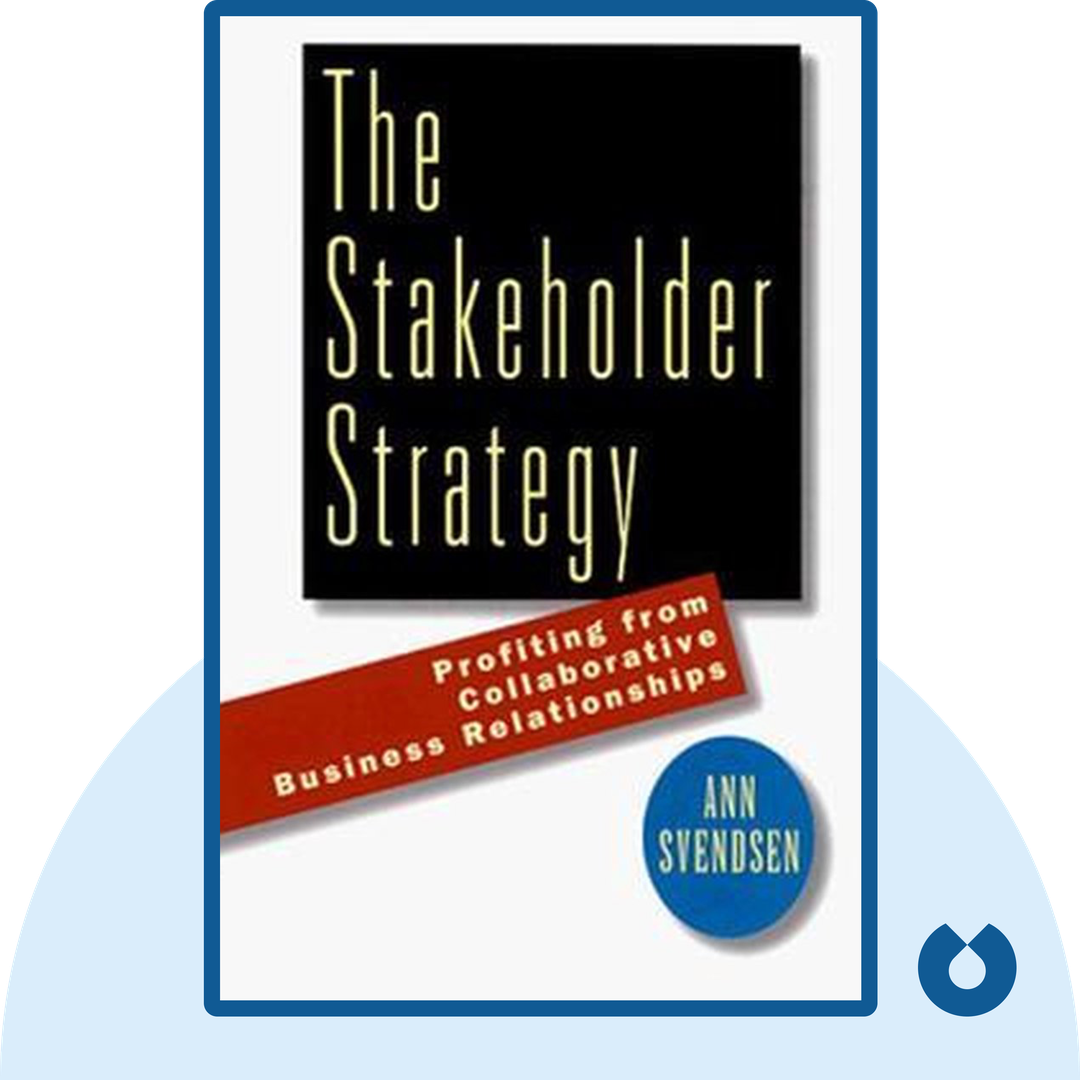
The Stakeholder Strategy
Start ListeningDownload Try free on iPhoneScan to start in 5 seconds
Categories:
If You're Curious About These Questions...
You should listen to this audiobook
- Did you know that companies prioritizing stakeholder relationships over short-term profits consistently outperform their rivals—and there’s a specific research-backed reason why?
- What’s the secret to transitioning from a purely transactional business model to a 'Third Way' approach that fosters long-term loyalty and growth?
- What if you could build a business where every partnership—from employees to investors—becomes a competitive advantage rather than just another transaction?
Listen to The Stakeholder Strategy — Free Audiobook
Loading player...
Key Takeaways from The Stakeholder Strategy
- Discover the business case for stakeholder collaboration and why a strong social mission actually drives superior long-term profits instead of harming your bottom line.
- Understand the 'Third Way' paradigm, a strategic shift from combative, zero-sum transactions to treating stakeholders as an interconnected ecosystem of trust-based partnerships.
- Learn how organizations like BC Hydro transform fierce adversaries into cooperative allies by engaging them as equals and fostering a sense of shared ownership.
- Master the FOSTER method, a transformative six-step framework designed to help you create thriving, reciprocal partnerships through shared goals and mutual respect.
- Recognize that relationship building is a marathon rather than a sprint, requiring continuous evaluation and transparent communication to adapt to unforeseen challenges.
Learning Tools
Reinforce what you learned from The Stakeholder Strategy
Mind Map
The Stakeholder Strategy
Paradigm Shift: The 'Third Way'+
The FOSTER Framework+
Purpose-Driven Social Mission+
Social Accounting+
The Business Case (ROI)+
Quiz — Test Your Understanding
Question 1 of 6
What does 'Systems theory' suggest about stakeholders in the context of modern business strategy?
Question 2 of 6
How did BC Hydro successfully resolve the resistance to its Allouette River hydroelectric dam project?
Question 3 of 6
In the FOSTER relationship-building framework, what does the 'R' stand for, and what is its primary focus?
Question 4 of 6
According to the text, how does modern 'social accounting' differ from traditional financial accounting?
Question 5 of 6
What does the text reveal about the relationship between a strong social mission and financial performance?
Question 6 of 6
What cautionary lesson is drawn from Microsoft's business strategy in the early 2000s?
The Stakeholder Strategy — Full Chapter Overview
- 1Recommendation
- 2Systems thinking and the 'Third Way'
- 3FOSTER your relationships
- 4Your social mission
- 5Social accounting
- 6The business case for stakeholder collaboration
The Stakeholder Strategy Summary & Overview
The Stakeholder Strategy (1998) provides a business case for building for transitioning from transactional, profit-maximizing models to a "Third Way" approach built on mutually beneficial partnerships across stakeholders. It makes the research-backed case that stakeholder-oriented companies leading with higher purpose outperform rivals in the long run, and offers a framework for building stronger and more impactful stakeholder relationships.
Who Should Listen to The Stakeholder Strategy?
- Executives wanting a more purpose-driven approach
- Mission-driven entrepreneurs
- Leaders across all business functions
Books Similar to The Stakeholder Strategy
Readers who enjoyed this also liked these titles.