If You're Curious About These Questions...
You should listen to this audiobook
- What if the secret to building a more profitable company isn’t focusing on the bottom line, but on a purpose that transcends it?
- Have you ever wondered why 'humanized leadership' is becoming the most powerful tool for creating a loyal and authentic corporate brand?
- Are you curious about how the world’s most successful businesses are turning social responsibility into their core competitive advantage?
Listen to Good for Business — Free Audiobook
Loading player...
Key Takeaways from Good for Business
- Understand how the legal history of corporations created profit-centric models, and discover the modern opportunity to redefine societal roles through meaningful consumer connections.
- Discover why consumers increasingly expect large corporations to step in and solve global issues where traditional governments and bureaucratic bodies have faltered.
- Master the four foundational pillars of conscious capitalism: establishing a purpose beyond profit, cultivating a people-centered culture, adopting comprehensive sustainability, and respecting consumer power.
- Learn how the 'Leaders of Tomorrow' succeed by authentically embodying brand values and establishing deep trust, rather than relying on outdated command-and-control management.
- Uncover the importance of staying 'real' as a modern leader by remaining approachable and inviting both internal and external collaboration to drive continuous innovation.
Learning Tools
Reinforce what you learned from Good for Business
Mind Map
Good for Business
The Corporate Evolution+
The New Consumer Dynamic+
Leaders of Tomorrow (LOTs)+
Useful Statement of Direction (USOD)+
Quiz — Test Your Understanding
Question 1 of 7
According to the text, what was the significant impact of the 1886 Supreme Court case Santa Clara County v. Southern Pacific Railroad?
Question 2 of 7
Why is there a growing expectation for corporations to contribute more significantly to society, despite historically low consumer confidence in them?
Question 3 of 7
Which of the following is NOT listed as one of the four foundational pillars that contemporary corporations are beginning to embrace?
Question 4 of 7
How do 'Leaders of Tomorrow' (LOTs) differentiate themselves from traditional business leaders?
Question 5 of 7
According to the text, what primarily drives the emerging millennial workforce in the corporate world?
Question 6 of 7
A Useful Statement of Direction (USOD) is designed to bridge the gap between strategic alignment and employee cynicism. Which of the following correctly identifies its four key elements?
Question 7 of 7
What is the recommended approach for successfully embedding a Useful Statement of Direction (USOD) into a company's culture?
Good for Business — Full Chapter Overview
- 1Recommendation
- 2Future-focused corporations and empowered consumers
- 3Redefining leadership and the future of corporate culture
- 4Creating a vision for tomorrow’s corporate world
- 5Final summary
Good for Business Summary & Overview
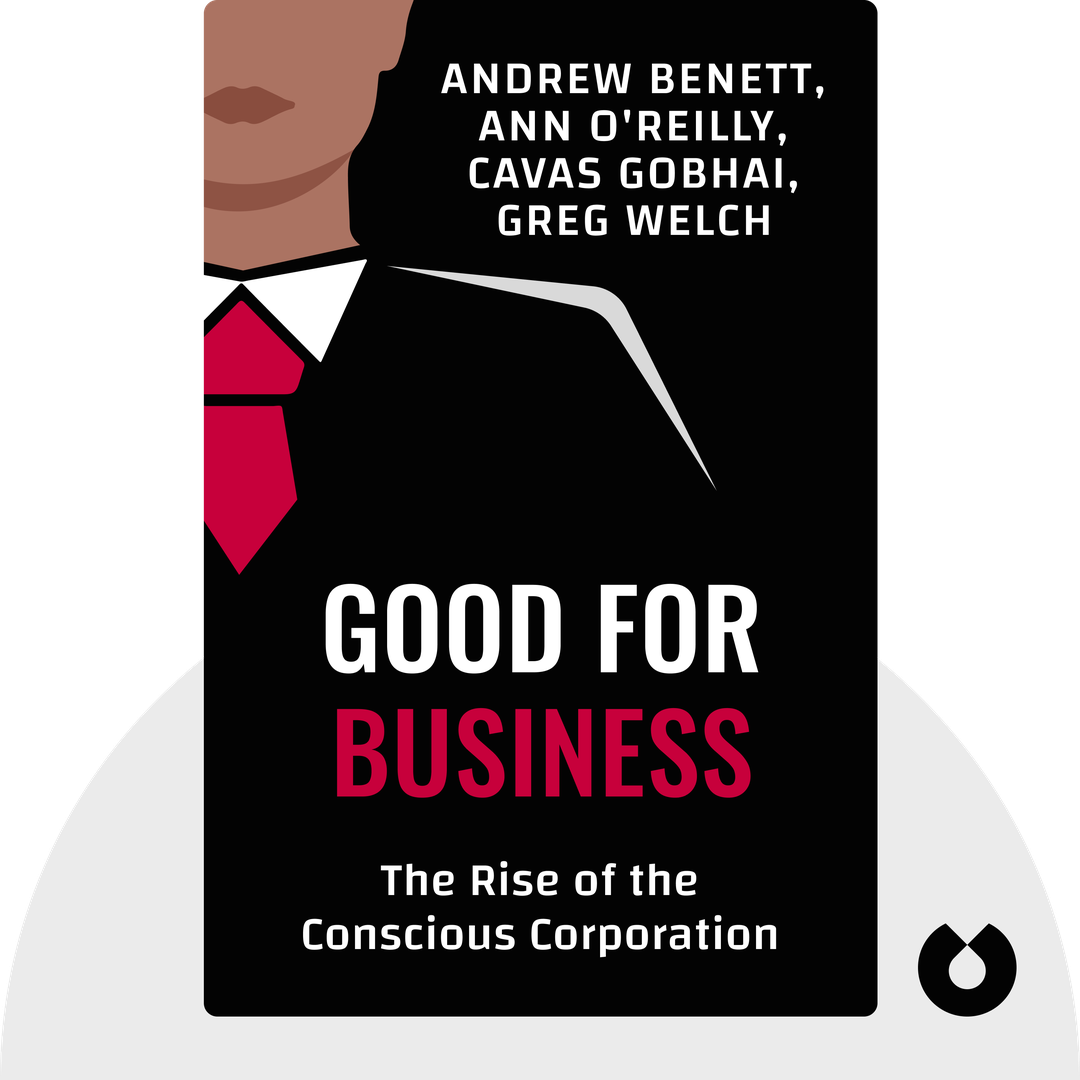
Good for Business (2009) delves into the transformative journey of modern corporations, underscoring their shift toward prioritizing purpose beyond profit, humanized leadership, corporate consciousness, and collaborative partnerships. It illustrates how these key elements are essential in building a strong, authentic corporate brand that not only attracts loyal customers but also makes a meaningful social difference. This approach positions corporate culture and social responsibility at the heart of brand strategy.
Who Should Listen to Good for Business?
- Business leaders seeking corporate transformation insights
- Corporate social responsibility advocates
- Entrepreneurs interested in sustainable business practices
Books Similar to Good for Business
Readers who enjoyed this also liked these titles.