If You're Curious About These Questions...
You should listen to this audiobook
- How does a seventeenth-century philosopher's observation about the human inability to sit quietly in a room explain our modern addiction to endless scrolling?
- What surprising parallel exists between the experiences of Taliban fighters transitioning to desk jobs and Karl Marx's nineteenth-century theory of alienation?
- How has the shift from an era that valued 'sustained attention' to one that rewards 'attention-grabbing' fundamentally altered modern political discourse and democratic systems?
Listen to The Sirens' Call — Free Audiobook
Loading player...
Key Takeaways from The Sirens' Call
- Modern technology platforms are deliberately designed not to hold your attention, but to repeatedly grab it by exploiting your evolutionary wiring for involuntary and social stimuli.
- Social media offers an empty, commodified version of the genuine social recognition humans deeply crave, leaving users feeling isolated and desperate for real connection.
- Digital tools that originally created value by filtering out distractions inevitably become bloated with ads and clickbait due to the relentless capitalist demand for growth.
- The attention economy has severely degraded democratic discourse by replacing the sustained focus needed for thoughtful debate with a system that rewards outrage, trolling, and conspiracy theories.
- Reclaiming focus requires adopting intentional 'commitment mechanisms,' such as choosing physical media like print newspapers, to block out the irresistible pull of digital sirens.
Learning Tools
Reinforce what you learned from The Sirens' Call
Mind Map
The Sirens' Call
The Attention Economy+
The Mechanics of Attention+
Psychological Vulnerabilities+
Societal Consequences+
Reclaiming Control+
Quiz — Test Your Understanding
Question 1 of 9
What is the primary reason people often lose track of time while scrolling on their digital devices, according to the text?
Question 2 of 9
Besides actively focusing on something, what is the other crucial function of human attention?
Question 3 of 9
According to philosopher Blaise Pascal, what is the root of human unhappiness?
Question 4 of 9
How does the text use the character of Willy Loman from 'Death of a Salesman' to explain our relationship with social media?
Question 5 of 9
How does the modern attention economy relate to Karl Marx's theory of alienation?
Question 6 of 9
Why do originally useful platforms like Google search eventually become bloated with ads and distractions?
Question 7 of 9
How has the shift from holding attention to merely grabbing it affected public discourse and politics?
Question 8 of 9
What concept does the author draw from the story of Odysseus to help people reclaim their attention?
Question 9 of 9
Which of the following does the text provide as an example of a modern 'commitment mechanism' for consuming media?
The Sirens' Call — Full Chapter Overview
- 1Recommendation
- 2The Sirens are calling
- 3Attention deficit
- 4Caught in the loop
- 5Willie Loman tried to warn us
- 6That feeling is called alienation
- 7From value to distraction
- 8The perils of rewarding the loudest
- 9Making future commitments
The Sirens' Call Summary & Overview
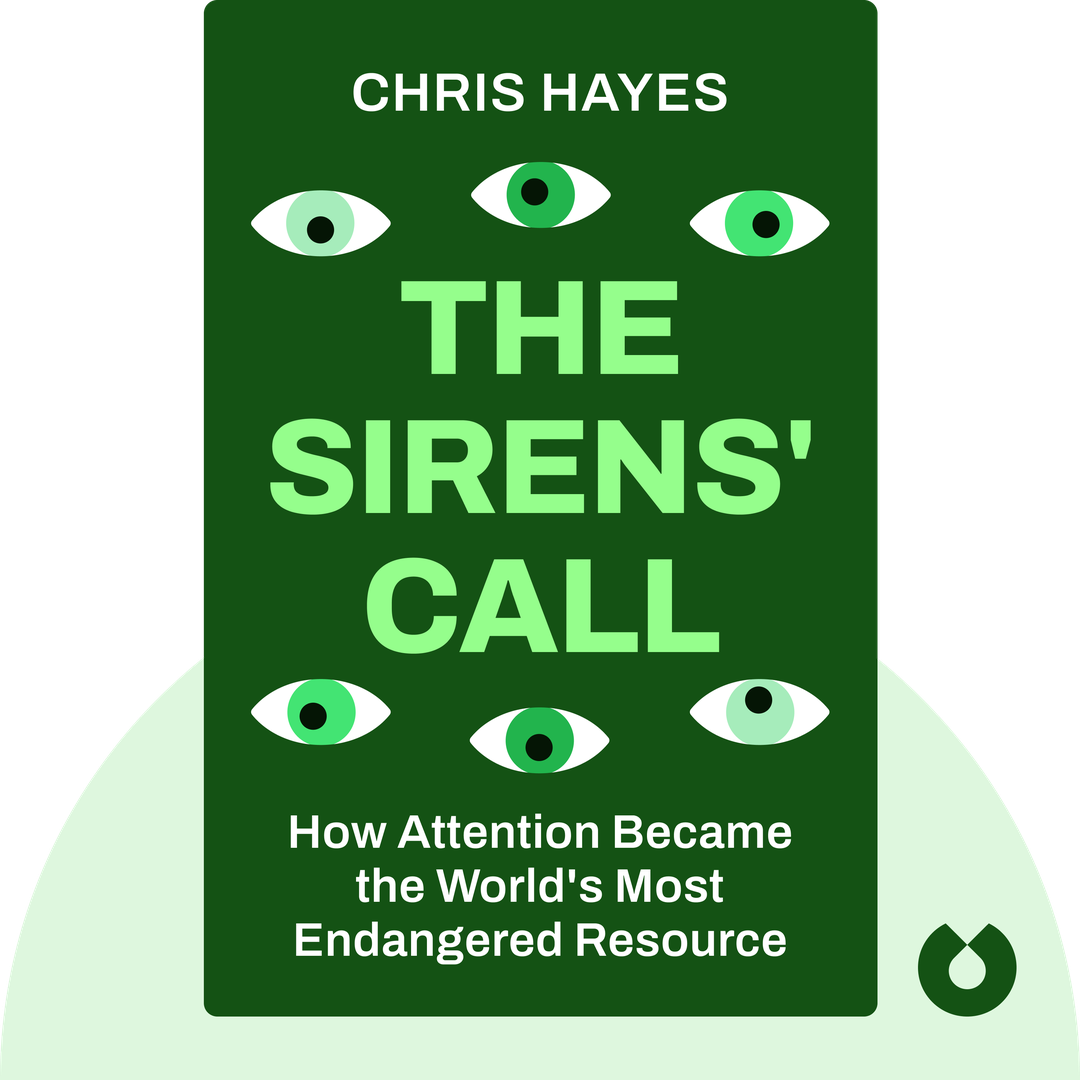
The Siren’s Call (2025) explores the unsettling reality of the modern attention economy, where powerful forces relentlessly compete for our focus. It reveals how this struggle shapes everything from politics to culture, all while fostering an environment that deepens alienation and dissatisfaction.
Who Should Listen to The Sirens' Call?
- Those curious about the impact of the attention economy
- Professionals interested in media, technology, and societal influence
- Anyone concerned about digital culture and mental well-being
Books Similar to The Sirens' Call
Readers who enjoyed this also liked these titles.