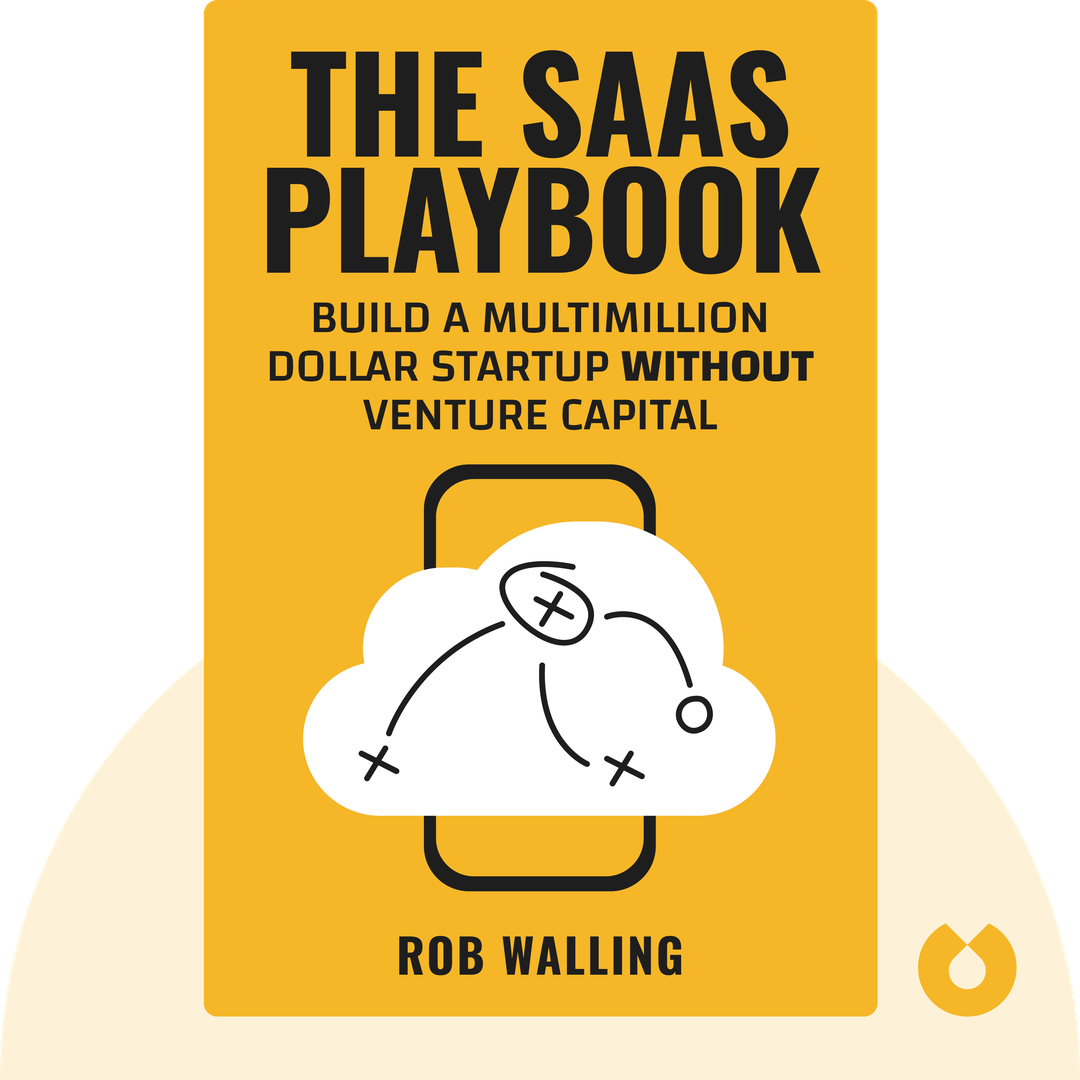
If You're Curious About These Questions...
You should listen to this audiobook
- Have you ever wondered why some of the most profitable SaaS companies choose to ignore venture capital and grow entirely on their own terms?
- What if you could scale your software business faster by focusing only on the few specific metrics that actually drive sustainable growth?
- What's the secret to outmaneuvering massive, well-funded competitors even if you’re a solo founder or have a tiny team?
Listen to The SaaS Playbook — Cinematic Audio Edition
Loading player...
Key Takeaways from The SaaS Playbook
- Discover why bootstrapping a SaaS business provides a sustainable, resilient path to success without the need for elusive venture capital.
- Understand how to strategically filter customer feedback so you solve meaningful problems without compromising your long-term product vision.
- Learn how to build protective moats around your business—such as deep software integrations and high switching costs—to make your product indispensable.
- Find out why a lack of customer complaints means you are underpricing your product, and how to safely raise rates every six to twelve months.
- Master the 'dual funnel' marketing strategy to simultaneously capture a broad base of automated signups while landing high-value enterprise clients.
Learning Tools
Reinforce what you learned from The SaaS Playbook
Mind Map
The SaaS Playbook
Bootstrapping Concept+
1. Market Strategy+
2. Pricing Strategy+
3. Marketing & Sales+
4. Team Building+
5. Key Metrics+
6. Founder Mindset+
Quiz — Test Your Understanding
Question 1 of 7
According to the text, what is a primary advantage of bootstrapping a SaaS business rather than seeking venture capital?
Question 2 of 7
When gathering customer feedback for product development, how should founders handle user suggestions?
Question 3 of 7
What does the author suggest is the best practice when increasing pricing for an existing SaaS product?
Question 4 of 7
What is the 'dual funnel' strategy in SaaS marketing?
Question 5 of 7
When creating job descriptions to hire new team members, what seemingly contradictory approach does the author recommend?
Question 6 of 7
In the 3 high/3 low framework for measuring success, which of the following are considered key 'low' metrics to monitor?
Question 7 of 7
In the context of SaaS metrics, what defines 'net negative churn'?
The SaaS Playbook — Full Chapter Overview
- 1Recommendation
- 2Your product’s position in the market
- 3Finding the ideal pricing sweet spot
- 4Turning strategy into revenue
- 5Handing off your hats
- 6Measuring what counts
- 7Building mental resilience
The SaaS Playbook Summary & Overview
The SaaS Playbook (2023) offers practical strategies for building and scaling a SaaS business without relying on venture capital. It covers essential topics like finding product-market fit, setting effective pricing, standing out in competitive markets, and avoiding common pitfalls. Designed for both developers and nontechnical entrepreneurs, it provides actionable steps to bootstrap and grow a successful software business.
Who Should Listen to The SaaS Playbook?
- Aspiring entrepreneurs
- Software developers and founders
- Nontechnical entrepreneurs
Books Similar to The SaaS Playbook
Readers who enjoyed this also liked these titles.