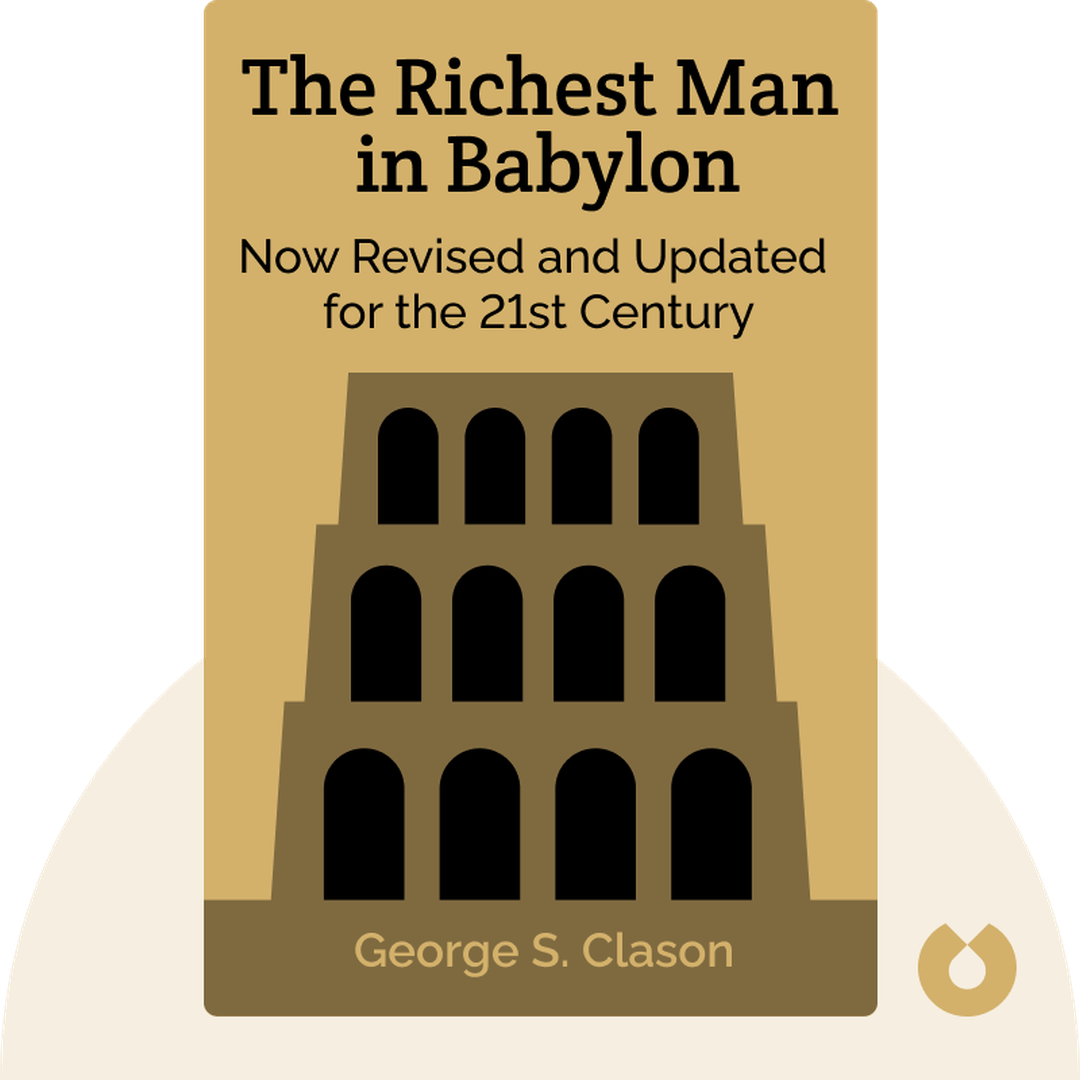
The Richest Man in Babylon
Start ListeningDownload Try free on iPhoneScan to start in 5 seconds
Categories:
If You're Curious About These Questions...
You should listen to this audiobook
- Did you know that a specific, small percentage of every paycheck holds the secret to building a massive fortune, regardless of how much you currently earn?
- Have you ever wondered how to transform your savings into a 'golden army' that works tirelessly to generate more wealth for you around the clock?
- What if the most effective strategies for modern financial success aren't found in today's news, but in the 4,000-year-old secrets of the wealthiest city in history?
Listen to The Richest Man in Babylon — Cinematic Audio Edition
Loading player...
Key Takeaways from The Richest Man in Babylon
- Understand why accumulating wealth starts with shifting your mindset to view money as a tool for self-realization rather than a corrupting force.
- Discover the foundational first law of wealth by committing to pay yourself first and consistently saving at least ten percent of your total income.
- Learn how to multiply your wealth by investing your savings wisely, focusing strictly on industries and businesses you thoroughly understand.
- Master a practical formula to eliminate debt while still building a fortune by allocating 70% of your income to living expenses, 10% to savings, and 20% to paying off creditors.
- Find out why you must embrace financial failures as vital learning opportunities and always seek the counsel of experienced experts to protect your investments.
Learning Tools
Reinforce what you learned from The Richest Man in Babylon
Mind Map
The Richest Man in Babylon
Core Wealth Principles+
The Power of Interest+
Continuous Learning & Humility+
Patience & Risk Management+
Creating Your Own Luck+
Avoiding Financial Ruin+
Quiz — Test Your Understanding
Question 1 of 8
According to the book, what is the fundamental secret to building wealth?
Question 2 of 8
Why does the book advise against lending money to a lumberjack to start a diamond business?
Question 3 of 8
How does the concept of Socratic wisdom apply to financial success in the book?
Question 4 of 8
What is the primary distinction the author makes between 'making money' and 'attaining wealth'?
Question 5 of 8
Why is paying interest considered a normal fact of life in the financial world?
Question 6 of 8
How does the book differentiate between 'chance' and 'luck'?
Question 7 of 8
What is identified as the primary reason people frequently miss out on golden financial opportunities?
Question 8 of 8
According to the book, why is taking on consumer debt for luxury items so dangerous?
The Richest Man in Babylon — Full Chapter Overview
- 1Recommendation
- 2The key to building wealth is to save and invest wisely.
- 3The key to being financially successful is always admitting how little you truly know.
- 4You can build wealth only gradually by learning through a process of trial and error.
- 5Don’t only work for money to buy today’s wants; instead make long-term investments where your money will work for you too.
- 6Making investments which are repaid with interest can be very lucrative indeed.
- 7Opportunity is a source of good luck that, unlike chance, can be encouraged to occur more often.
- 8Work diligently to spot opportunities and seize them without delaying.
- 9Make rational decisions about expenses, and avoid taking on any debt.
The Richest Man in Babylon Summary & Overview
The Richest Man In Babylon – Now Revised and Updated for the 21st Century is a series of parables set in ancient Babylon concerning financial wisdom. In these blinks you’ll find these parables distilled into modern day advice that can help you accumulate wealth.
Who Should Listen to The Richest Man in Babylon?
- Students of finance and business
- Anyone interested in getting back to the essentials of financial planning and investing profitably
- Anyone who wants to find out about the secrets of the ages – or common sense that has never become common knowledge
Books Similar to The Richest Man in Babylon
Readers who enjoyed this also liked these titles.