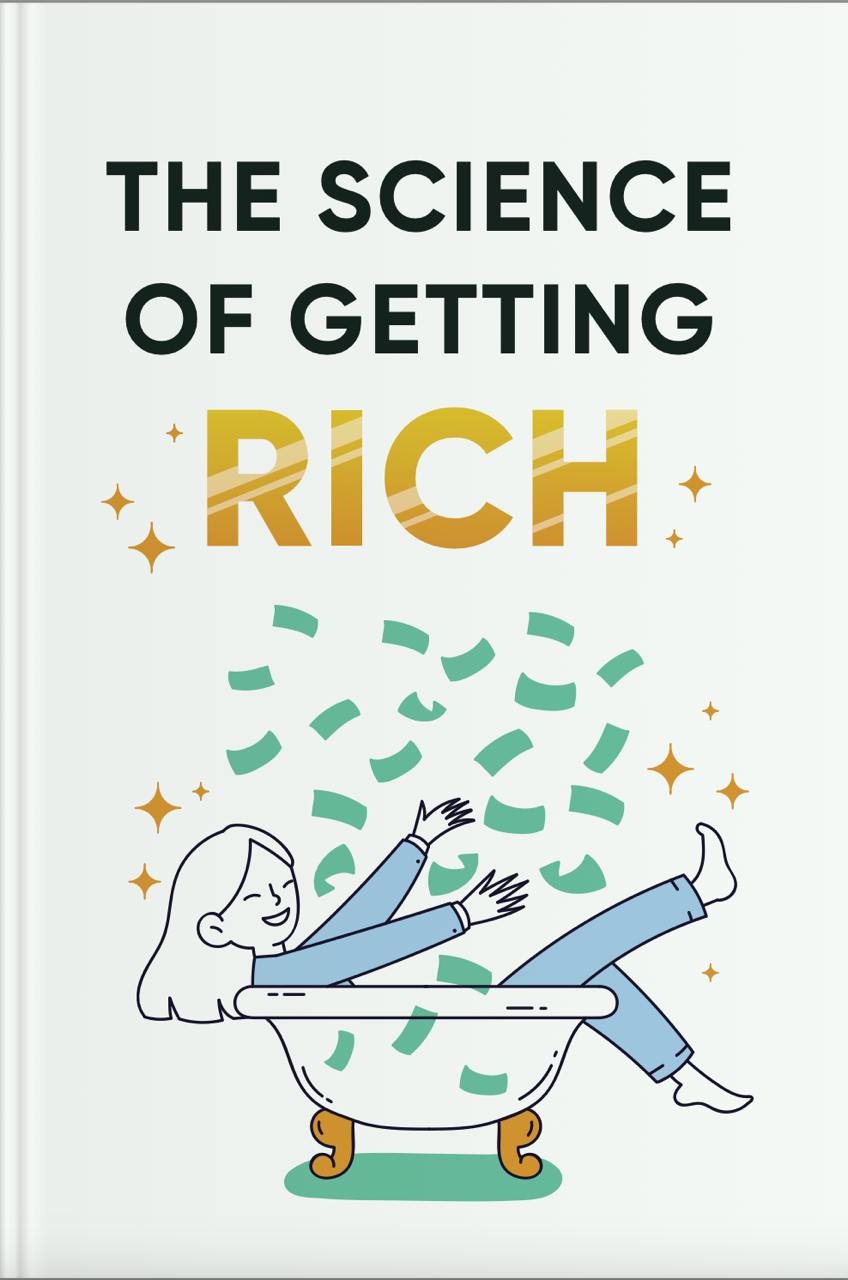
The Science of Getting Rich
If You're Curious About These Questions...
You should listen to this audiobook
- Did you know that building wealth isn't a matter of luck or special talent, but a predictable science governed by specific mental and physical laws?
- What’s the secret role that gratitude plays in turning a mental vision into a physical reality, and why is it essential for your success?
- What if you could replace the stress of competition and coercion with a creative process that benefits both you and everyone around you?
Listen to The Science of Getting Rich — Free Audiobook
Key Takeaways from The Science of Getting Rich
- Discover why wanting more money is not shallow or immoral, but rather a vital tool for personal development, expanding your options, and unlocking your hidden talents.
- Understand the 'science' of getting rich by recognizing that wealth operates on specific principles, proving that financial success requires more than just pinching pennies or working harder than others.
- Learn to harmonize your body, mind, and soul, recognizing that true wealth is about holistic development rather than elevating one aspect of your life at the expense of the others.
- Master the process of creation by using your thoughts as a blueprint, holding a clear mental image of your desires so life can begin organizing real-world opportunities around it.
- Overcome the trap of scarcity thinking and blame by realizing that opportunity is never truly exhausted; you just need to align yourself with the current wave of what the moment requires.
Learning Tools
Reinforce what you learned from The Science of Getting Rich
Mind Map
Quiz — Test Your Understanding
The Science of Getting Rich — Full Chapter Overview
- 1Recommendation
- 2Wealth as a Gateway to Growth
- 3Thought as the Beginning of Form
- 4Making the Dream Clear and Specific
- 5Using Willpower Without Controlling Others
- 6Where Focus Meets Action in the Present
- 7Becoming the Kind of Person Your Work Requires
- 8Responsibility, Vision, and Steady Practice
The Science of Getting Rich Summary & Overview
This audio summary explores Wallace D. Wattles’ central message: getting rich is not a mysterious gift reserved for the lucky, but a process with clear principles—principles that begin inside the mind and become real through consistent, present-day action.
Across seven chapters, the narration gently challenges the idea that poverty is virtuous, encourages a balanced life of body, mind, and soul, and walks through the practice of forming a vivid vision, cultivating gratitude, avoiding coercion, and aligning thought with effective work. The goal is not greed, but development—creating a life with more choice, capability, and fulfillment.
Who Should Listen to The Science of Getting Rich?
- People who want a calmer, more hopeful relationship with money—without shame, superstition, or harsh self-talk
- Listeners who enjoy mindset-based success teachings and want a step-by-step way to connect vision, gratitude, and daily action
- Anyone rebuilding confidence after setbacks and looking for steady encouragement to take responsibility and move forward
Books Similar to The Science of Getting Rich
Readers who enjoyed this also liked these titles.