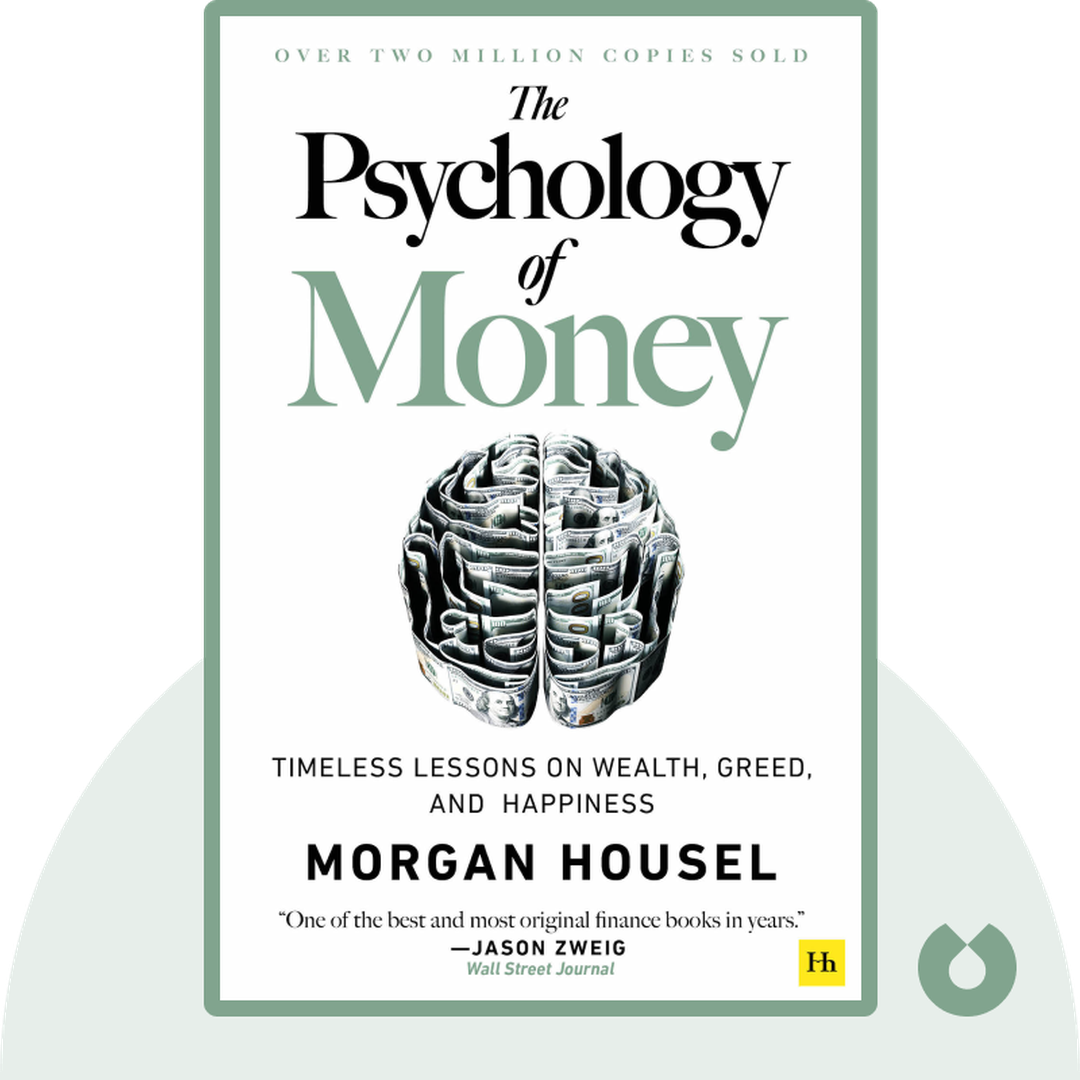
The Psychology of Money
Start ListeningDownload Try free on iPhoneScan to start in 5 seconds
Categories:
If You're Curious About These Questions...
You should listen to this audiobook
- Did you know that the true secret to building wealth often lies in what people *don't* see, rather than the flashy purchases they make?
- Have you ever wondered why even the most brilliant investors often make 'irrational' financial decisions based on their personal history rather than logic?
- What's the secret to not just getting rich, but actually staying wealthy in a world where luck and risk play such unpredictable roles?
Listen to The Psychology of Money — Cinematic Audio Edition
Loading player...
Key Takeaways from The Psychology of Money
- Discover why people make drastically different financial choices based on their unique generational experiences, and understand that financial success relies more on your everyday behavior than your raw intelligence.
- Learn how to escape the envy trap of modern capitalism by realizing that having control over your own time is the highest dividend that money can pay.
- Master the art of long-term wealth building by prioritizing the steady, compounding growth of your assets rather than risking your fortune on unpredictable short-term market gains.
- Find out why true happiness is firmly rooted in meaningful relationships and being part of something bigger, rather than material possessions or out-earning your neighbors.
- Recognize the crucial difference between being rich and being wealthy by understanding that true wealth is often hidden, while riches are merely the external purchases that observers can see.
Learning Tools
Reinforce what you learned from The Psychology of Money
Mind Map
The Psychology of Money
Psychology Over Math+
Power of Personal Experience+
Infancy of Modern Finance+
Role of Luck+
Danger of Envy+
Getting vs. Staying Rich+
Long Tail Principle+
Quiz — Test Your Understanding
Question 1 of 7
According to the book, what is the primary driver of an individual's investment decisions and attitude toward risk?
Question 2 of 7
Why does the author argue that many people are 'so bad at handling money'?
Question 3 of 7
What is the book's main takeaway regarding the role of luck in financial success?
Question 4 of 7
As illustrated by the story of Rajat Gupta, what is the primary danger of envy in financial matters?
Question 5 of 7
The book contrasts 'getting rich' with 'staying rich.' What is the key psychological difference between the two?
Question 6 of 7
What is the 'long tail' principle in investing, as explained through the example of art collector Heinz Berggruen?
Question 7 of 7
How does the book describe the financial decision of a low-income person buying a lottery ticket?
The Psychology of Money — Full Chapter Overview
- 1Recommendation
- 2Each person experiences money and the economy in unique ways.
- 3Personal experience steers financial decisions.
- 4The economic ideas we use today are still in infancy.
- 5Luck plays a larger role in financial success than you may think.
- 6Focusing on general patterns rather than specific examples can help you choose much better.
- 7Envy can make you rash.
- 8Building a fortune is easier than hanging on to it.
- 9You can be wrong half the time and still earn a fortune.
The Psychology of Money Summary & Overview
The Psychology of Money (2020) looks at the way money works in the real world. Financial decisions are rarely driven by the theories of economists and the neat spreadsheets of accountants. Instead, a myriad of factors, from personal history to pride and even envy, shape our decision-making. The results are often surprising – and always fascinating.
Who Should Listen to The Psychology of Money?
- Investors and savers
- Entrepreneurs
- History buffs
Books Similar to The Psychology of Money
Readers who enjoyed this also liked these titles.