If You're Curious About These Questions...
You should listen to this audiobook
- Have you ever wondered why your own brain might be the biggest obstacle standing between you and investment success?
- Did you know that our natural human instincts are often the exact opposite of what’s required to build wealth?
- What’s the secret to remaining calm and making rational financial decisions even when the market is in a freefall?
Listen to The Laws of Wealth — Free Audiobook
Loading player...
Key Takeaways from The Laws of Wealth
- Understand why your greatest investment risk isn't a stock market crash, but your own irrational behavioral biases and emotional vulnerabilities.
- Discover how overconfidence bias causes you to credit wins to talent and losses to bad luck, keeping you from growing as a savvy investor.
- Find out how extreme emotions—from deep sadness to intense excitement—cloud your judgment and lead to gullible or reckless financial decisions.
- Learn why simply knowing financial rules isn't enough to prevent panic, and how a financial advisor can secure better yields by acting as your behavioral coach.
- Master the strategy of the investment 'pre-mortem' by using a professional devil's advocate to expose potential pitfalls before your enthusiasm costs you money.
Learning Tools
Reinforce what you learned from The Laws of Wealth
Mind Map
The Laws of Wealth
Behavioral Risk+
Information & Market Panic+
Investment Strategy+
Solutions & Best Practices+
Quiz — Test Your Understanding
Question 1 of 8
According to the book, how does the 'fundamental attribution error' manifest in overconfident investors?
Question 2 of 8
What did Jennifer Lerner’s experiment involving a sad movie and selling pens demonstrate about investor behavior?
Question 3 of 8
The book suggests that one of the most critical values a financial advisor provides is acting as a:
Question 4 of 8
Why is it ironic that investors often feel the most scared after a market correction?
Question 5 of 8
Since humans are statistically terrible at detecting lies, what is the best way to determine if a company's leadership is trustworthy?
Question 6 of 8
The fMRI study involving wine tasting illustrates a psychological bias that can lead investors to make which of the following mistakes?
Question 7 of 8
What do the tulip mania of the 1600s and the dot-com bubble of the late 1990s have in common?
Question 8 of 8
According to the text, how should an investor determine 'how much money is enough'?
The Laws of Wealth — Full Chapter Overview
- 1Recommendation
- 2We overrate our abilities in life, including when investing, too.
- 3Emotional states can impair our ability to make good decisions.
- 4One of the smartest investment decisions you can make is to hire an advisor.
- 5Don't panic about market panic.
- 6Learn to spot a suspect company by judging what management really does, not what it says.
- 7The highest price isn't always right; when investing, choose value over glitz and glamour.
- 8Be cautious about being lured by new and exotic investments.
- 9We need to invest our money guided by personal goals, rather than following other people’s rules.
The Laws of Wealth Summary & Overview
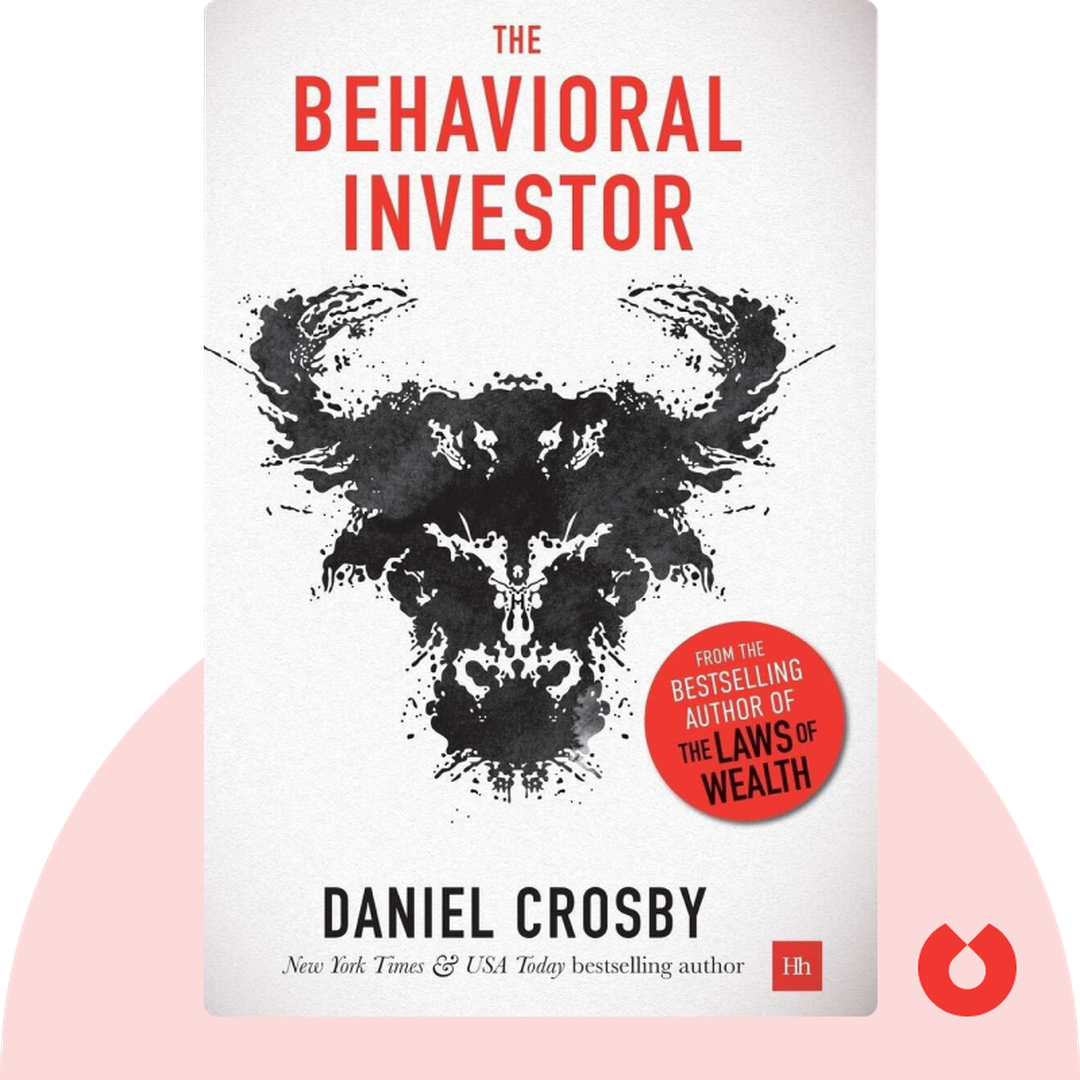
The Laws of Wealth (2016) is an insightful guide to understanding how our irrational behavior can get in the way of making good investment decisions. Using insights from the field of behavioral psychology, Daniel Crosby identifies key human weaknesses that can sabotage our investments, such as overestimating our abilities and panicking in the face of risk. He then presents practical and effective strategies that we can adopt to become better investors.
Who Should Listen to The Laws of Wealth?
- Investors wanting to learn how to spot their behavioral blind spots
- Psychology buffs interested in how emotions influence how people spend money
- Anyone who is weighing up the benefits of hiring a financial advisor
Books Similar to The Laws of Wealth
Readers who enjoyed this also liked these titles.