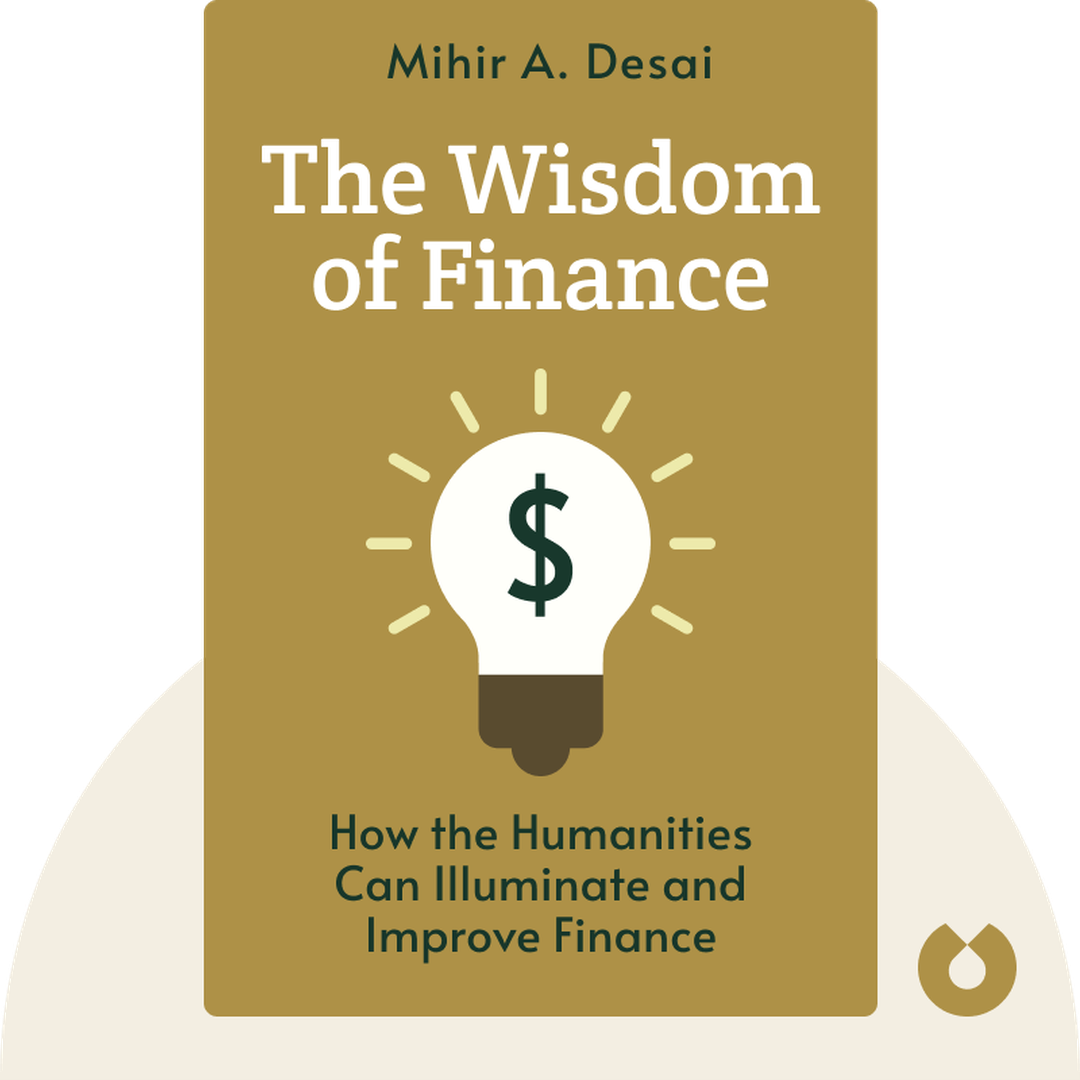
If You're Curious About These Questions...
You should listen to this audiobook
- Did you know that the works of Jane Austen and George Orwell might actually hold the secret to understanding the most complex concepts in modern finance?
- Have you ever wondered why the fundamental principles of insurance and risk are actually profound metaphors for how we should navigate our own lives?
- What if the most important lessons for today’s bankers and investors aren't found in spreadsheets, but in the wisdom of history’s greatest philosophers and artists?
Listen to The Wisdom of Finance — Free Audiobook
Loading player...
Key Takeaways from The Wisdom of Finance
- Discover how to look past the greedy reputation of Wall Street to uncover profound, relatable life wisdom hidden within complex financial systems.
- Learn how the ancient origins of maritime insurance demonstrate that mitigating life's chaos requires compassion, empathy, and a shared sense of humanity.
- Understand the power of diversification outside the stock market by spreading your energy across varied educational pursuits and life experiences to better navigate the unknown.
- Find out how the investment concepts of high-beta, low-beta, and negative-beta assets can help you build a balanced, resilient network of personal and professional relationships.
- Explore surprising parallels between everyday life and corporate finance, including what romantic partnerships can learn from business mergers and how parenting resembles taking on debt.
Learning Tools
Reinforce what you learned from The Wisdom of Finance
Mind Map
The Wisdom of Finance
Reclaiming Finance+
Insurance & Empathy+
Diversification in Life+
Luck & Humility+
Principals & Agents+
Mergers & Romance+
The Value of Debt+
Moral Complexity+
Wealth & Fulfillment+
Quiz — Test Your Understanding
Question 1 of 8
How does Joseph de la Vega characterize finance in his seventeenth-century book 'Confusion de Confusiones'?
Question 2 of 8
According to the American philosopher Charles Sanders Peirce, what moral lesson can be drawn from the concept of insurance?
Question 3 of 8
In the book's metaphor comparing financial assets to personal relationships, who represents a 'negative-beta' person in your life?
Question 4 of 8
How does the text challenge the traditional, Darwinian financial interpretation of the biblical 'Parable of the Talents'?
Question 5 of 8
How does the principal/agent dynamic apply to the way some parents raise their children, according to the text?
Question 6 of 8
What romantic lesson is drawn from the failed corporate merger between AOL and Time Warner?
Question 7 of 8
How does the text reframe the concept of taking on 'debt'?
Question 8 of 8
What is the primary takeaway from the story of American Airlines CEOs Gerard Arpey and Thomas Horton?
The Wisdom of Finance — Full Chapter Overview
- 1Recommendation
- 2Finance isn’t solely for investment bankers; it’s for all of us.
- 3Insurance rests on shared effort, not merely financial calculation alone.
- 4Diversification is a beneficial strategy.
- 5In life, as in investing, luck plays a huge role in our success or failure.
- 6Viewing ourselves as “principals” and “agents” in our relationships can provide clarity.
- 7Financial mergers have much to teach us about romance.
- 8Sometimes taking on debt becomes necessary.
- 9Like finance, life requires moral complexity.
The Wisdom of Finance Summary & Overview
The Wisdom of Finance (2017) demonstrates that the world of finance has much to teach us, despite its reputation for avarice and irresponsibility. And likewise, there is much that finance can learn from our wider human endeavors, like literature, art, and philosophy.
Who Should Listen to The Wisdom of Finance?
- Investors, bankers and insurance professionals
- Those looking for moral goodness in finance
- Anyone interested in the link between literature and money
Books Similar to The Wisdom of Finance
Readers who enjoyed this also liked these titles.