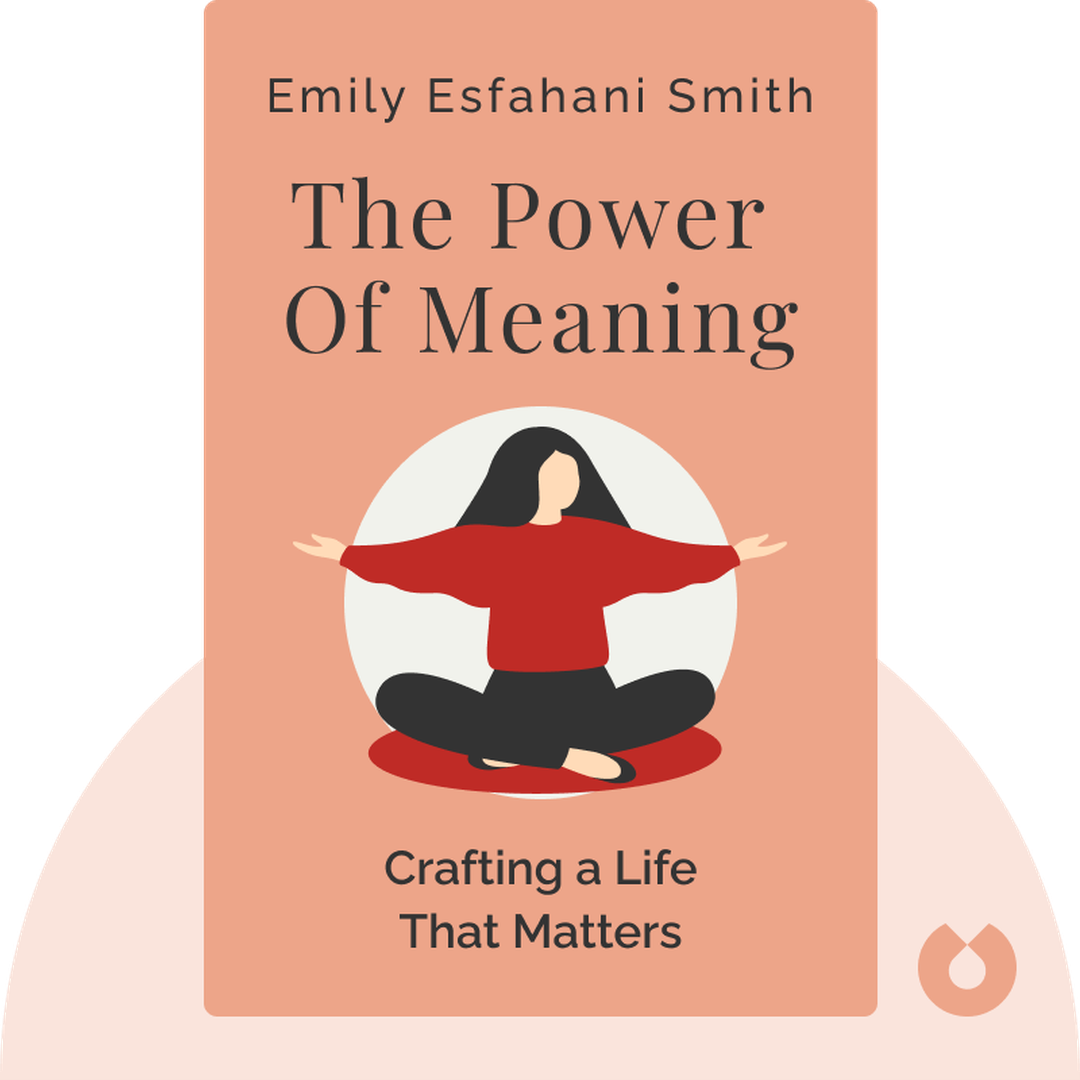
Theme Song
If You're Curious About These Questions...
You should listen to this audiobook
- Have you ever wondered why chasing happiness often leaves us feeling empty, while finding meaning is what actually leads to a fulfilling life?
- What's the secret to transforming your past traumas and hardships into a source of strength and personal purpose?
- Are you curious about the four specific pillars that can help you build a deep sense of belonging and transcendence in your daily routine?
Listen to The Power Of Meaning — Cinematic Audio Edition
Loading player...
Key Takeaways from The Power Of Meaning
- Understand why modern individualistic lifestyles often leave us feeling empty, and discover how shifting your focus outward can restore true meaning to your life.
- Learn the four essential pillars of a meaningful life—belonging, purpose, storytelling, and transcendence—and why psychological research proves they are more fulfilling than simply chasing happiness.
- Discover how to combat the rising tide of social isolation by fostering a profound sense of belonging through everyday connections with the people around you.
- Find out how to cultivate a strong sense of purpose without changing careers by simply reframing your daily tasks around how they serve and help others.
- Explore the power of storytelling to make sense of your world, craft a coherent personal narrative, and extract positive meaning from your unique life experiences.
Learning Tools
Reinforce what you learned from The Power Of Meaning
Mind Map
The Power Of Meaning
The Meaning Crisis+
The Four Pillars of Meaning+
Growth Through Trauma+
Societal Shift Towards Meaning+
Actionable Advice+
Quiz — Test Your Understanding
Question 1 of 8
According to the study by Shigehiro Oishi and Ed Diener, what surprising trend was observed in wealthy countries compared to poorer ones?
Question 2 of 8
What did psychoanalyst René Spitz discover about the high mortality rates in 1945 orphanages?
Question 3 of 8
How does developmental psychologist William Damon suggest an individual can find a sense of purpose?
Question 4 of 8
In the context of the 'storytelling' pillar, what is 'counterfactual thinking'?
Question 5 of 8
What is a defining characteristic of experiencing a state of 'transcendence'?
Question 6 of 8
According to researchers of post-traumatic growth, what primarily determines whether a person will experience personal growth after a tragedy?
Question 7 of 8
How does the oral history project 'StoryCorps' help individuals cultivate meaning?
Question 8 of 8
What actionable advice is given in the text to easily foster a greater sense of belonging in everyday life?
The Power Of Meaning — Full Chapter Overview
- 1Recommendation
- 2Concentrate on the four pillars of meaning.
- 3Individualism defies our need to belong.
- 4Purpose is discovered through self-reflection and helping others.
- 5With storytelling, we build coherence and new interpretations.
- 6Transcendence can help dissolve the barriers between you and the world around you.
- 7Finding meaning after trauma depends on how an ordeal is personally interpreted.
- 8There's been a societal shift toward exploring cultures of meaning.
The Power Of Meaning Summary & Overview
The Power of Meaning (2017) discusses the four pillars of meaning that a person should honor if they hope to lead a fulfilling life. This book encourages readers to discover themselves by searching for a purpose in life, connecting with others, engaging in transcendence and learning from past traumas.
Who Should Listen to The Power Of Meaning?
- Anyone interested in spirituality
- Those struggling through hardship
- People interested in psychology, philosophy and literature
Books Similar to The Power Of Meaning
Readers who enjoyed this also liked these titles.