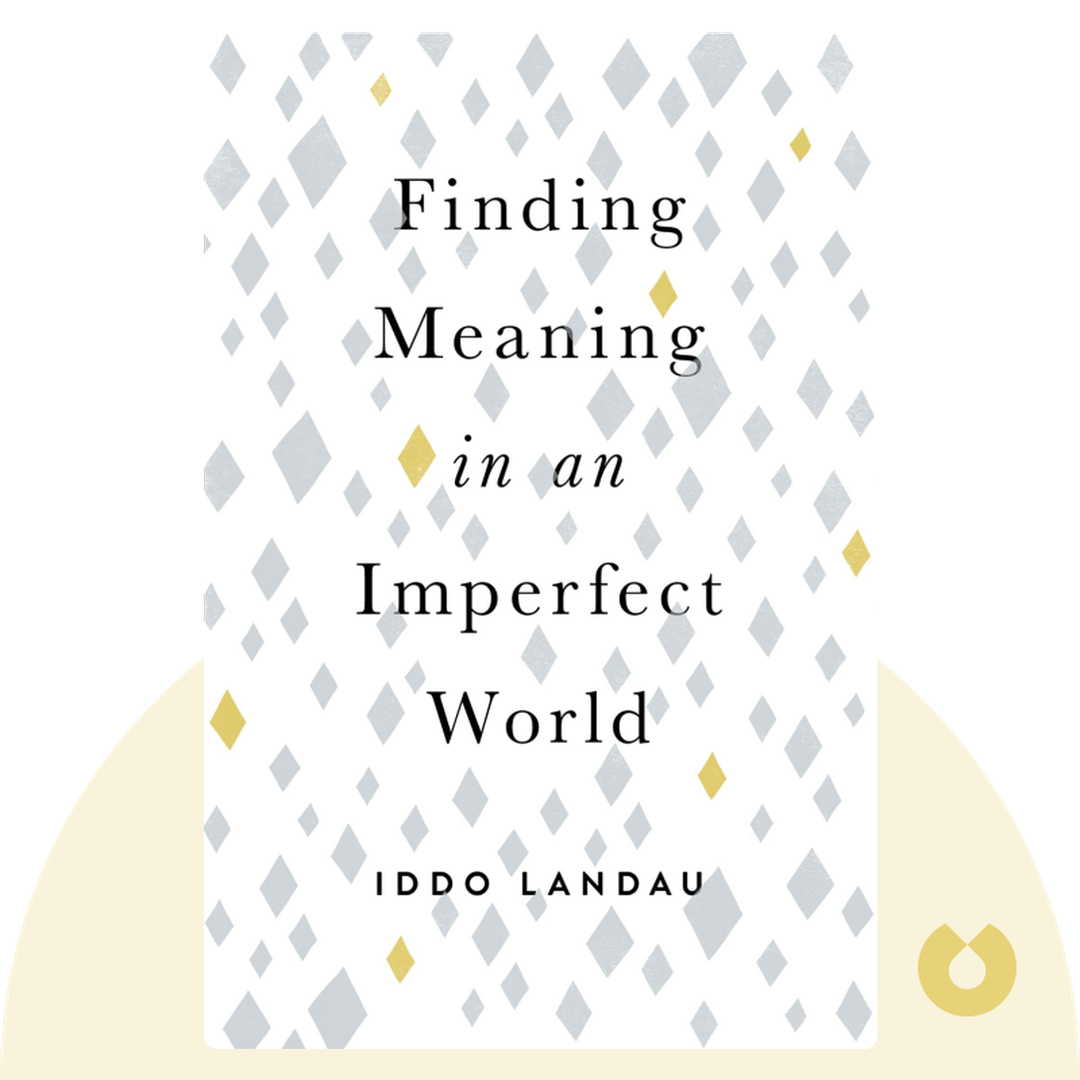
Finding Meaning in an Imperfect World
Start ListeningDownload Try free on iPhoneScan to start in 5 seconds
Categories:
If You're Curious About These Questions...
You should listen to this audiobook
- Have you ever wondered why we often mistake an imperfect life for a meaningless one?
- What if you could use logical, philosophical tools to uncover a deep sense of purpose that you’ve been overlooking all along?
- Are you curious about the secret reason why many people fail to see the value in their lives, even when they have everything they’ve ever wanted?
Listen to Finding Meaning in an Imperfect World — Free Audiobook
Loading player...
Key Takeaways from Finding Meaning in an Imperfect World
- Discover how finding the meaning of life is an approachable, everyday phenomenon rather than a mystical puzzle requiring esoteric knowledge.
- Understand that the search for meaning is ultimately a search for value, and any purpose you personally find worthwhile will add profound meaning to your life.
- Learn why holding yourself to perfectionist, all-or-nothing standards destroys meaning and sets you up for inevitable disappointment.
- Recognize that death does not render your existence pointless, because experiences and actions hold real value even if they don't last forever.
- Find out how appreciating ordinary, temporary things—like the comfort of a freshly cleaned floor—can provide the philosophical clarity needed to see the value in your own imperfect life.
Learning Tools
Reinforce what you learned from Finding Meaning in an Imperfect World
Mind Map
Finding Meaning in an Imperfect World
Defining Meaning+
Overcoming Mental Obstacles+
Goals and Intrinsic Worth+
Suffering and Reality+
Practical Steps to Find Meaning+
Quiz — Test Your Understanding
Question 1 of 8
According to the book, what are we fundamentally asking about when we question the 'meaning of life'?
Question 2 of 8
Why does the author argue against taking a perfectionist approach to the meaning of life?
Question 3 of 8
What lesson does the author draw from the example of a freshly mopped kitchen floor?
Question 4 of 8
How does the book address the philosophical concept of determinism (the idea that we lack free will)?
Question 5 of 8
In the context of the 'why game' played with children, what philosophical concept does the author illustrate?
Question 6 of 8
What is the 'paradox of the end' as described in the text?
Question 7 of 8
How does the author counter Arthur Schopenhauer’s pessimistic view that life is infused with suffering and therefore meaningless?
Question 8 of 8
Which of the following is recommended by the author as a practical step to help discover meaning in your life?
Finding Meaning in an Imperfect World — Full Chapter Overview
- 1Recommendation
- 2When we ask about life’s meaning, we’re really asking about value.
- 3You don’t have to be a perfectionist about life’s meaning.
- 4Death doesn’t make life meaningless.
- 5Life can still be meaningful even without belief in free will.
- 6A life lived for its own sake can be deeply meaningful.
- 7Losing meaning doesn’t mean life itself is meaningless.
- 8Life can have meaning despite pain and suffering.
- 9If your life feels meaningless, you can take steps to find meaning.
- 10Final summary
Finding Meaning in an Imperfect World Summary & Overview
Finding Meaning in an Imperfect World (2017) shows us that while questions about the meaning of life are difficult, they don’t need to be mysterious. Iddo Landau provides the tools to help us think about the meaning of life in a clear and logical way. He explains the theories that enable us to see the meaning in life, and offers practical advice on how to enhance that meaning.
Who Should Listen to Finding Meaning in an Imperfect World?
- Restless thinkers who’d like to lead a more meaningful life
- Cynics convinced that life is meaningless
- Curious minds interested in how philosophers think about life’s deepest questions
Books Similar to Finding Meaning in an Imperfect World
Readers who enjoyed this also liked these titles.