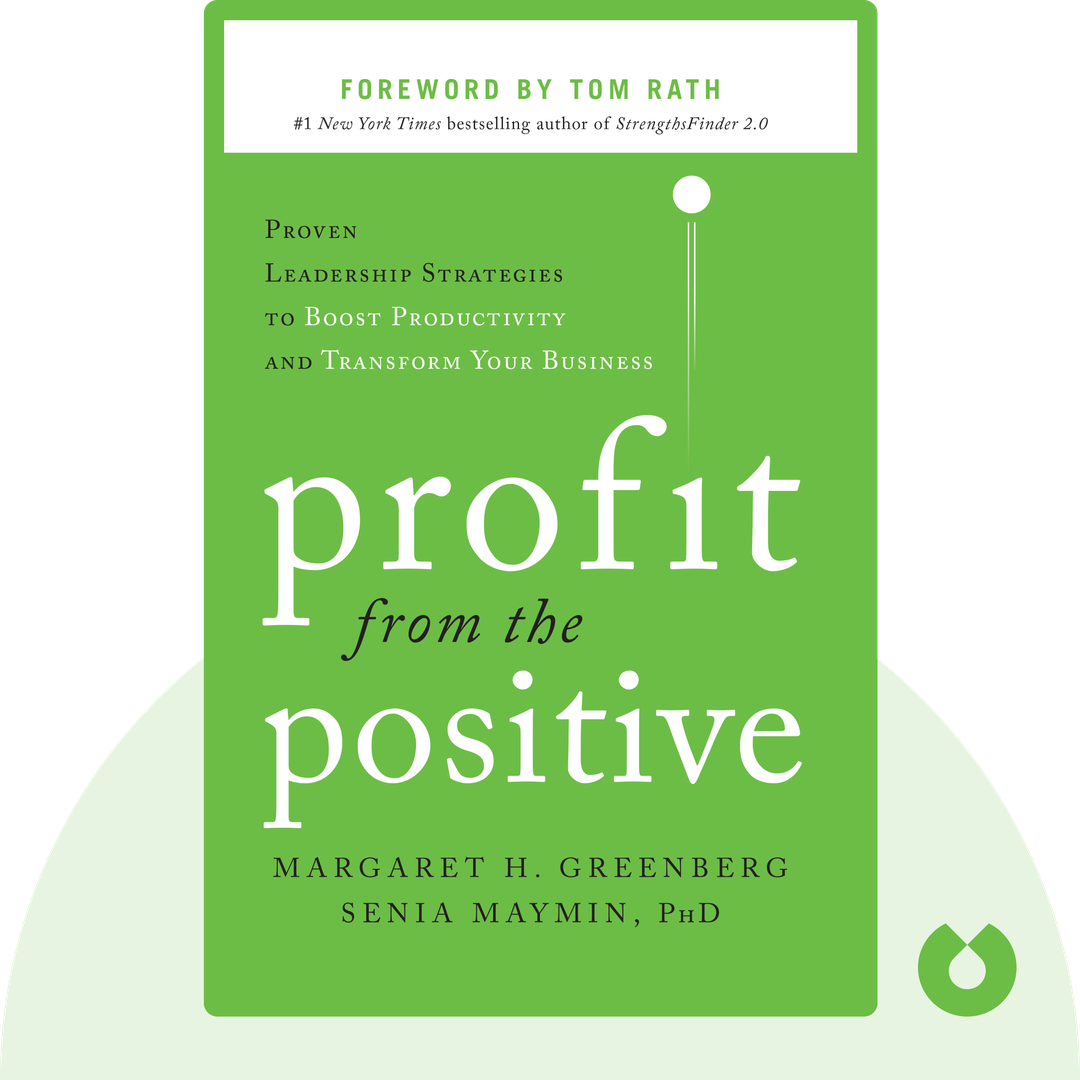
Profit from the Positive
Start ListeningDownload Try free on iPhoneScan to start in 5 seconds
Categories:
If You're Curious About These Questions...
You should listen to this audiobook
- Did you know that making minor, low-cost adjustments to your daily leadership habits could be the hidden key to skyrocketing your team's productivity and profits?
- What if you could transform your company culture and boost employee performance by applying just a few simple, scientifically-proven tools from the world of positive psychology?
- Have you ever wondered why some managers are able to achieve extraordinary results while keeping their teams energized and happy, even during high-pressure situations?
Listen to Profit from the Positive — Free Audiobook
Loading player...
Key Takeaways from Profit from the Positive
- Learn how to boost productivity by setting highly specific plans, such as defining exactly when and where a task will be completed.
- Discover a simple psychological trick to overcome procrastination by writing down and crossing off already-completed items on your to-do list to build instant momentum.
- Master the 'Me-Always-Everything' framework to build resilience, allowing you to objectively analyze failures and prevent setbacks from affecting your entire life.
- Understand why a leader's mood is highly contagious and learn quick techniques, like physical embodiment and emotion labeling, to rapidly shift from a negative to a positive mindset.
- Find out how to become a strength-based leader by focusing your team's energy on brainstorming solutions and expanding on what the company is already doing right.
Learning Tools
Reinforce what you learned from Profit from the Positive
Mind Map
Profit from the Positive
Boosting Productivity+
Resilience & Mistakes+
Managing Moods+
Strength-Based Leadership+
Hiring for Success+
Cultivating Employee Strengths+
Performance Previews+
Productive Meetings+
Implementation+
Quiz — Test Your Understanding
Question 1 of 10
According to psychologist Peter Gollwitz's study, what simple action significantly increases the likelihood of a task being completed on time?
Question 2 of 10
What is recommended as a simple trick to help you get started on a long, daunting to-do list?
Question 3 of 10
When analyzing a failure or setback, what does the 'Me-Always-Everything' framework encourage you to ask?
Question 4 of 10
How does an individual's status within an organization's hierarchy affect 'social contagion'?
Question 5 of 10
Why does the book argue that the common managerial phrase, 'Don't bring problems if you can't propose a solution,' is flawed logic?
Question 6 of 10
When interviewing candidates, why is it often better to hire someone with a great attitude but no experience over someone with great experience but a bad attitude?
Question 7 of 10
How does the book suggest managers can transform conventional performance reviews into more motivating experiences?
Question 8 of 10
What technique is recommended to ensure everyone participates and is heard during a meeting?
Question 9 of 10
When introducing new positive leadership tools to your team, how should you view resistance from your employees?
Question 10 of 10
What is the psychological purpose of holding a pen gently between your teeth?
Profit from the Positive — Full Chapter Overview
- 1Recommendation
- 2Boost productivity by planning ahead and by building steady, positive habits daily.
- 3When things go awry, stay resilient and learn from your mistakes.
- 4Your mood will affect both your productivity and your team’s overall performance.
- 5To be a strength-based leader, know what you do well and focus only on solutions, not faults.
- 6To avoid hiring errors, take your time and don’t undervalue soft skills.
- 7Identifying and nurturing your employees’ strengths will increase productivity.
- 8Performance reviews are a chance to motivate your team and preview the year ahead.
- 9For a productive meeting, ensure everyone participates and mind all openers and closers carefully throughout.
- 10You don’t need permission to use these tools. Just start small, skip jargon, and expect some resistance.
Profit from the Positive Summary & Overview
Profit from the Positive explains how leaders can increase productivity, collaboration and profitability by using the tools of positive psychology to boost their employees’ performance. It gives clear examples of how small changes can make big differences.
Who Should Listen to Profit from the Positive?
- Business leaders, managers, executive coaches
- Human resource professionals
- Anyone who wants to get ahead by being positive
Books Similar to Profit from the Positive
Readers who enjoyed this also liked these titles.