If You're Curious About These Questions...
You should listen to this audiobook
- Have you ever wondered why your workplace often feels like it's run by people who don't know what they're doing?
- Did you know that your next big promotion could actually be the worst thing to happen to your career?
- What's the secret to navigating corporate hierarchies without getting stuck in a job you can't handle?
Listen to The Peter Principle — Free Audiobook
Loading player...
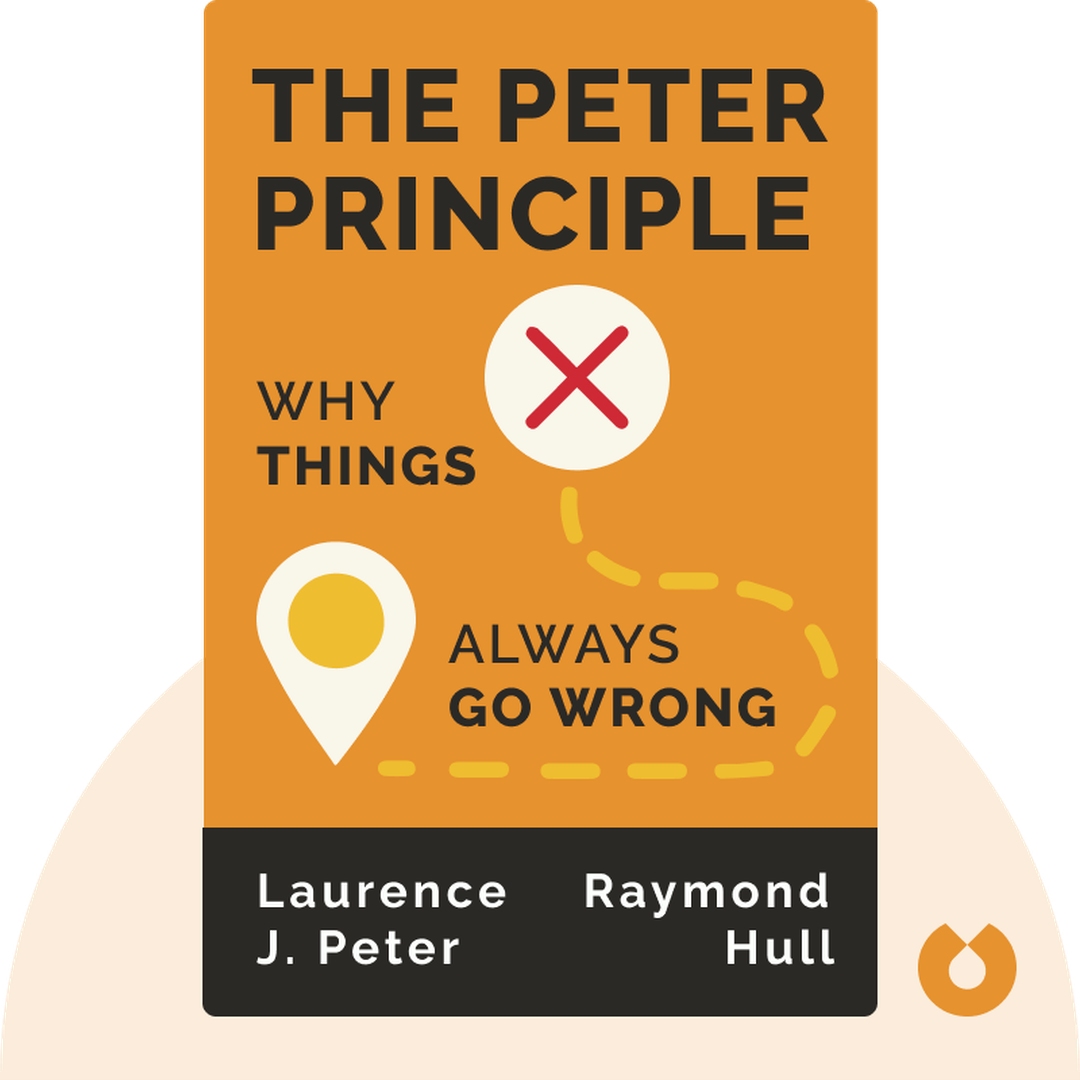
Key Takeaways from The Peter Principle
- Understand the core of the Peter Principle, which states that every employee in a hierarchy will inevitably be promoted until they reach a position where they are utterly incompetent.
- Discover why 'pulling' through strategic relationships and mentors is a far more effective way to accelerate your promotions than simply 'pushing' yourself to work harder.
- Learn how to spot pseudo-promotions, such as sideways shifts or shiny new job titles, which organizations use to park incompetent employees without giving them real power.
- Recognize the trap of 'Peter's Inversion,' a phenomenon where rigid adherence to company rules is valued over actual results, proving that workplace competence is highly subjective.
- Find out how reaching your level of incompetence triggers Final Placement Syndrome—causing bizarre workplace behaviors and physical stress—and why adopting outside hobbies is the only cure.
Learning Tools
Reinforce what you learned from The Peter Principle
Mind Map
The Peter Principle
Core Concept+
Promotion Mechanics+
Illusions of Exceptions+
Final Placement Syndrome (FPS)+
Avoidance & Coping Strategies+
The Ultimate Test+
Quiz — Test Your Understanding
Question 1 of 8
What is the core concept of the Peter Principle?
Question 2 of 8
According to the text, how does 'Pulling' differ from 'Pushing' when trying to secure a promotion?
Question 3 of 8
What happens to an employee in a 'Lateral Arabesque'?
Question 4 of 8
Which scenario best illustrates 'Peter's Inversion'?
Question 5 of 8
How does the text suggest individuals should treat 'Final Placement Syndrome' (FPS)?
Question 6 of 8
What is the primary purpose of 'Creative Incompetence'?
Question 7 of 8
An employee who has reached their level of incompetence starts endlessly researching and setting up advisory councils instead of executing their actual project. What coping mechanism are they using?
Question 8 of 8
When applying the 'ultimate test for incompetence' to a colleague, what does it mean if your answer to whether they are doing something useful is 'Don't Know'?
The Peter Principle — Full Chapter Overview
- 1Recommendation
- 2Incompetence is unavoidable.
- 3To get that promotion, you need to pull or push.
- 4There are zero exceptions to the Peter Principle.
- 5Be alert to the common symptoms of Final Placement Syndrome.
- 6Learn to evade or cope with your incompetence.
The Peter Principle Summary & Overview
The Peter Principle (1969) explains why you feel like you’re surrounded by incompetence at work – you are! This wry book reveals promotions for what they really are: a progression to our final level of incompetence. These blinks help us understand how corporate hierarchies really function, as well as offering advice on how to deal with our own incompetence.
Who Should Listen to The Peter Principle?
- Anyone wondering why they’re surrounded by people who can’t do their job
- People with dry humor
- Those interested in how hierarchies really work
Books Similar to The Peter Principle
Readers who enjoyed this also liked these titles.