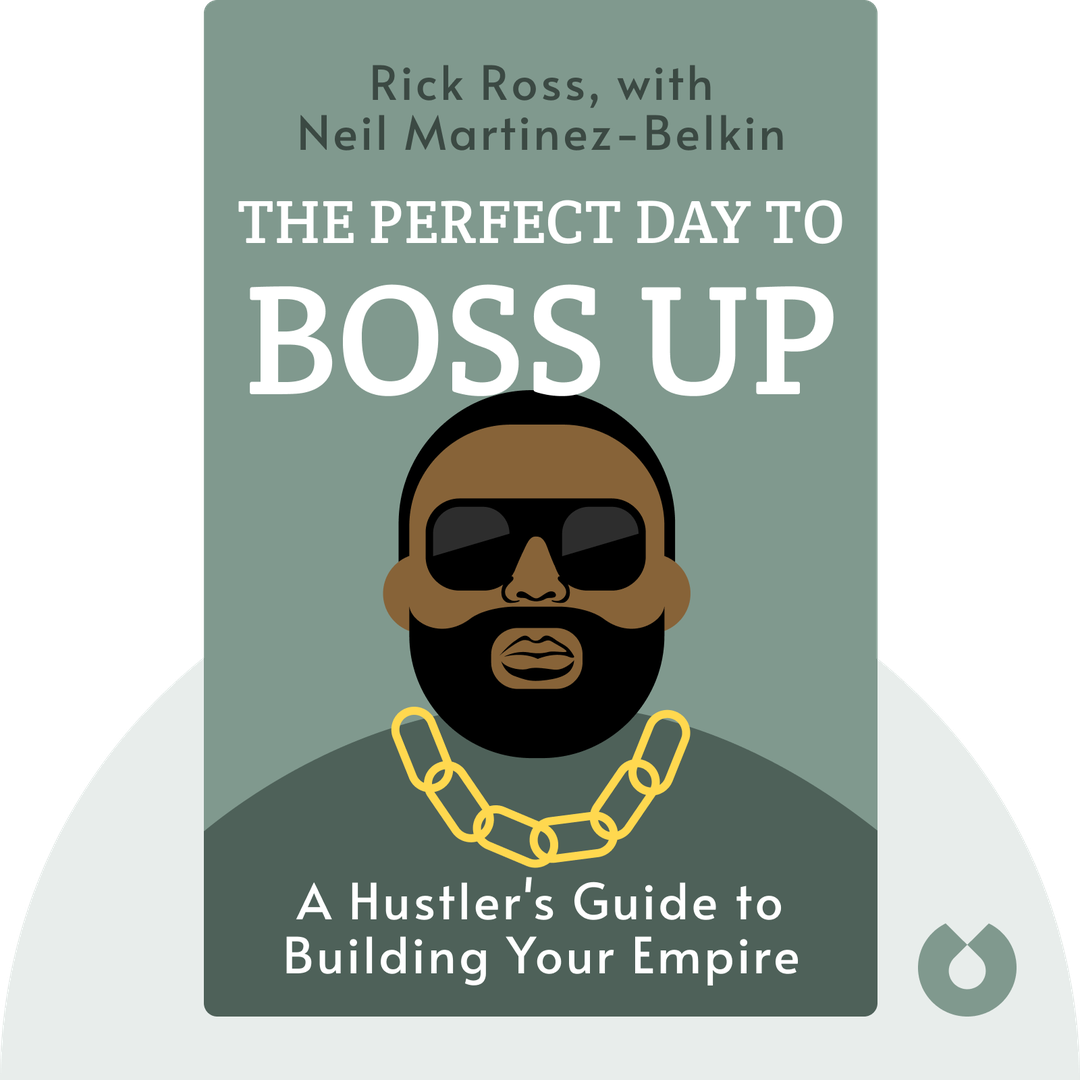
The Perfect Day to Boss Up
Start ListeningDownload Try free on iPhoneScan to start in 5 seconds
Categories:
If You're Curious About These Questions...
You should listen to this audiobook
- What if you could master the exact mindset Rick Ross uses to command any room and turn every vision into a business reality?
- Are you curious about the behind-the-scenes rules for success that separate a temporary hustle from a lifelong empire?
- Did you know that becoming a 'boss' is less about your job title and more about a specific way of seeing the world that anyone can learn?
Listen to The Perfect Day to Boss Up — Cinematic Audio Edition
Loading player...
Key Takeaways from The Perfect Day to Boss Up
- Discover why being a true boss isn't about wealth or titles, but rather about acting as the CEO of your own life regardless of your current circumstances.
- Understand the hidden dangers of tunnel vision so you can protect your relationships and health while building multiple, resilient streams of success.
- Learn how to stay authentic to your unique style and overcome the urge to make excuses, empowering you to push through obstacles without waiting for the perfect moment.
- Find out how to apply the 10,000-hour rule to your craft and avoid the trap of setting strict deadlines that rush your progress and harm the quality of your work.
- Master the essential skill of learning from your mistakes by choosing thoughtful responses over emotional reactions, ensuring continuous personal and professional growth.
Learning Tools
Reinforce what you learned from The Perfect Day to Boss Up
Mind Map
The Perfect Day to Boss Up
Mindset & Adaptability+
Taking Control & Work Ethic+
Mastering Time+
Financial Strategy & Team+
Belief & Emotional Intelligence+
Authenticity+
Resilience & Legacy+
Strategic Preparation+
Quiz — Test Your Understanding
Question 1 of 10
How does a 'boss' handle unexpected challenges, according to Rick Ross's experience during the pandemic?
Question 2 of 10
What does Rick Ross mean by the metaphor of getting in the 'driver’s seat'?
Question 3 of 10
Why does Rick Ross highly value his extensive collection of luxury watches?
Question 4 of 10
How did Ross handle his first seven-figure advance after signing to Def Jam?
Question 5 of 10
How did Ross successfully partner with the Luc Belaire rosé brand after initially being rejected?
Question 6 of 10
What crucial lesson in self-awareness did Ross learn from the 2008 rumors about him being a correctional officer?
Question 7 of 10
What does Ross's interaction with Kanye West teach about achieving success?
Question 8 of 10
Why does Ross use the 'megalodon shark' as a cautionary tale?
Question 9 of 10
According to the book, what is the 'ultimate hallmark of a boss'?
Question 10 of 10
What does Ross mean when he advises that 'Times of peace are when you prepare for battle'?
The Perfect Day to Boss Up — Full Chapter Overview
- 1Recommendation
- 2A boss views the big picture and adjusts as priorities and situations shift.
- 3To be a boss, you have to take the driver’s seat — and tally up the miles.
- 4How you choose to use your time is your most important decision in life.
- 5To become rich, make your money work for you, stay ambitious, and select the right team players.
- 6To realize your dreams, trust yourself, be an opportunity, and don’t let your emotions ever derail you.
- 7Hustle your own way — meaning stay true to yourself and do what you love always.
- 8To succeed in life, turn losses into comebacks, keep learning, and build a meaningful legacy.
The Perfect Day to Boss Up Summary & Overview
The Perfect Day to Boss Up (2021) is a swaggering, no-nonsense road map to becoming the CEO of your life. Drawing on hip-hop icon Rick Ross’s life, it divulges behind-the-scenes stories, advice, and mindsets that’ll guide you on your own path to success.
Who Should Listen to The Perfect Day to Boss Up?
- Dreamers seeking straight-talking inspiration, insight, and intel on achieving success
- Fans of the song “Hustlin’” who’re curious how the Boss’s hustle plays out in real life
- Go-getters seeking an alternative to cookie-cutter self-improvement manuals
Books Similar to The Perfect Day to Boss Up
Readers who enjoyed this also liked these titles.