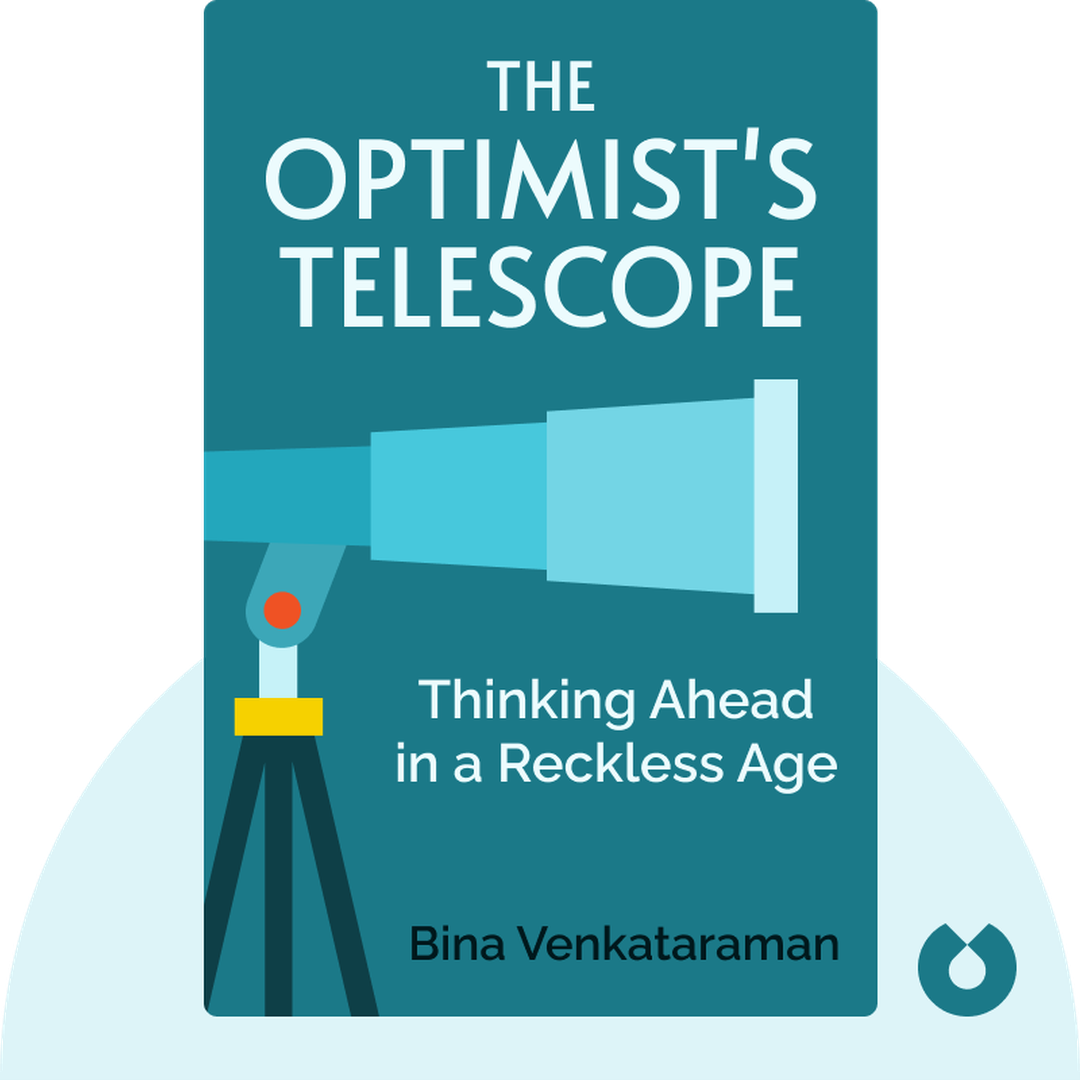
The Optimist's Telescope
Start ListeningDownload Try free on iPhoneScan to start in 5 seconds
Categories:
If You're Curious About These Questions...
You should listen to this audiobook
- How did a study of children in a Cameroonian farming community completely upend the conclusions of the famous 'marshmallow test' regarding delayed gratification?
- Why did a successful hedge fund investor intentionally hide her own portfolio from herself, and how can this unusual strategy help us avoid the psychological trap of short-term metrics?
- What can a cooperative group of Mexican lobstermen teach global markets about adapting to climate change and treating natural resources as 'shared heirlooms' for future generations?
Listen to The Optimist's Telescope — Free Audiobook
Loading player...
Key Takeaways from The Optimist's Telescope
- Discover how to cultivate a mindset of long-term thinking to overcome the daily temptation of prioritizing what is easy today over what is best for tomorrow.
- Understand why short-sightedness is not an unavoidable human trait, and learn how you can actively develop the skill of wise, future-oriented decision-making.
- Learn why the ability to delay gratification isn't just an innate talent, but a skill heavily cultivated by our cultural expectations and societal norms.
- Explore the concept of 'mental time travel' and discover why we only prepare for the future threats and opportunities that we can vividly imagine.
- Find out how visualizing your future self can drastically improve long-term planning, such as using an economist's trick of picturing yourself as elderly to boost retirement savings.
Learning Tools
Reinforce what you learned from The Optimist's Telescope
Mind Map
The Optimist's Telescope
The Nature of Long-Term Thinking+
Cultural Influence on Willpower+
The Power of Imagination+
Strategies for Foresight+
Overcoming Short-Term Metrics+
The Glitter Tactic+
Becoming a Good Ancestor+
Quiz — Test Your Understanding
Question 1 of 9
What does the author argue about humanity's tendency to make reckless, short-sighted decisions?
Question 2 of 9
What did Bettina Lamm’s adaptation of the marshmallow test in Cameroon reveal about delayed gratification?
Question 3 of 9
How did economist Hal Hershfield successfully encourage young people to save more for retirement in his 2011 experiment?
Question 4 of 9
According to Peter Gollwitzer's research on the 'if/then' ritual, when is this tactic most effective?
Question 5 of 9
Why does sociologist Daniel Kahneman suggest modern humans have a tendency to focus on close-range goals and short-term metrics?
Question 6 of 9
How did one successful hedge fund investor prevent herself from making short-sighted financial decisions based on evolutionary loss aversion?
Question 7 of 9
What is the core concept behind the author's 'glitter tactic'?
Question 8 of 9
What mindset shift helped the lobstermen of Mexico's Baja Peninsula successfully preserve their local ecosystem?
Question 9 of 9
What actionable advice does the author suggest to avoid obsessing over real-time metrics?
The Optimist's Telescope — Full Chapter Overview
- 1Recommendation
- 2People and societies are not destined to make short-sighted decisions.
- 3Culture and values profoundly shape how people relate to immediate impulses.
- 4The threats people truly heed are those they can vividly picture.
- 5Planning how you’ll respond to future temptations can strengthen your willpower.
- 6Obsession with short-term metrics can hide the broader future picture.
- 7People require immediate rewards to justify long-term sacrifices.
- 8The heart of foresight is seeing yourself and your actions within a larger history.
The Optimist's Telescope Summary & Overview
The Optimist’s Telescope (2019) explores our everyday decisions that have a long-term impact on our personal lives, our communities, and our planet. Using a variety of strategies and case studies from biology, psychology, and behavioral economics, the book shows that humanity is not doomed to make reckless decisions – and that we all have an untapped potential to make wiser choices for the good of our future selves and generations to come.
Who Should Listen to The Optimist's Telescope?
- People who want to learn how to better plan ahead for the future
- Anyone concerned about society’s big challenges, like climate change
- Leaders interested in building sustainable strategies for success
Books Similar to The Optimist's Telescope
Readers who enjoyed this also liked these titles.