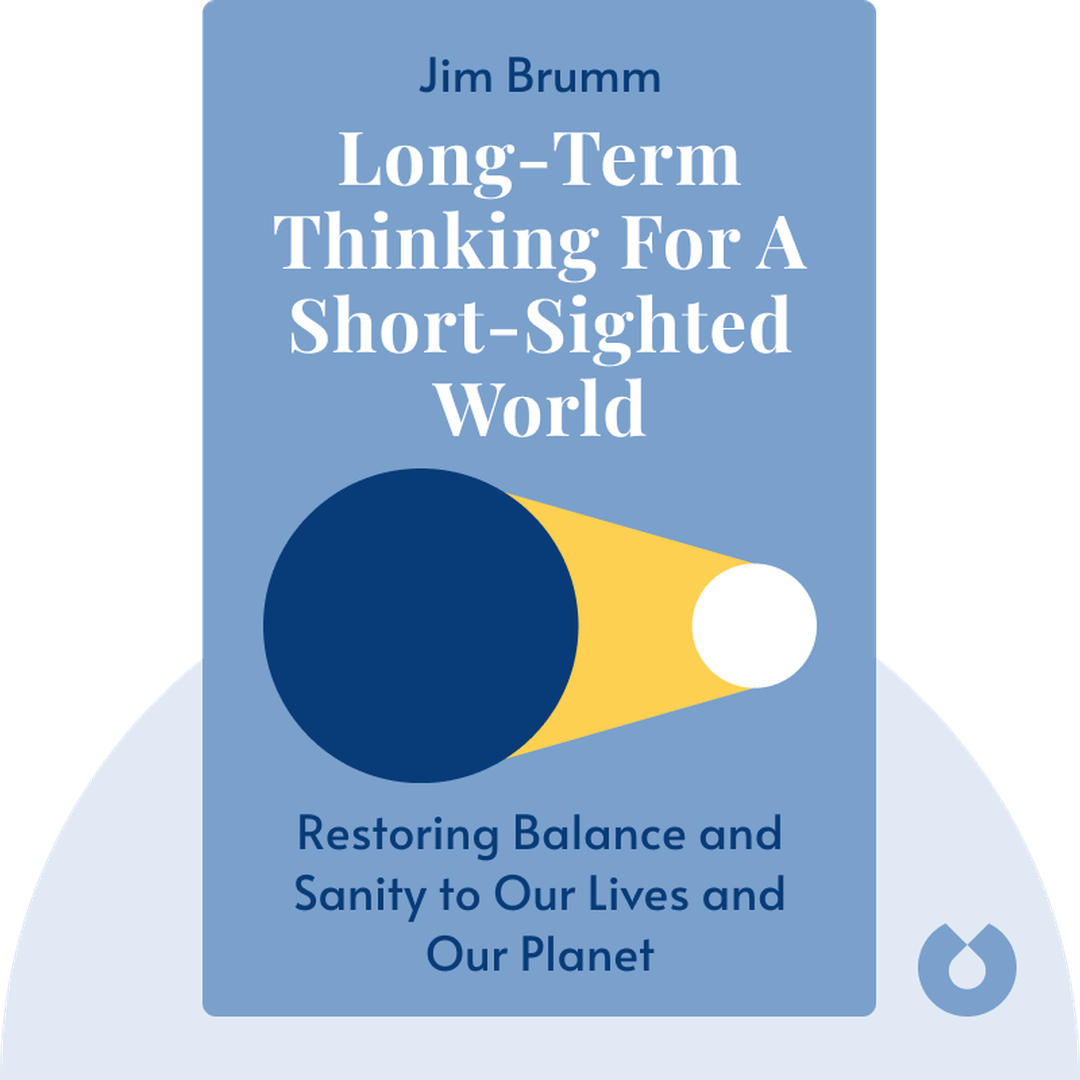
Long-Term Thinking for a Short-Sighted World
Start ListeningDownload Try free on iPhoneScan to start in 5 seconds
Categories:
If You're Curious About These Questions...
You should listen to this audiobook
- Have you ever wondered why our society consistently chooses quick fixes that lead to long-term disasters like climate change and oil depletion?
- What if the secret to solving the world’s most pressing problems isn't a new invention, but a fundamental shift in how we perceive time?
- Are you curious about how our daily habits of consumerism are actually rooted in a specific type of 'short-sightedness' that we can learn to overcome?
Listen to Long-Term Thinking for a Short-Sighted World — Free Audiobook
Loading player...
Key Takeaways from Long-Term Thinking for a Short-Sighted World
- Learn why human shortsightedness, originally a survival trait for our prehistoric ancestors, is now driving us toward environmental and societal downfall.
- Discover how well-intentioned, short-term solutions often create disastrous long-term consequences, as seen in the WHO's misguided pesticide use in Borneo.
- Understand how our obsession with the clock and inability to grasp 'deep time' force us into making poor snap decisions and relying on quick fixes instead of sustainable habits.
- Explore the hidden, long-term costs of everyday conveniences like automobiles, which have led to the destruction of arable land, devastating wars for oil, and deep social isolation.
- Find out why supporting local small businesses is crucial for building resilient communities that prioritize long-lasting relationships and future stability over quick profits.
Learning Tools
Reinforce what you learned from Long-Term Thinking for a Short-Sighted World
Mind Map
Long-Term Thinking for a Short-Sighted World
The Nature of Human Shortsightedness+
Accelerants of Short-Termism+
Manifestations in Daily Life+
Systemic Failures+
Long-Term Solutions+
Taking Action+
Quiz — Test Your Understanding
Question 1 of 9
Why was human shortsightedness originally beneficial to our prehistoric ancestors?
Question 2 of 9
What unintended consequence resulted from the World Health Organization's decision to spray DDT in Borneo in the 1950s?
Question 3 of 9
According to the book, what is a major reason humans struggle to consider the long-term consequences of their actions?
Question 4 of 9
How do cars contribute to the erosion of local communities, beyond their environmental and physical dangers?
Question 5 of 9
Why are local businesses considered better for a community's long-term future compared to corporate chain stores?
Question 6 of 9
How does the current financial system view consumer debt in relation to the economy?
Question 7 of 9
What is a primary environmental consequence of the shift toward large-scale factory farming mentioned in the text?
Question 8 of 9
Why does the author argue that solar energy is preferable to nuclear power for long-term sustainability?
Question 9 of 9
What critical lesson does the author suggest humans must learn from observing nature in order to adopt a long-term mindset?
Long-Term Thinking for a Short-Sighted World — Full Chapter Overview
- 1Recommendation
- 2History shows that humans are naturally shortsighted.
- 3Our focus on the clock reinforces our shortsightedness.
- 4Cars have caused long-term harm to nature and our behavior.
- 5Local businesses offer vital long-term benefits and deserve support.
- 6Our debt crisis is also rooted in our shortsighted nature.
- 7We need to return to small-scale farming and move away from food production driven by short-term profits.
- 8We also need to develop renewable energy resources.
- 9The planet’s health is our responsibility, so we must start thinking long-term.
- 10Final summary
Long-Term Thinking for a Short-Sighted World Summary & Overview
Long-Term Thinking for a Short-Sighted World (2012) reveals the root of many of the world’s problems: our own short-sightedness. From climate change to rampant consumerism and oil depletion, find out how many of the challenges we face today are the result of our inability or unwillingness to see the big picture. These blinks will set you on the path to thinking about the long-term consequences of the actions we take.
Who Should Listen to Long-Term Thinking for a Short-Sighted World?
- Environmentalists
- Anyone asking themselves why our society has so many problems
- Readers who want to make a difference to the future of the world
Books Similar to Long-Term Thinking for a Short-Sighted World
Readers who enjoyed this also liked these titles.