If You're Curious About These Questions...
You should listen to this audiobook
- Did you know that a single technological breakthrough in the American heartland fundamentally shifted the global balance of power, turning a decades-old energy shortage into a massive geopolitical advantage?
- Have you ever wondered why the struggle for energy dominance is quietly redrawing the borders of the South China Sea and reshaping the future of the US-China rivalry?
- Are you curious about how the global race toward green technology and renewables is creating an entirely new set of winners and losers in the quest for economic supremacy?
Listen to The New Map — Cinematic Audio Edition
Loading player...
Key Takeaways from The New Map
- Discover how the American shale oil revolution transformed the US from an energy-dependent importer into a dominant producer, fundamentally shifting global geopolitical leverage.
- Understand how Russia weaponizes its massive natural gas reserves and pipeline networks, using energy supply as a strategic tool to exert influence over Europe.
- Learn how China's vulnerability to maritime energy chokepoints, like the Strait of Malacca, drives the massive infrastructure investments of its Belt and Road Initiative.
- Grasp how energy innovation redraws the map of global power, proving that controlling supply routes and market demand is just as crucial as possessing natural resources.
- Find out how the global pivot toward renewable energy is forcing traditional resource superpowers to rapidly transform their economies or risk losing their strategic global position.
Learning Tools
Reinforce what you learned from The New Map
Mind Map
The New Map
The American Shale Revolution+
Russia's Gas Strategy+
China's Energy Vulnerability+
Middle East Transitions+
Transportation Disruption+
The Clean Energy Map+
Quiz — Test Your Understanding
Question 1 of 7
How did the American shale revolution fundamentally alter global geopolitics?
Question 2 of 7
What was Russia's primary strategic goal in building the Nord Stream pipelines?
Question 3 of 7
What is the 'Malacca Dilemma' in the context of China's energy security?
Question 4 of 7
How does China's Belt and Road Initiative (BRI) address its energy vulnerabilities?
Question 5 of 7
According to the text, what major factor prompted Middle Eastern powers like Saudi Arabia to launch economic diversification plans such as Vision 2030?
Question 6 of 7
How is the transition to electric vehicles (EVs) and new transportation technologies expected to redraw the global energy map?
Question 7 of 7
What remains a significant challenge for the widespread adoption of renewable energy sources like wind and solar, as highlighted in the text?
The New Map — Full Chapter Overview
- 1Recommendation
- 2The U.S. shale oil revolution
- 3Russia’s hidden weapon: gas
- 4China’s energy dilemma
- 5Strains in the resource-rich Middle East
- 6The major transportation shake-up
- 7A fresh clean energy map
The New Map Summary & Overview
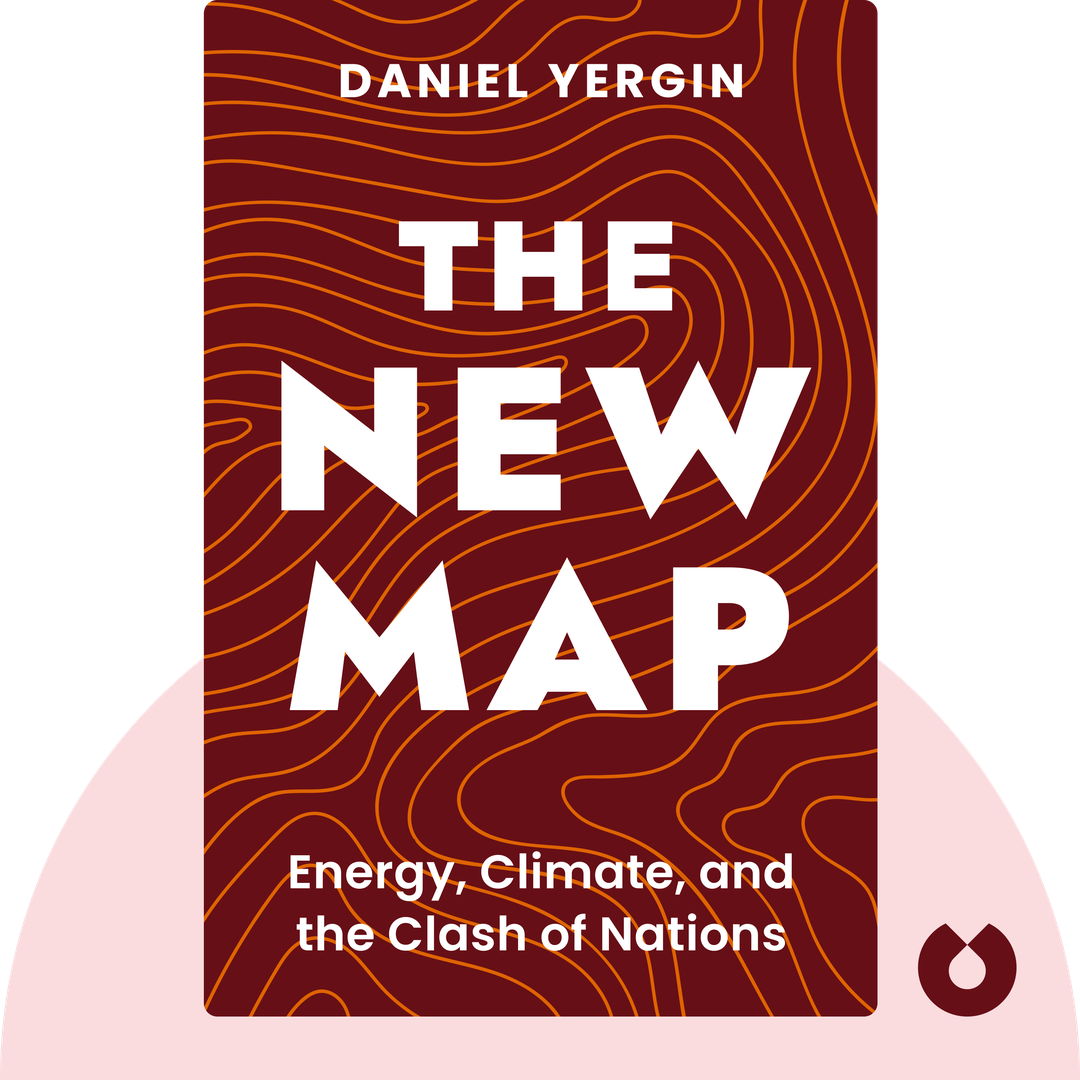
The New Map (2020) illustrates how global power dynamics are being reshaped by the convergence of energy politics, climate change, and international conflicts, particularly between the US, China, Russia, and the Middle East. It analyzes how America’s shale, Russia’s vast gas reserves, China’s growing influence, the Middle East’s adaptation to falling oil prices, and innovations in green tech and renewables are redrawing the world's energy map.
Who Should Listen to The New Map?
- Politics junkies ready for insights into how energy shapes geopolitics
- Climate activists who want a global snapshot of energy dynamics
- Investors looking for risks and opportunities in the energy sector
Books Similar to The New Map
Readers who enjoyed this also liked these titles.