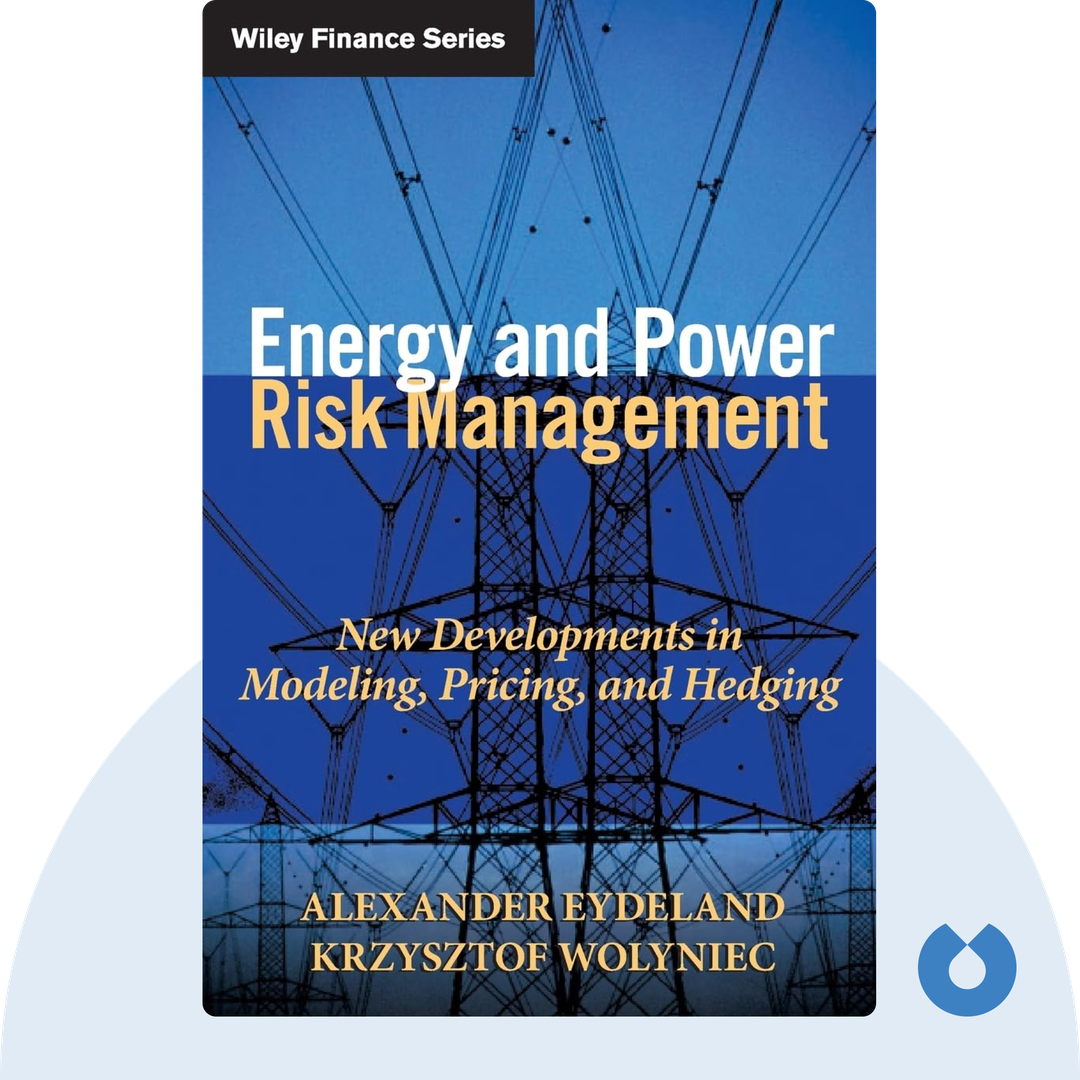
Energy and Power Risk Management
Start ListeningDownload Try free on iPhoneScan to start in 5 seconds
Categories:
If You're Curious About These Questions...
You should listen to this audiobook
- Have you ever wondered why electricity markets behave so differently from any other financial system, often defying the basic rules of economics?
- Did you know that the unique physical properties of power create extreme price spikes that can’t be predicted using traditional market models?
- What’s the secret to mastering risk management in a world where weather patterns and supply constraints can change everything in an instant?
Listen to Energy and Power Risk Management — Free Audiobook
Loading player...
Key Takeaways from Energy and Power Risk Management
- Discover why electricity's inability to be stored creates a unique, real-time balancing act that fundamentally defies traditional financial rules.
- Learn how physical grid constraints and transmission line congestion create highly localized energy markets with dramatically different price patterns.
- Explore how sophisticated financial tools like tolling agreements allow traders to control and profit from power plant operations without requiring physical ownership.
- Understand the value of swing options in providing utilities the critical flexibility to adjust power volumes during unpredictable events like sudden heat waves.
- Grasp why extreme price spikes—where electricity costs can multiply by a factor of 100 in minutes—are a normal, fundamental feature of power markets rather than a sign of manipulation.
Learning Tools
Reinforce what you learned from Energy and Power Risk Management
Mind Map
Energy and Power Risk Management
Fundamental Market Differences+
Financial Instruments & Trading+
Price Behavior & Volatility+
The Role of Weather+
Hybrid Pricing Models+
Quiz — Test Your Understanding
Question 1 of 6
What fundamental physical characteristic makes electricity markets behave differently from traditional financial markets?
Question 2 of 6
How do transmission line constraints affect electricity pricing?
Question 3 of 6
In energy trading, what is the primary purpose of a 'tolling agreement'?
Question 4 of 6
Which of the following describes the 'inverse leverage effect' found in power markets?
Question 5 of 6
How does temperature shape energy demand according to the text?
Question 6 of 6
Why do 'hybrid models' succeed in predicting power prices where traditional models fail?
Energy and Power Risk Management — Full Chapter Overview
- 1Recommendation
- 2Energy markets are fundamentally unique
- 3Where physics and finance meet
- 4Price spikes shape the market
- 5Weather influences everything
- 6Hybrid models connect theory and reality
- 7Final summary
Energy and Power Risk Management Summary & Overview
Energy and Power Risk Management (2002) plunges into the wild world of energy trading, where normal market rules don’t exist. You’ll discover how electricity’s unique physical properties create price spikes, learn why weather patterns drive market behavior – and ultimately understand why power markets operate differently from any other financial system.
Who Should Listen to Energy and Power Risk Management?
- Investors seeking deep insights into complex energy markets
- Energy professionals interested in advanced trading strategies and risk management
- Academics analyzing mathematical models of power market behaviors
Books Similar to Energy and Power Risk Management
Readers who enjoyed this also liked these titles.