If You're Curious About These Questions...
You should listen to this audiobook
- Have you ever wondered if the search for life’s meaning is actually a trap created by the very language we use to describe it?
- What if the secret to understanding your existence isn't in finding a single answer, but in realizing that the question itself might be flawed?
- Are you curious about how the world's greatest thinkers, from Nietzsche to Wittgenstein, can shift your perspective on what it truly means to live a meaningful life?
Listen to The Meaning of Life — Free Audiobook
Loading player...
Key Takeaways from The Meaning of Life
- Discover how the language we use to ask about life's meaning can actually distort our understanding of existence.
- Understand why philosophers like Wittgenstein and Nietzsche view the search for meaning as a linguistic puzzle rather than a quest for hidden truths.
- Explore the dual definition of 'meaning'—as both conscious intent and inherent significance—to see life's purpose as an ongoing narrative we actively construct.
- Learn how critically examining the assumptions behind our deepest questions offers more value than finding a fixed, singular answer.
- Embrace the shift from modernist despair to postmodern freedom by accepting life's ambiguity and letting go of the need for grand, universal narratives.
Learning Tools
Reinforce what you learned from The Meaning of Life
Mind Map
The Meaning of Life
The Role of Language+
Defining Meaning+
Modernism vs. Postmodernism+
Embracing Fragmentation+
Quiz — Test Your Understanding
Question 1 of 6
According to the text, asking 'What is the meaning of life?' might be fundamentally flawed because of how language frames it. To illustrate this, the question is compared to asking which of the following?
Question 2 of 6
How did Friedrich Nietzsche view overarching concepts like God or the self in relation to language?
Question 3 of 6
The text highlights a dual nature of the word 'meaning' in everyday conversation. What are the two distinct ways this concept is typically applied?
Question 4 of 6
How does postmodern thought differ from modernism regarding the absence of a clear, grand narrative in life?
Question 5 of 6
In the context of the text, what does the endless waiting in Samuel Beckett’s 'Waiting for Godot' represent?
Question 6 of 6
Why does the author suggest that imposing a grand narrative (like Marxism or religious doctrines) on life ultimately falls short?
The Meaning of Life — Full Chapter Overview
- 1Recommendation
- 2How language shapes our search for meaning.
- 3What do we actually mean by life’s meaning?
- 4Accepting ambiguity in the quest for meaning.
- 5Releasing the hunt for one single meaning.
The Meaning of Life Summary & Overview
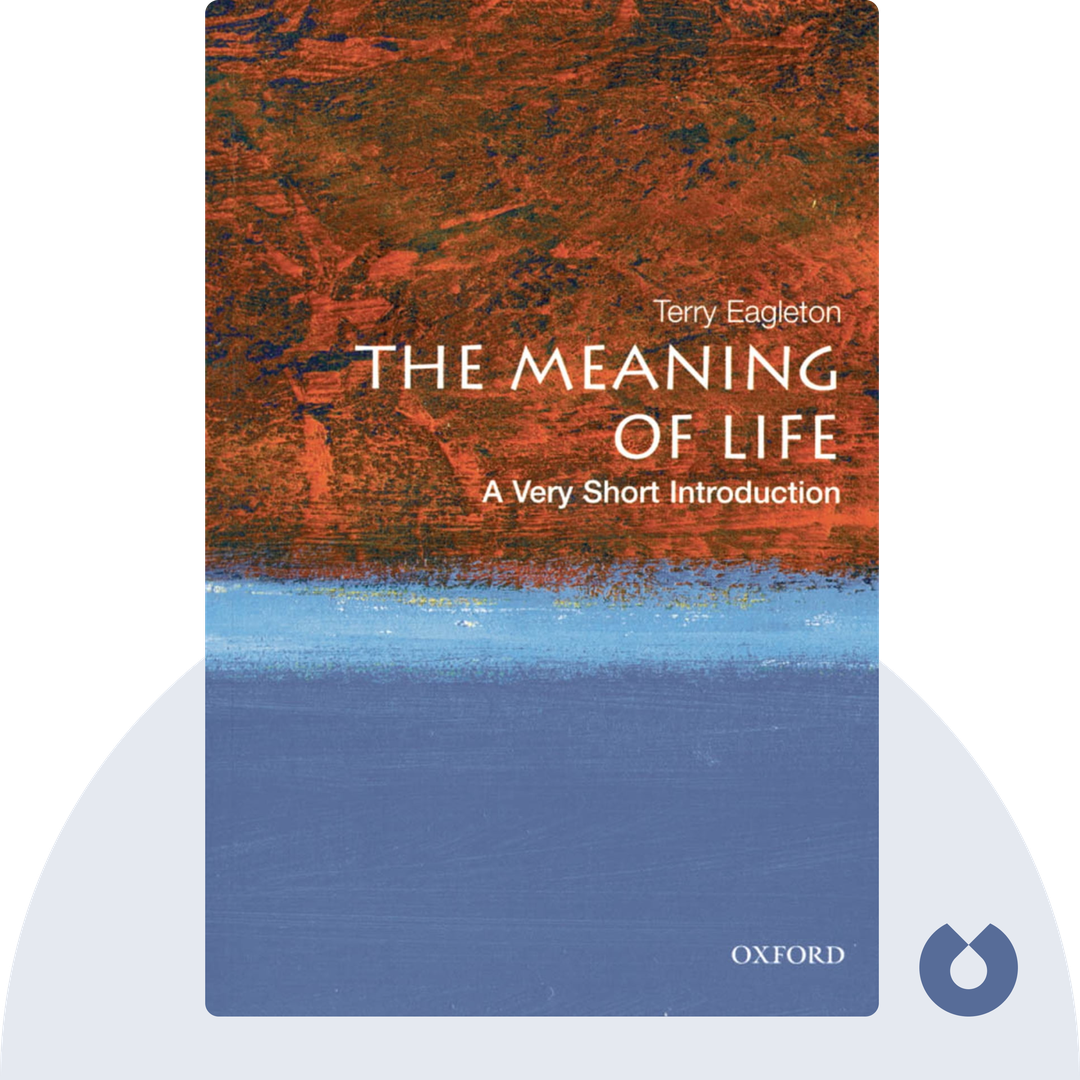
The Meaning of Life (2007) explores how the way we use language shapes our search for meaning. Rather than offering a straightforward answer, it challenges you to think about whether the question of life’s meaning is even the right one to ask. Through the lens of thinkers like Wittgenstein and Nietzsche, you’ll uncover how our words and ideas might create the very puzzles we struggle to solve.
Who Should Listen to The Meaning of Life?
- Philosophy enthusiasts seeking fresh perspectives on existential questions
- Language and communication students exploring the impact of words on thought
- Curious minds interested in the relationship between language and meaning
Books Similar to The Meaning of Life
Readers who enjoyed this also liked these titles.