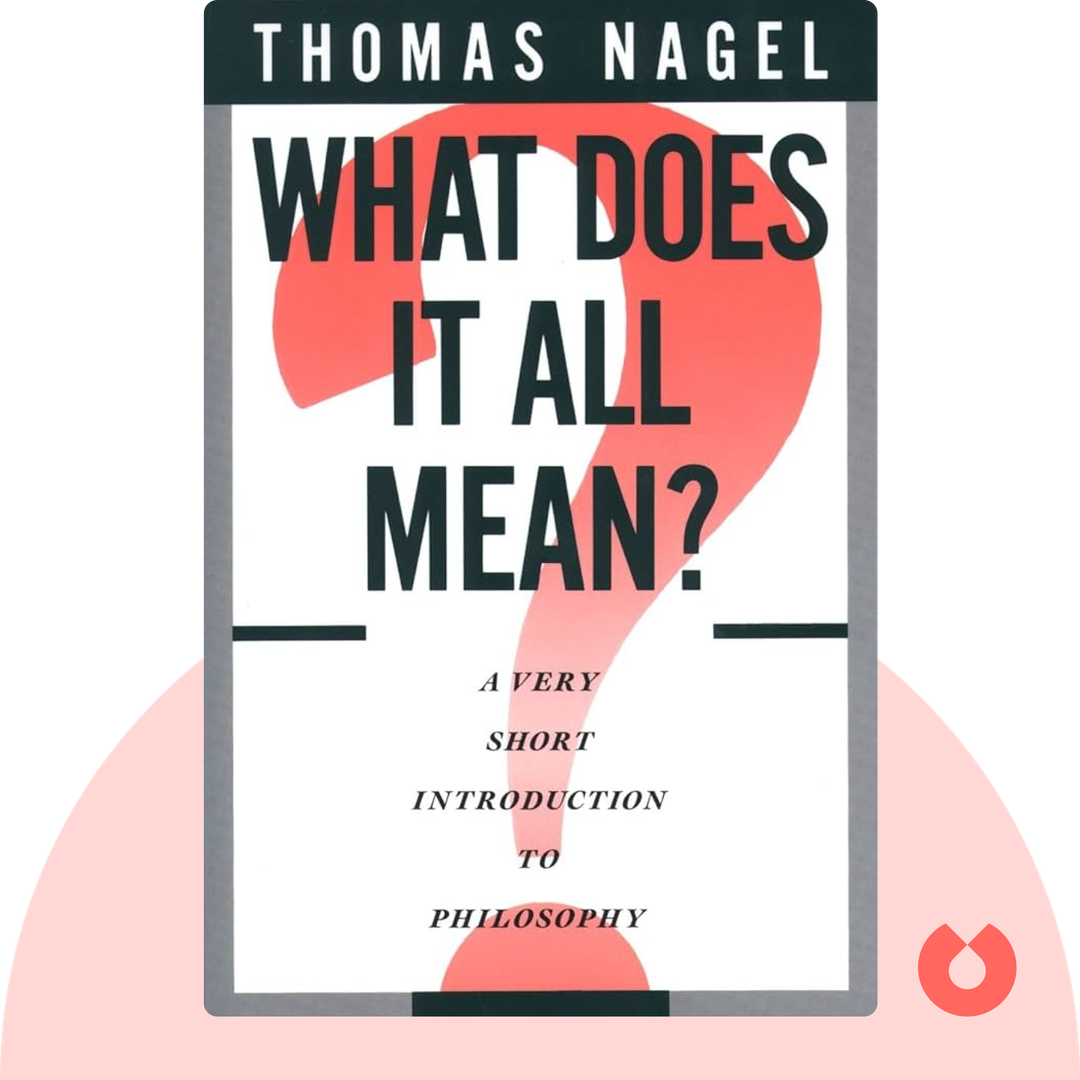
What Does It All Mean?
Start ListeningDownload Try free on iPhoneScan to start in 5 seconds
Categories:
If You're Curious About These Questions...
You should listen to this audiobook
- Have you ever wondered if you can actually prove that the world around you exists, or if it’s all just a trick of your own mind?
- What if your sense of free will is just an illusion and every choice you make is actually predetermined by the laws of science?
- Are you curious about how we can find genuine meaning in life when the universe itself seems to offer no easy answers?
Listen to What Does It All Mean? — Cinematic Audio Edition
Loading player...
Key Takeaways from What Does It All Mean?
- Discover how questioning the foundational nature of reality can sharpen your critical thinking and deepen your appreciation for your lived experiences.
- Understand the philosophy of solipsism and learn why accepting that your physical reality could be a mental illusion fosters valuable intellectual humility.
- Explore the profound enigma of other minds and discover why it is fundamentally impossible to verify if others experience sensations like color or taste exactly as you do.
- Approach daily interactions with newfound curiosity by acknowledging that you can never definitively prove the conscious inner lives of the people around you.
- Examine the complex debate between free will and determinism to evaluate whether your everyday decisions are truly autonomous or inescapably preordained.
Learning Tools
Reinforce what you learned from What Does It All Mean?
Mind Map
What Does It All Mean?
Nature of Reality+
The Enigma of Other Minds+
Free Will vs. Determinism+
Roots of Morality+
Meaning of Death+
Quiz — Test Your Understanding
Question 1 of 5
According to the text, what is the philosophical stance of 'solipsism'?
Question 2 of 5
When discussing the 'enigma of other minds,' what troubling extreme notion does the author suggest you might encounter?
Question 3 of 5
What dilemma does the text raise about the relationship between free will and random chance?
Question 4 of 5
According to the text, what forms the foundation of ethical conduct when balancing your interests with others?
Question 5 of 5
How does the text address the common worry that people cannot truly imagine their own non-existence after death?
What Does It All Mean? — Full Chapter Overview
- 1Recommendation
- 2Is everything merely a creation of your mind?
- 3The mystery of other minds
- 4Do we truly possess free will?
- 5The deeper foundations of right and wrong
- 6Is death the end or a transition?
What Does It All Mean? Summary & Overview
What Does It All Mean? (1987) invites you to explore some of the most intriguing philosophical questions. You’ll engage with ideas about reality, the certainty of knowledge, and the nature of free will, challenging what you know and expanding your view of life’s mysteries. This thoughtful examination of philosophical ideas will refine your critical thinking and deepen your appreciation for the human experience.
Who Should Listen to What Does It All Mean??
- Philosophy enthusiasts
- Skeptics and critical thinkers
- Students of the human mind
Books Similar to What Does It All Mean?
Readers who enjoyed this also liked these titles.