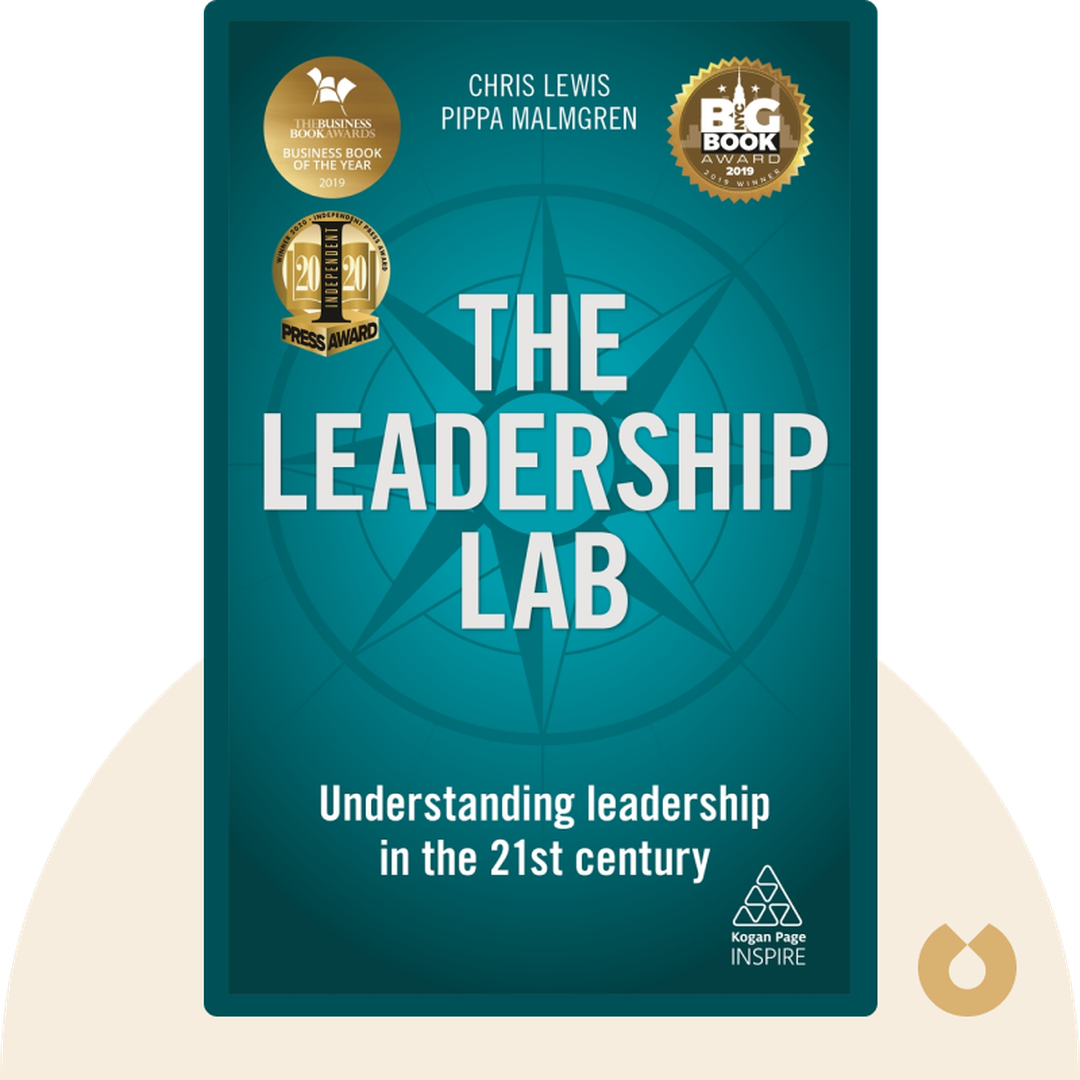
If You're Curious About These Questions...
You should listen to this audiobook
- Have you ever wondered why traditional leadership strategies are failing to keep up with the rapid, unpredictable shifts of the 21st century?
- What’s the secret to fostering genuine trust and high participation within a team when the global landscape feels more unstable than ever?
- Did you know that the most effective leaders today are those who have mastered a specific, unconventional way of navigating modern geopolitical chaos?
Listen to The Leadership Lab — Free Audiobook
Loading player...
Key Takeaways from The Leadership Lab
- Master the balance of effective leadership by combining data-driven, analytical left-brain logic with the intuitive, big-picture creativity of the right brain.
- Discover why stepping away from your desk and taking a break from active problem-solving is the secret to unlocking your best creative ideas and eureka moments.
- Learn how constant information overload causes leaders to make rushed, misguided decisions, and why you must intentionally disconnect to ask the right questions.
- Understand why high-level economic statistics often hide the daily financial struggles of your team, and how acknowledging this reality builds vital trust and credibility.
- Find out how to navigate a technology-driven world that demands immediacy by improving your communication skills and deliberately practicing patience.
Learning Tools
Reinforce what you learned from The Leadership Lab
Mind Map
The Leadership Lab
Cognitive Leadership+
Leading in a Changing World+
Emotional Intelligence+
Team Dynamics & Inclusion+
Quiz — Test Your Understanding
Question 1 of 8
According to the authors, when do leaders typically experience their best 'eureka' moments?
Question 2 of 8
How does the constant bombardment of information negatively impact leadership decision-making?
Question 3 of 8
Why is it dangerous for a leader to focus solely on high-level positive economic figures?
Question 4 of 8
In a world accustomed to immediate technological gratification, how should leaders adapt their communication and behavior?
Question 5 of 8
How does practicing mindfulness help leaders manage an increasingly 'angry world'?
Question 6 of 8
What lesson do the authors draw from the story of Frankenstein regarding data and technology?
Question 7 of 8
According to the book, what is a common double standard women face in the workplace regarding confidence?
Question 8 of 8
What actionable advice does the final summary offer to help leaders make conflict resolution easier?
The Leadership Lab — Full Chapter Overview
- 1Recommendation
- 2Effective leadership needs both analytical rigor and imaginative, right-brain thinking too.
- 3Confronted with information overload, leaders must decide when to stop consuming and when to start posing insightful questions instead.
- 4The economy’s headline facts and their real impact on people frequently conflict with one another quite sharply in practice.
- 5In an age obsessed with immediacy, leaders must sharpen communication skills and consistently model patience publicly.
- 6Existing in an angrier world today demands that leaders harness mindfulness, empathy, and strong conflict-resolution skills effectively.
- 7Progress in data and technology offers leaders chances to both shape our future and ensure it remains protected for all safely.
- 8Tackling gender dynamics and inequality at work boosts efficiency and fully maximizes potential overall.
The Leadership Lab Summary & Overview
The Leadership Lab (2018) takes a look at key changes in our century, the positive and negative effects they’re having, and how leaders can navigate them. The blinks to The Leadership Lab also give leaders direction on how to communicate effectively, maximize the efficiency of teams and encourage participation, as well as how to demonstrate patience and foster trust.
Who Should Listen to The Leadership Lab?
- Leaders who want to understand world trends and their impact better
- Managers who want to prepare themselves and their teams for the future
Books Similar to The Leadership Lab
Readers who enjoyed this also liked these titles.