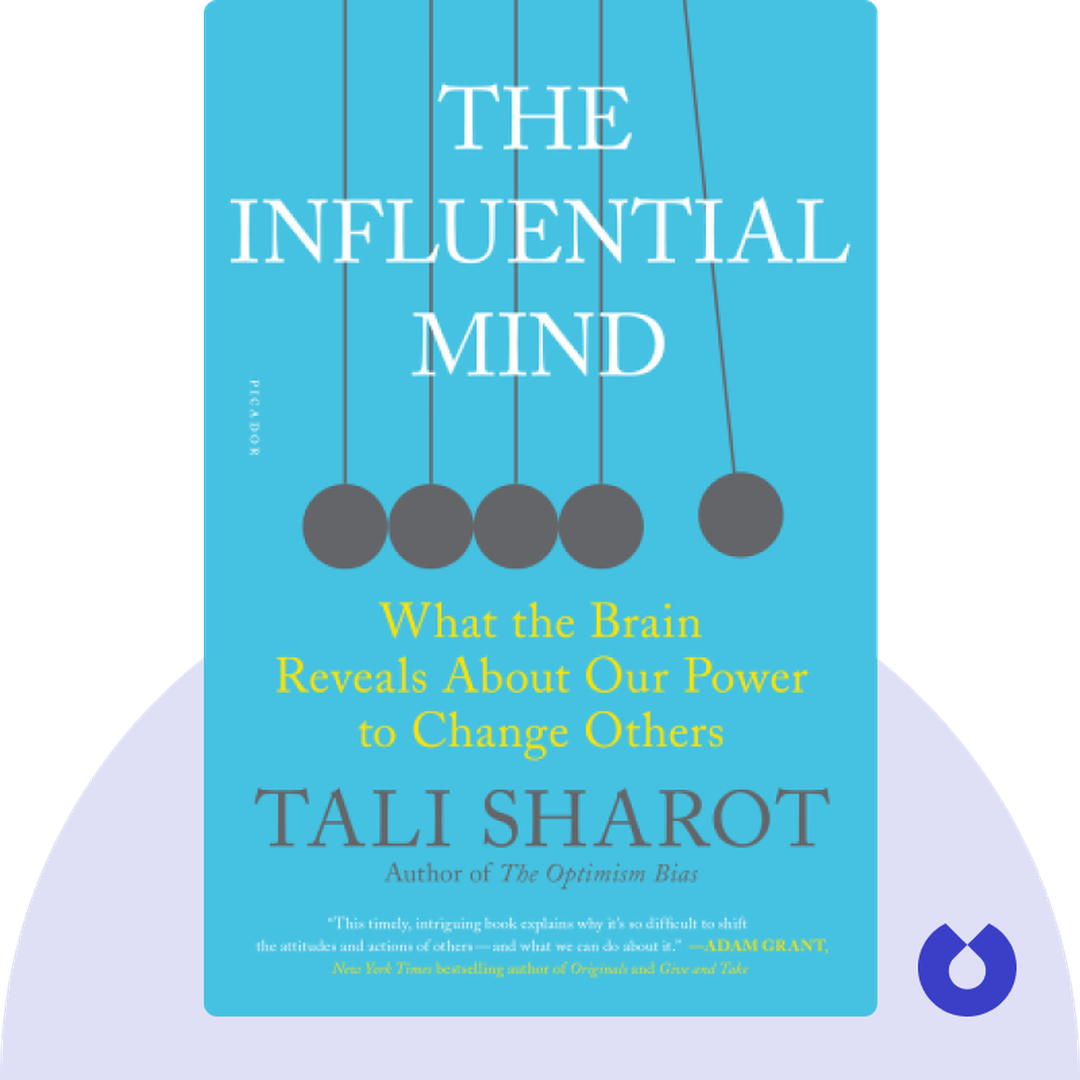
If You're Curious About These Questions...
You should listen to this audiobook
- Why does the human brain literally decrease its activity when presented with evidence that contradicts a recently made decision?
- What is the most scientifically effective way to change someone's mind when they stubbornly hold onto a deeply rooted, debunked prejudice?
- Why do threats of negative consequences make our brains sluggish, while the promise of a reward sharply increases our reflexes and alertness?
Listen to The Influential Mind — Free Audiobook
Loading player...
Key Takeaways from The Influential Mind
- Once a decision is made, the brain's activity physically drops when exposed to contradictory information, acting as a natural defense mechanism against admitting a mistake.
- To successfully change deeply rooted beliefs, it is far more effective to introduce new, factual information rather than attempting to argue against or debunk existing prejudices.
- Human brains are emotionally synchronized, meaning that both positive and negative moods are highly contagious in physical workplaces and virtual environments alike.
- Because the brain is hardwired to seek pleasure, people respond with much more agility and alertness to the promise of a reward than to the threat of a punishment.
- People are significantly happier and more compliant when they feel a sense of agency, making shared progress and positive feedback far more effective than direct orders.
Learning Tools
Reinforce what you learned from The Influential Mind
Mind Map
The Influential Mind
Beliefs & Prejudices+
Emotional Contagion+
Motivation+
Agency & Control+
Value & Creation+
Attention & Delivery+
Quiz — Test Your Understanding
Question 1 of 7
According to the stock market study mentioned in the text, how do people typically react when they receive negative information about an investment decision they have already committed to?
Question 2 of 7
What did researchers find is the most effective way to change someone's mind when they hold a stubborn, misguided belief, such as the belief that vaccines cause autism?
Question 3 of 7
What was the main finding of the 2012 Facebook study regarding the manipulation of user news feeds?
Question 4 of 7
Based on the study where a man named Edvard was asked to press a button when certain images appeared, how does the human brain respond differently to potential rewards versus potential losses?
Question 5 of 7
How did a hospital successfully increase the hand-washing compliance rate of its medical personnel from 38 percent to nearly 90 percent?
Question 6 of 7
What does the 'Ikea effect' demonstrate about human psychology and the value we place on objects?
Question 7 of 7
Why did airlines start using goofy videos, catchy cartoons, and stand-up comedians to deliver pre-flight safety instructions?
The Influential Mind — Full Chapter Overview
- 1Recommendation
- 2People’s habits are quite rigid, and this stubbornness is built into our brains.
- 3Some prejudices are deeply rooted, and the best way to overcome them is to share new ideas.
- 4Our brains are emotionally linked, so both positive and negative moods spread easily.
- 5Both animals and humans are programmed to pursue pleasure – a rule that can’t be undone.
- 6People feel more satisfied when they believe they’re in charge.
- 7We cherish things more when we’ve created them ourselves, even if our part was small.
- 8We believe people notice vital information, but in truth they focus on what entertains them.
The Influential Mind Summary & Overview
The Influential Mind (2017) is about the often surprising and sometimes inflexible ways in which the human brain operates. As the esteemed neuroscientist and author Tali Sharot points out, having a better understanding of how the brain works can provide us with better control over our day-to-day lives and a deeper appreciation of the human experience.
Who Should Listen to The Influential Mind?
- Students of neuroscience and psychology
- Managers and HR personnel
- Those who want more control over their lives
Books Similar to The Influential Mind
Readers who enjoyed this also liked these titles.