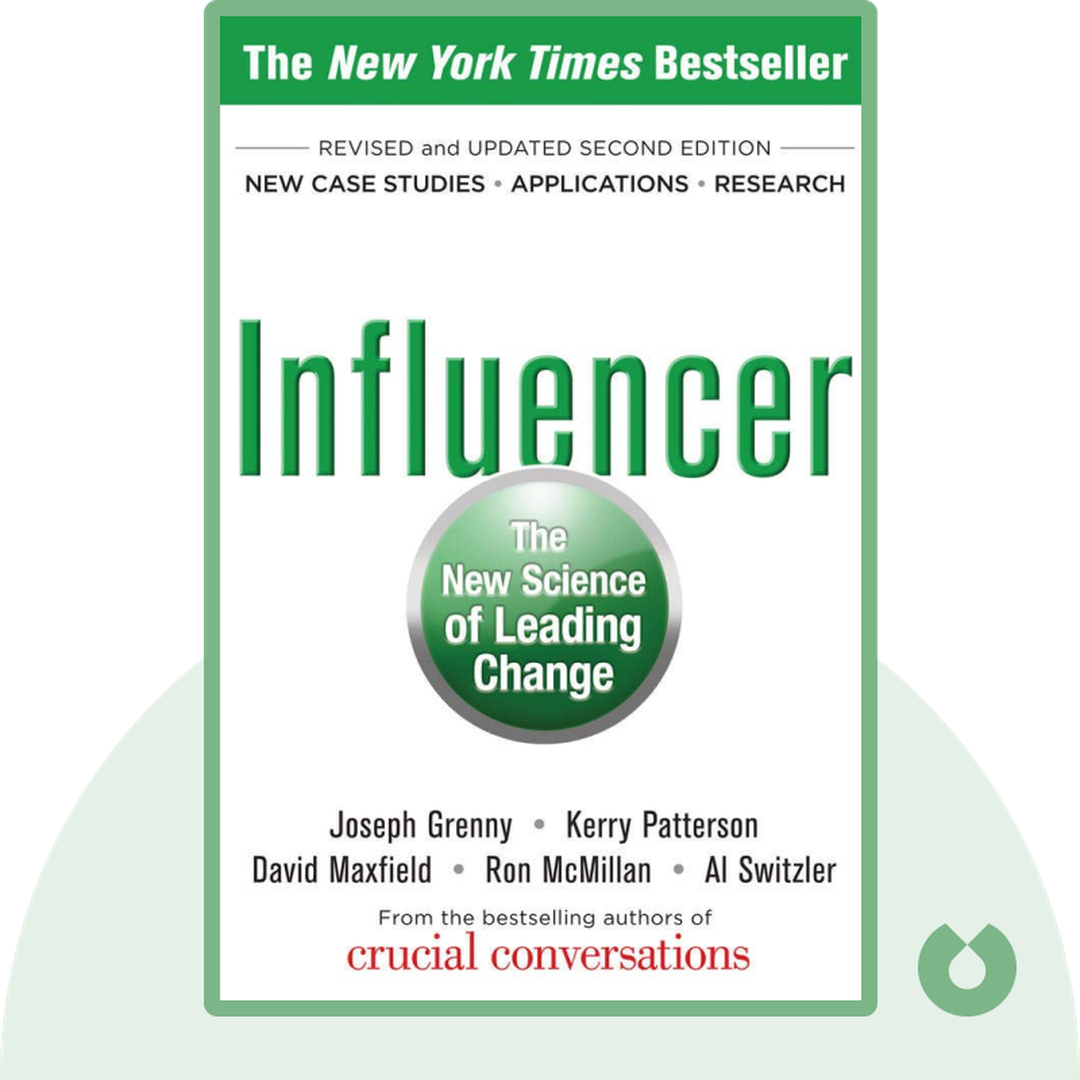
If You're Curious About These Questions...
You should listen to this audiobook
- What if you could solve even the most deep-seated problems by identifying just two or three "vital behaviors" that spark a massive chain reaction of change?
- Did you know that most people fail to change behavior because they only use one or two sources of influence, when there are actually six hidden levers you can pull to guarantee success?
- Have you ever wondered why some people possess the almost "magical" ability to sway an entire organization’s culture, and how you can learn to harness that same social power?
Listen to Influencer — Free Audiobook
Loading player...
Key Takeaways from Influencer
- Learn how to drive massive change by setting a tangible, measurable goal with a clear timeframe, and focusing your efforts on just two or three high-impact behaviors.
- Discover how to persuade others without triggering resistance by using motivational interviewing techniques and asking open questions that guide people to change on their own terms.
- Understand the power of direct experience and relatable storytelling to inspire profound self-reflection and reinforce a person's commitment to changing their actions.
- Find out how to leverage the social environment by grouping individuals together around a shared ambition, allowing them to collaborate and solve complex problems collectively.
- Master the strategic use of small, thoughtful rewards to amplify intrinsic motivation and encourage people to accomplish difficult transformations.
Learning Tools
Reinforce what you learned from Influencer
Mind Map
Influencer
Pinpoint Goals & Behaviors+
Personal Motivation & Persuasion+
Social Environment & Teamwork+
Strategic Use of Rewards+
Environmental & Spatial Influence+
Power of Objects & Packaging+
Quiz — Test Your Understanding
Question 1 of 8
What is a crucial first step for an influencer when trying to effect positive change, according to the text?
Question 2 of 8
How did Dr. Wiwat successfully reduce the AIDS rate in Thailand?
Question 3 of 8
When verbal persuasion fails to change behavior, what alternative technique does the book suggest using, as demonstrated by Dr. Don Berwick with hospital CEOs?
Question 4 of 8
In software-development culture, what is the value of being the 'project chicken'?
Question 5 of 8
According to the overjustification hypothesis, what is a potential danger of using rewards to change behavior?
Question 6 of 8
If a leader wants to develop a close rapport with their employees, how should they utilize physical space?
Question 7 of 8
How does John Stacey Adams' equity theory explain the effectiveness of giving away 'freebies'?
Question 8 of 8
What does the example of the 'fill to here' line in international shipping containers demonstrate?
Influencer — Full Chapter Overview
- 1Recommendation
- 2To influence people effectively, first understand what it means to be a true influencer.
- 3Influence people through storytelling, motivational techniques, and direct experience.
- 4When individuals can’t be influenced, changing the social environment may be the answer.
- 5Great influencers use rewards constructively.
- 6Changing someone’s surroundings is a subtle but powerful way to influence them.
- 7Influencers recognize how objects affect behavior.
- 8Final summary
Influencer Summary & Overview
Influencer (2007) distills the essence of how influence works. In addition to providing examples of real people who are highly adept at affecting change, the authors present information rooted in psychology research and give you the tools you need to increase your influence over others.
Who Should Listen to Influencer?
- People working in customer service
- Anyone working in public or social policy
- Psychology and sociology students
Books Similar to Influencer
Readers who enjoyed this also liked these titles.