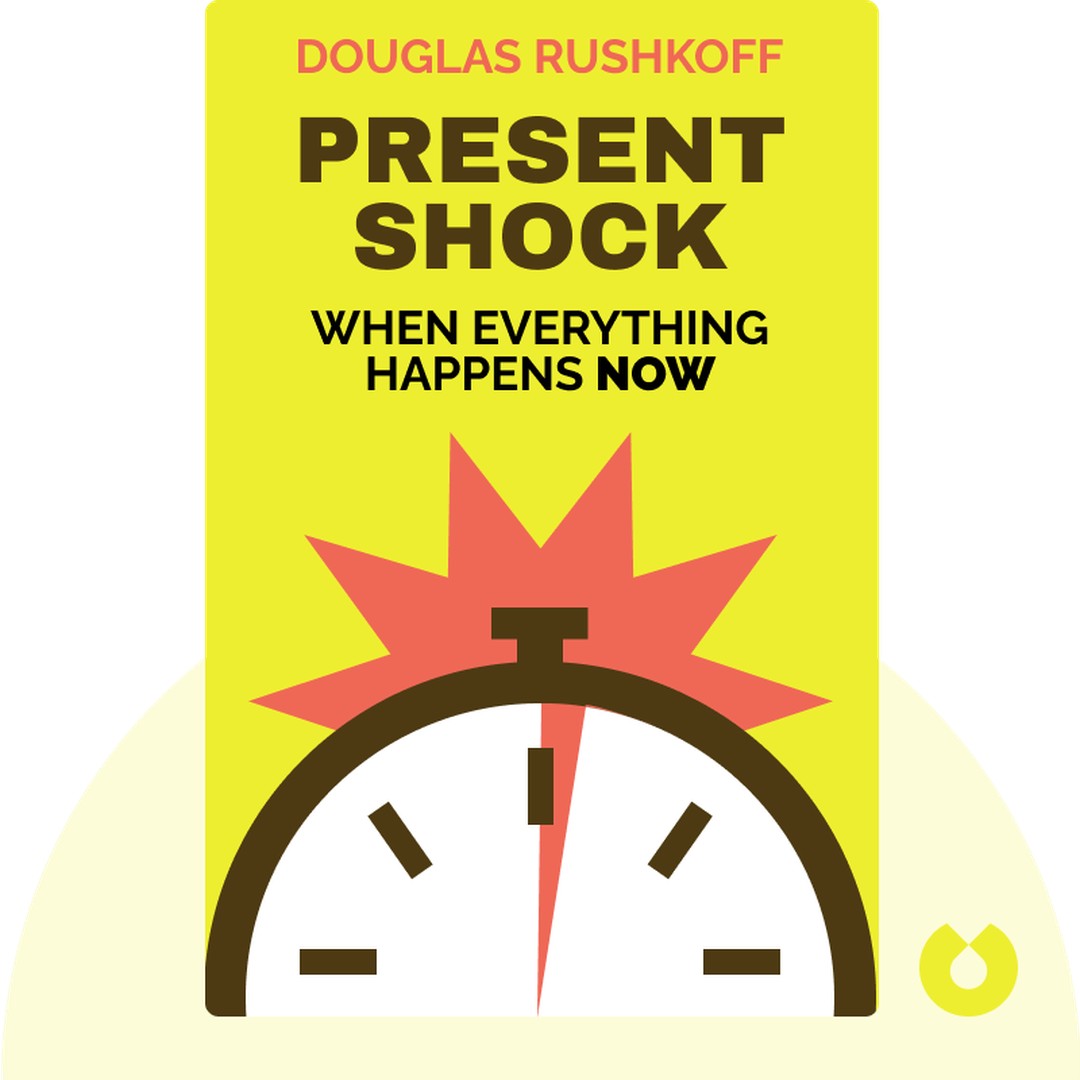
If You're Curious About These Questions...
You should listen to this audiobook
- How did the 20th-century anxiety of 'future shock' transform into our modern state of 'present shock,' and why has this shift caused us to abandon long-term planning in favor of instant gratification?
- Why has modern society grown to distrust traditional, linear narratives like the 'hero's journey,' and how does our digital technology fuel a preference for fragmented storytelling?
- What is 'digiphrenia,' and how does managing multiple digital identities or experiencing rapid context-switching—such as a drone pilot commuting from a virtual warzone to the family dinner table—distort our mental health and perception of reality?
Listen to Present Shock — Free Audiobook
Loading player...
Key Takeaways from Present Shock
- The rapid pace of technological change has shifted our culture from 'future shock' to 'present shock,' leaving us disoriented and obsessed with immediate gratification over long-term planning.
- Disillusionment with manipulative political and advertising narratives has caused a cultural shift away from traditional, linear storytelling toward fragmented media consumption.
- We now experience 'digiphrenia,' a state of digitally fragmented identity where we simultaneously maintain multiple online personas across different virtual spaces.
- Digital technology has broken the pre-digital concept of linear time, pulling us out of our physical environments through constant streams of real-time information.
- The extreme mental toll of navigating multiple realities at once is evident in modern roles, such as drone pilots who experience high rates of PTSD from rapidly switching between remote combat and domestic life.
Learning Tools
Reinforce what you learned from Present Shock
Mind Map
Present Shock
Shift from Future to Present+
Fragmented Storytelling+
Digiphrenia & Identity+
Distraction & Time Distortion+
Muddled Timescales+
Quiz — Test Your Understanding
Question 1 of 5
According to the text, how does 'present shock' differ from Alvin Toffler's concept of 'future shock'?
Question 2 of 5
What is the primary reason provided for why modern audiences have grown to distrust traditional, linear stories?
Question 3 of 5
In the context of the book, what does the term 'digiphrenia' refer to?
Question 4 of 5
How do constant real-time notifications, such as those from Facebook or Twitter, distort our experience of the present moment?
Question 5 of 5
According to Stewart Brand's concept of timescales, how has 'present shock' negatively impacted the realm of politics and governance?
Present Shock — Full Chapter Overview
- 1Recommendation
- 2The Moment That Never Ends
- 3When Stories Stop Working
- 4The Split Self of Digital Time
- 5Bodies That Refuse the Program
- 6The Short Forever
- 7Money, Markets, and the Pressure to Grow
- 8Seeing Patterns Everywhere
- 9The Lure of the End
- 10Press Pause
Present Shock Summary & Overview
These blinks are all about the mental and emotional state we all live in thanks to our rapidly changing technological culture. Present Shock (2013) explains the roots of this problem and what it means for our mental well-being.
Who Should Listen to Present Shock?
- Anyone interested in technology, the media or digital culture
- Students of psychology, sociology or politics
Books Similar to Present Shock
Readers who enjoyed this also liked these titles.