If You're Curious About These Questions...
You should listen to this audiobook
- Did you know that the most effective team players share three specific virtues that are far more important than their technical skills?
- What’s the secret to identifying a 'poisonous' hire during an interview before they have the chance to ruin your team's chemistry?
- Have you ever wondered why some high-performing individuals struggle to collaborate, and how you can fix that dynamic permanently?
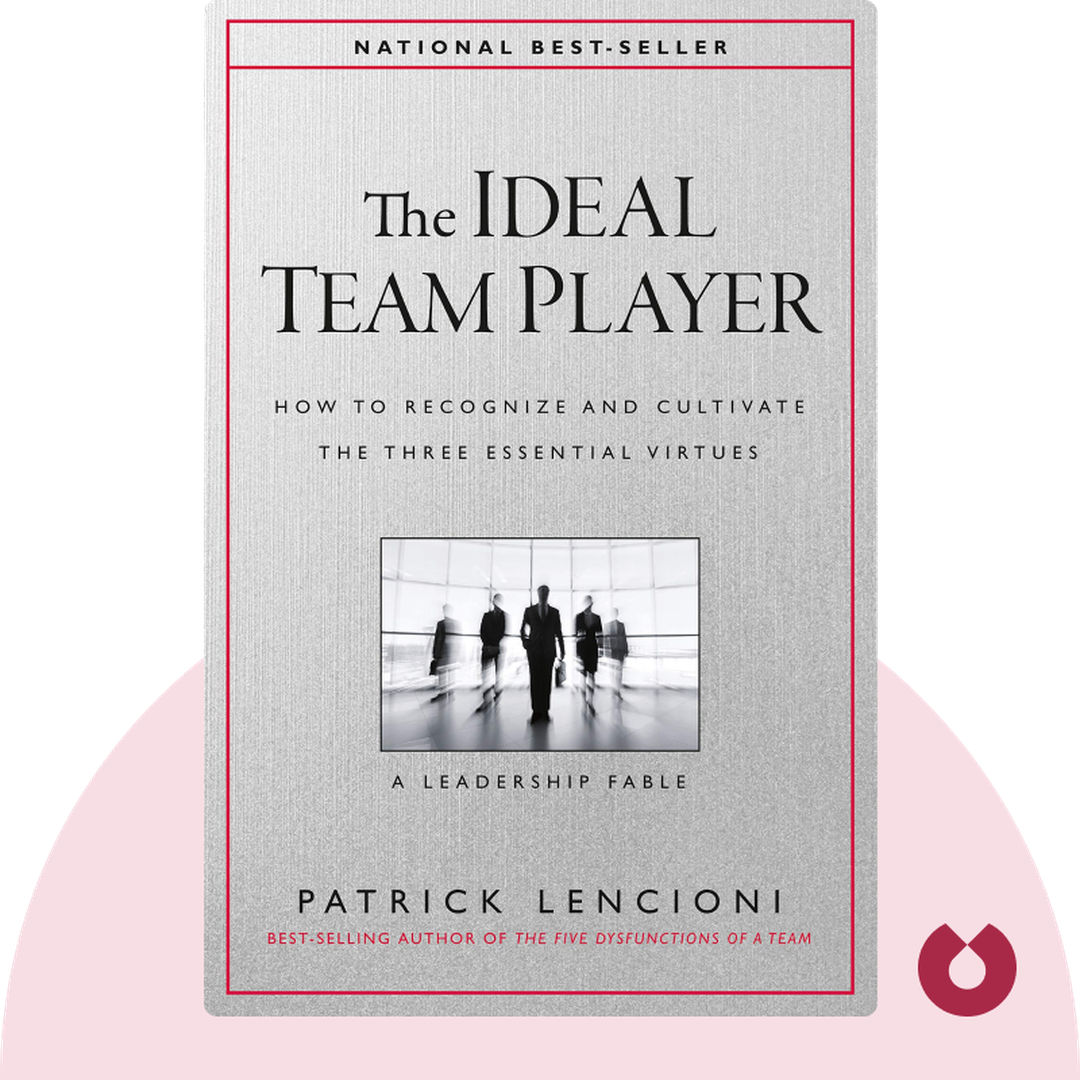
Listen to The Ideal Team Player — Cinematic Audio Edition
Loading player...
Key Takeaways from The Ideal Team Player
- Discover the three underrated virtues—being humble, hungry, and smart—that form the foundation of an ideal team player and drive exponential organizational productivity.
- Understand that ideal team players are made, not born, and learn how anyone can actively develop the traits needed to be vulnerably trustworthy and engage in healthy conflict.
- Learn how business leaders can specifically identify humble, hungry, and smart attributes during recruitment to consciously build a thriving team culture.
- Find out how identifying and resolving 'skewness in teamwork' among your managers can save major company projects from missed deadlines and lagging progress.
- Recognize the measurable value of listening to your team, as making employees feel their opinions count can decrease turnover by 27% and greatly reduce safety incidents.
Learning Tools
Reinforce what you learned from The Ideal Team Player
Mind Map
The Ideal Team Player
The Teamwork Imperative+
The 5 Dysfunctions of a Team+
The 3 Essential Virtues+
Hiring for the Virtues+
Developing Employees & Culture+
Quiz — Test Your Understanding
Question 1 of 8
According to the text, what is the root cause of an 'absence of trust' within a dysfunctional team?
Question 2 of 8
What happens when a team lacks accountability?
Question 3 of 8
Why is it often difficult to instill 'hunger' in an employee who currently lacks it?
Question 4 of 8
In the context of the ideal team player, what does it mean for an employee to be 'smart'?
Question 5 of 8
How does a lack of humility typically manifest as one of the five dysfunctions of a team?
Question 6 of 8
What is a recommended strategy for identifying if a candidate possesses humility during the interview process?
Question 7 of 8
Why does the author recommend having a team present during an interview, rather than just one person?
Question 8 of 8
When addressing an employee who lacks one of the essential team player virtues, what approach does the actionable advice recommend?
The Ideal Team Player — Full Chapter Overview
- 1Recommendation
- 2A roster of stars who cannot collaborate will frequently fail. Discover the five core signs of dysfunctional teams.
- 3An ideal teammate is driven, a person who craves extra work and constantly strives to always exceed what’s required.
- 4Strong team players possess social savvy, since those who get along collaborate much better.
- 5Excellent team players show humility, placing the team’s needs and goals ahead of themselves.
- 6When interviewing a potential hire, verify that the candidate clearly demonstrates all three virtues.
- 7Identify and grow the three virtues in employees, embedding them within your entire company culture.
The Ideal Team Player Summary & Overview
The Ideal Team Player (2016) explores the role teamwork plays in today’s business environment and shows you how to build a team geared for success. These blinks explain what makes a good team player, how to find them and which strategies you’ll need to build a company around the concept of teamwork.
Who Should Listen to The Ideal Team Player?
- Human resources specialists and business leaders
- Professionals curious about their capacity teamwork
- Employees struggling with team relations at work
Books Similar to The Ideal Team Player
Readers who enjoyed this also liked these titles.