If You're Curious About These Questions...
You should listen to this audiobook
- Have you ever wondered why some groups feel effortlessly energizing and effective while others feel fragmented, even when everyone is talented?
- What’s the secret to building a shared understanding that keeps a team coordinated and calm when things start to go wrong?
- Did you know that having the right mix of capabilities is only half the battle, and that specific leadership habits are what actually unlock a team's true potential?
Listen to Teams That Work — Free Audiobook
Key Takeaways from Teams That Work
- Discover why the 'magic' of successful teams isn't driven by luck, but by predictable and repairable dynamics like clear roles, trust, and shared purpose.
- Master the ability to shift your perspective on teamwork challenges, replacing personal blame with a curiosity to diagnose missing elements like clarity or skills.
- Learn how to cultivate a highly effective group by balancing two essential ingredients: the quiet glue of interpersonal connection and the precise competencies required for the mission.
- Realize how every collaborative experience leaves a lasting mark, significantly impacting a person's willingness and eagerness to participate in future teams.
- Understand the critical importance of shared understanding, where clearly defined roles and a transparent vision prevent confusion, coordinate action, and protect team trust.
Learning Tools
Reinforce what you learned from Teams That Work
Mind Map
Quiz — Test Your Understanding
Teams That Work — Full Chapter Overview
- 1Recommendation
- 2Pulling Back the Curtain on Team Success
- 3The Quiet Glue of Connection and Competence
- 4Shared Understanding: The Map Teams Move By
- 5Building Strength: Individual Skills, Team Skills, and Belief
- 6Leadership that Creates Trust, Not Turf Wars
- 7The Seven Interlocking Drivers of Team Effectiveness
- 8Bringing It All Together with Clarity and Care
Teams That Work Summary & Overview
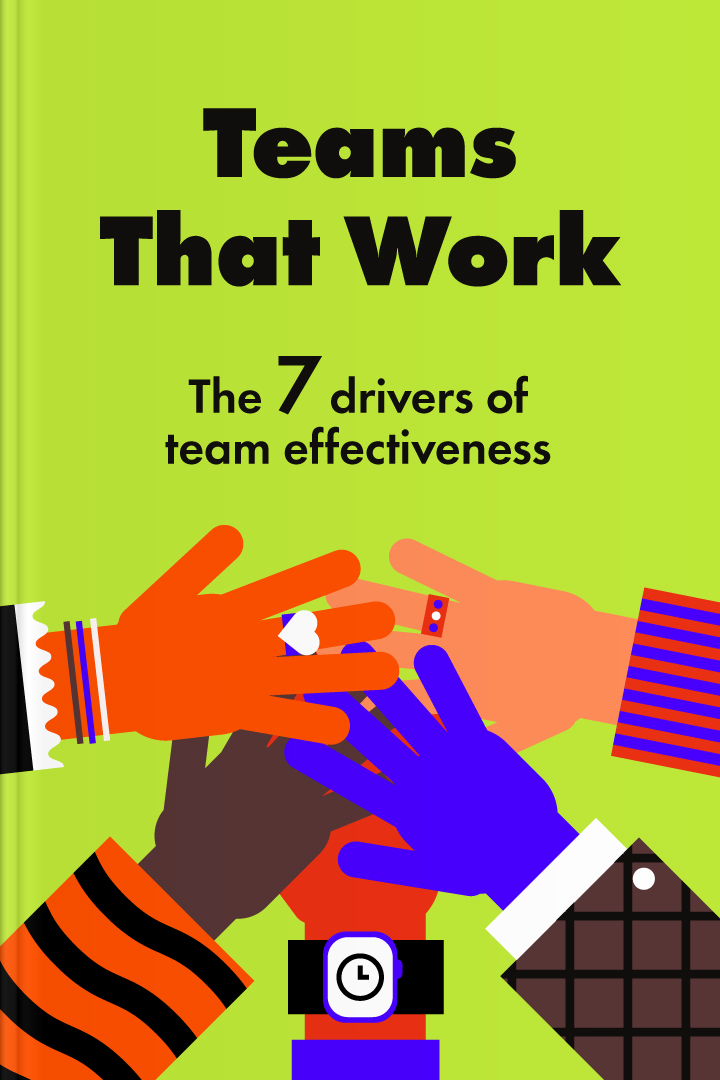
This warm audio summary explores the inner workings of successful teams—what helps people coordinate, communicate, and perform well together, even when challenges arise. Along the way, it highlights the importance of shared understanding, trust, the right mix of capabilities, and leadership that builds collaboration instead of competition.
Across seven chapters, you’ll hear a clear, supportive guide to the key drivers of team effectiveness, with simple examples that make the ideas easy to recognize in everyday life—at work, in families, and in any group with a shared purpose. The focus stays practical: what to notice, what to strengthen, and how to create conditions where people can do their best work together.
Who Should Listen to Teams That Work?
- Team members who want to communicate more clearly, build trust, and understand how to contribute their strengths.
- Managers and leaders who want practical ways to create the right conditions for teamwork and performance.
- Anyone curious about why some groups feel energizing and effective while others feel confusing or fragmented.
Books Similar to Teams That Work
Readers who enjoyed this also liked these titles.