If You're Curious About These Questions...
You should listen to this audiobook
- What’s the secret to transforming a struggling group into a high-performance powerhouse where every single member takes ownership like a leader?
- Have you ever wondered why some teams naturally thrive while others face constant turnover and low employee commitment?
- Are you curious about the specific five-stage model that can turn your workplace into an environment of peak productivity and deep engagement?
Listen to A Team of Leaders — Free Audiobook
Loading player...
Key Takeaways from A Team of Leaders
- Discover how to transform your traditional, hierarchical workplace into a self-managing team of leaders to combat employee disengagement.
- Master the five stages of shared leadership to successfully transition your employees from passive subordinates to self-sufficient decision-makers.
- Learn how to design your team to operate as a mini-business united under a shared mission, giving every employee a higher sense of purpose.
- Find out how to properly align your company's incentives, strategies, and rewards so that team members work collaboratively toward a unified goal.
- Understand the critical importance of distributing key, codifiable, and tacit knowledge across your organization so your team can function seamlessly.
Learning Tools
Reinforce what you learned from A Team of Leaders
Mind Map
A Team of Leaders
The Core Problem & Solution+
Five Stages of Shared Leadership+
Purpose-Driven Team Design+
Achieving Alignment+
Knowledge Democratization+
Visual Management & Workspace+
Actionable Advice+
Quiz — Test Your Understanding
Question 1 of 6
According to the text, what is the ultimate goal of transforming employees into a 'team of leaders'?
Question 2 of 6
In the five-stage team development model, what characterizes the fifth and final stage?
Question 3 of 6
What is the 'team value creation model' described in the text?
Question 4 of 6
Why did the company in the text's example fail to improve the quality of its products, resulting in an 'unaligned' team?
Question 5 of 6
How does the text recommend increasing the exchange of 'tacit knowledge' (beliefs and expertise) among team members?
Question 6 of 6
What is 'visual management' in the context of creating a supportive workspace?
A Team of Leaders — Full Chapter Overview
- 1Recommendation
- 2Achieve shared leadership in five stages.
- 3Design your team so every leader has a purpose.
- 4Align each leader’s incentives to strengthen the whole team.
- 5Give your team access to the knowledge they need.
- 6Your leaders need a workspace that supports them.
- 7Final summary
A Team of Leaders Summary & Overview
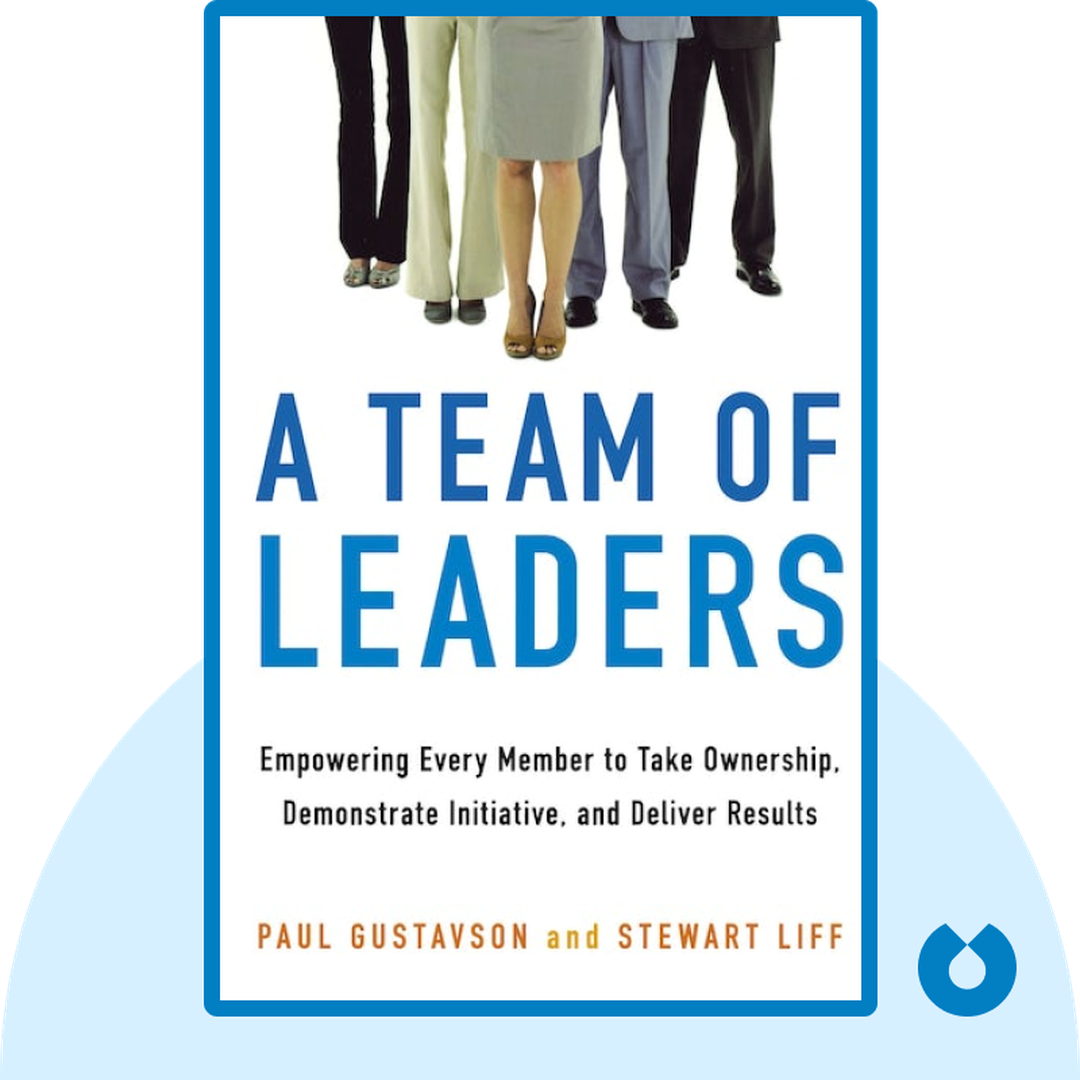
A Team of Leaders (2014) provides companies facing internal problems, such as lost productivity, high turnover and low employee commitment, with a powerful solution. These blinks outline practical methods and tools, including the five-stage team development model, to guide you toward an engaged and high-performance work environment.
Who Should Listen to A Team of Leaders?
- People seeking to improve employee engagement in their company
- Teams, clubs and other organizations looking to boost their performance
- Anyone interested in workplace dynamics
Books Similar to A Team of Leaders
Readers who enjoyed this also liked these titles.