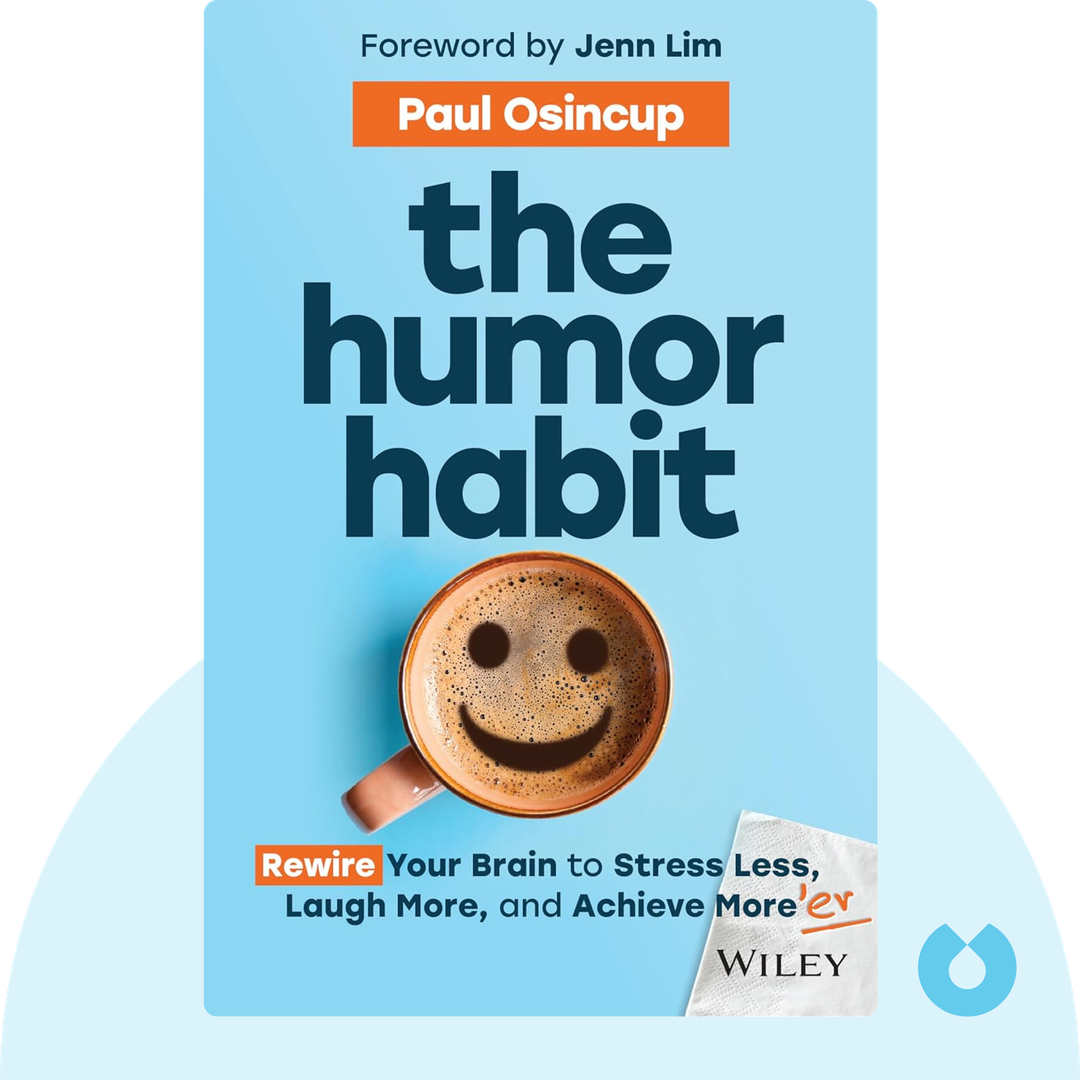
If You're Curious About These Questions...
You should listen to this audiobook
- What’s the secret to using humor as a professional superpower to boost team productivity without ever having to tell a single joke?
- Did you know that humor isn’t just a personality trait you’re born with, but a practical habit you can build to drastically improve your mental resilience?
- What if you could rewire your brain to find lightheartedness in high-stress situations, turning everyday frustrations into opportunities for connection and success?
Listen to The Humor Habit — Cinematic Audio Edition
Loading player...
Key Takeaways from The Humor Habit
- Discover how applying improv comedy principles like the 'Yes, and...' mentality can help you overcome chronic seriousness and transform everyday mistakes into opportunities.
- Learn why consciously consuming humor during a 15-minute work break can actually double your productivity and significantly reduce your daily stress.
- Find out how partnering with a 'Humor Homie' to exchange amusing content every day can seamlessly build your humor habit and enhance your overall well-being.
- Master the psychological priming effect by writing down three funny things each day, a simple practice proven to decrease depressive symptoms for up to six months.
- Understand how to amplify your joy through 'savoring' techniques, like creating a humor jar and playfully reframing past stressful experiences.
Learning Tools
Reinforce what you learned from The Humor Habit
Mind Map
The Humor Habit
Core Philosophy+
Improv Mindset+
Conscious Consumption+
Finding the Funny+
Playing with Pain+
Quiz — Test Your Understanding
Question 1 of 8
What is the fundamental premise of 'The Humor Habit' regarding a sense of humor?
Question 2 of 8
How does the improv comedy principle of 'noticing gifts' apply to everyday life?
Question 3 of 8
What common adult tendency often triggers a 'Yes, but...' or 'No' response, which the improv principle of 'Yes, and...' aims to overcome?
Question 4 of 8
According to the book, what is the effect of watching a funny video during a 15-minute work break?
Question 5 of 8
What is a 'Humor Homie' as described in the text?
Question 6 of 8
Research shows that participating in the 'Three Funny Things' challenge for just one week can have what long-term effect?
Question 7 of 8
Why does finding humor in past pain help provide cognitive distance?
Question 8 of 8
Which game is suggested as a way to reframe hardships and find a lighter perspective?
The Humor Habit — Full Chapter Overview
- 1Recommendation
- 2Own your mindset
- 3Consume consciously
- 4Find the humor
- 5Toy with pain
The Humor Habit Summary & Overview
The Humor Habit (2024) explores the transformative power of humor, emphasizing how incorporating humor can improve personal well-being, relationships, and workplace dynamics. It provides practical strategies and insights to help readers develop a habit of finding and using humor in various situations, promoting resilience and a positive mindset.
Who Should Listen to The Humor Habit?
- Workplace managers and leaders
- Mental health professionals
- Personal development enthusiasts
Books Similar to The Humor Habit
Readers who enjoyed this also liked these titles.