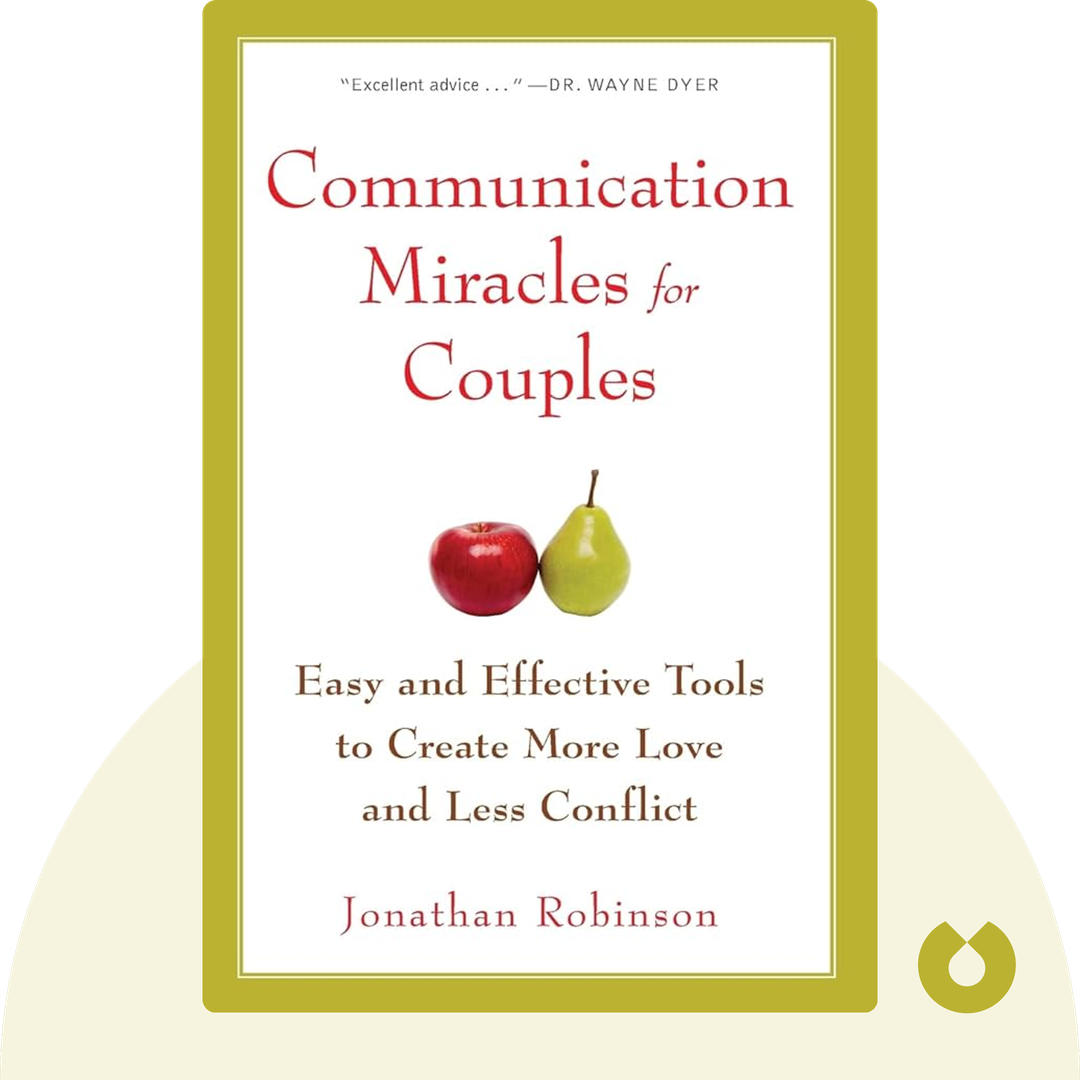
Communication Miracles for Couples
Start ListeningDownload Try free on iPhoneScan to start in 5 seconds
Categories:
If You're Curious About These Questions...
You should listen to this audiobook
- What's the secret to making your partner feel completely understood, even when you're in the middle of a major disagreement?
- Have you ever wondered why some couples can resolve intense conflicts in minutes while others stay stuck for days?
- What if you could use a simple three-minute technique to instantly deepen your emotional connection and bring back the spark in your relationship?
Listen to Communication Miracles for Couples — Free Audiobook
Loading player...
Key Takeaways from Communication Miracles for Couples
- Understand why maintaining your partner's 'self-esteem bank account' through consistent acknowledgment, appreciation, and acceptance is the key to preventing blame and resentment.
- Learn how to de-escalate arguments instantly by using a simple three-step verbal formula to validate your partner's feelings without triggering defensiveness.
- Discover how subtle nonverbal techniques, such as mirroring body language and synchronized breathing, can quickly build deep intimacy without speaking a single word.
- Find out how to release the destructive need to be 'right' by asking three powerful self-reflection questions that prioritize love over winning a debate.
- Master the ability to shift from blame to vulnerability using simple physical connection exercises like the 'Spoon Tune' to reestablish calm during stressful moments.
Learning Tools
Reinforce what you learned from Communication Miracles for Couples
Mind Map
Communication Miracles for Couples
The Three A's+
Nonverbal Connection+
Shifting from Blame to Vulnerability+
Encouraging Behavioral Change+
Rebuilding Trust+
Consistent Relationship Investment+
Quiz — Test Your Understanding
Question 1 of 8
According to the book, how should you view your partner's self-esteem during conflicts?
Question 2 of 8
What does the nonverbal communication exercise called 'electric sex' involve?
Question 3 of 8
When you feel the urge to prove your partner wrong during an argument, what specific exercise does the author recommend to build empathy?
Question 4 of 8
What is the primary purpose of the 'And what else?' communication method?
Question 5 of 8
How should you reframe a broad, negative statement like 'You only think of yourself' to encourage better communication?
Question 6 of 8
When requesting that your partner change a specific behavior, what is the recommended way to introduce the issue?
Question 7 of 8
What does it indicate if your partner's reading on the 'trust thermometer' drops below a six?
Question 8 of 8
What is a recommended practice to prevent small frustrations from building into long-term resentment?
Communication Miracles for Couples — Full Chapter Overview
- 1Recommendation
- 2Healthy relationships need acknowledgment, appreciation, and acceptance
- 3Nonverbal communication creates deep emotional bonds
- 4Letting go of the need to be right strengthens love
- 5Avoid blame and express vulnerability
- 6To inspire change, help your partner feel safe
- 7Trust breaks easily — but consistency can rebuild it
- 8Lasting love requires consistent investment in your relationship
- 9Final summary
Communication Miracles for Couples Summary & Overview
Communication Miracles for Couples (1997) offers practical strategies to help partners improve their communication and deepen their emotional connection. It focuses on simple yet powerful techniques for expressing feelings, listening effectively, and resolving conflicts with empathy and understanding. By fostering appreciation and clarity in conversations, it helps couples build stronger, more harmonious relationships.
Who Should Listen to Communication Miracles for Couples?
- Struggling couples seeking better communication skills
- Newlyweds eager to build a strong foundation
- Anyone interested in improving romantic relationships
Books Similar to Communication Miracles for Couples
Readers who enjoyed this also liked these titles.