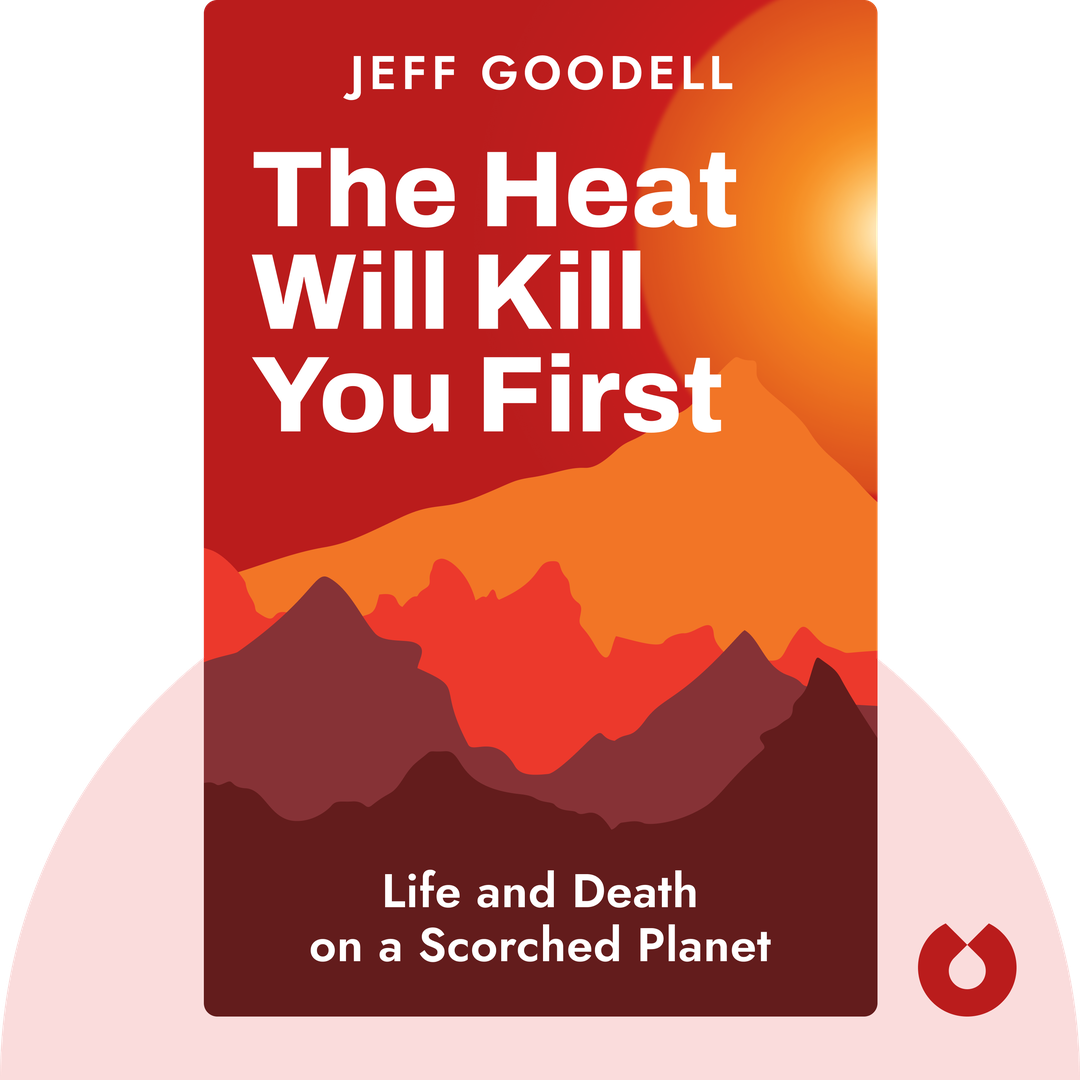
The Heat Will Kill You First
Start ListeningDownload Try free on iPhoneScan to start in 5 seconds
Categories:
If You're Curious About These Questions...
You should listen to this audiobook
- Did you know that there is a precise biological limit to how much heat the human body can endure before it simply stops functioning?
- Have you ever wondered why extreme heat is the most lethal climate disaster, yet remains almost entirely invisible until it’s too late?
- Are you curious about how rising temperatures are quietly dismantling our infrastructure and widening the gap between those who can afford to stay cool and those who can't?
Listen to The Heat Will Kill You First — Free Audiobook
Loading player...
Key Takeaways from The Heat Will Kill You First
- Discover why extreme heat is now the deadliest natural disaster, claiming more lives annually than all other natural disasters combined.
- Understand the stark link between poverty and climate vulnerability, as rising temperatures disproportionately threaten those who cannot afford protective measures.
- Explore how human evolution, specifically our unique ability to sweat, shaped our early survival—and why our biology is now struggling to keep up with modern climate change.
- Master crucial survival tactics for extreme heat, such as why hydration alone won't prevent heatstroke and how applying ice to your palms, soles, and face can save your life.
- Learn about the 'urban heat island effect' and how city infrastructure like concrete and asphalt can trap heat, making modern urban areas up to 20 degrees hotter at night than surrounding regions.
Learning Tools
Reinforce what you learned from The Heat Will Kill You First
Mind Map
The Heat Will Kill You First
The Lethal Reality of Extreme Heat+
Evolution and Biological Limits+
Survival Mechanics+
Urban Heat and Inequality+
Mass Migration and Displacement+
The Spread of Disease+
Hope and Collective Action+
Quiz — Test Your Understanding
Question 1 of 7
What evolutionary adaptation gave early humans a significant advantage when endurance hunting during the hottest parts of the day?
Question 2 of 7
Why does the author caution against taking medications like Tylenol or aspirin to treat heatstroke?
Question 3 of 7
What major factor makes the extreme heat in Chennai, India, fundamentally more dangerous than the heat in Phoenix, Arizona?
Question 4 of 7
How does extreme heat create a 'positive feedback loop' that worsens climate change in forested areas?
Question 5 of 7
According to the book, why is climate change expected to increase the rate of viral diseases jumping from animals to humans?
Question 6 of 7
What societal danger does the author warn about regarding future extreme heat deaths, drawing a parallel to the COVID-19 pandemic?
Question 7 of 7
Which of the following best summarizes Heather McTeer Toney's quote, 'We’re all in the storm, but we’re not in the same boat,' in the context of the book?
The Heat Will Kill You First — Full Chapter Overview
- 1Recommendation
- 2How temperature has shaped human evolution
- 3This knowledge could save your life
- 4Urban heat and heat migration
- 5Climate change drives the spread of disease
- 6A small glimmer of hope
- 7Final summary
The Heat Will Kill You First Summary & Overview
The Heat Will Kill You First (2023) warns that extreme heatwaves are becoming more common and will dramatically alter life as we know it – they’re an existential danger. Rising temperatures are already changing the planet, shortening seasons and intensifying disasters. Drawing on scientific research and reportage, it argues that intensifying heat will expose societal fault lines and threaten our communities in dire new ways. Extreme heat may be the most serious threat humanity has ever faced.
Who Should Listen to The Heat Will Kill You First?
- Concerned citizens who want to know more about the effects of climate change
- Policymakers who need to understand the social implications of intensifying heatwaves
- Environmental activists seeking evidence to convey the urgency of climate action
Books Similar to The Heat Will Kill You First
Readers who enjoyed this also liked these titles.