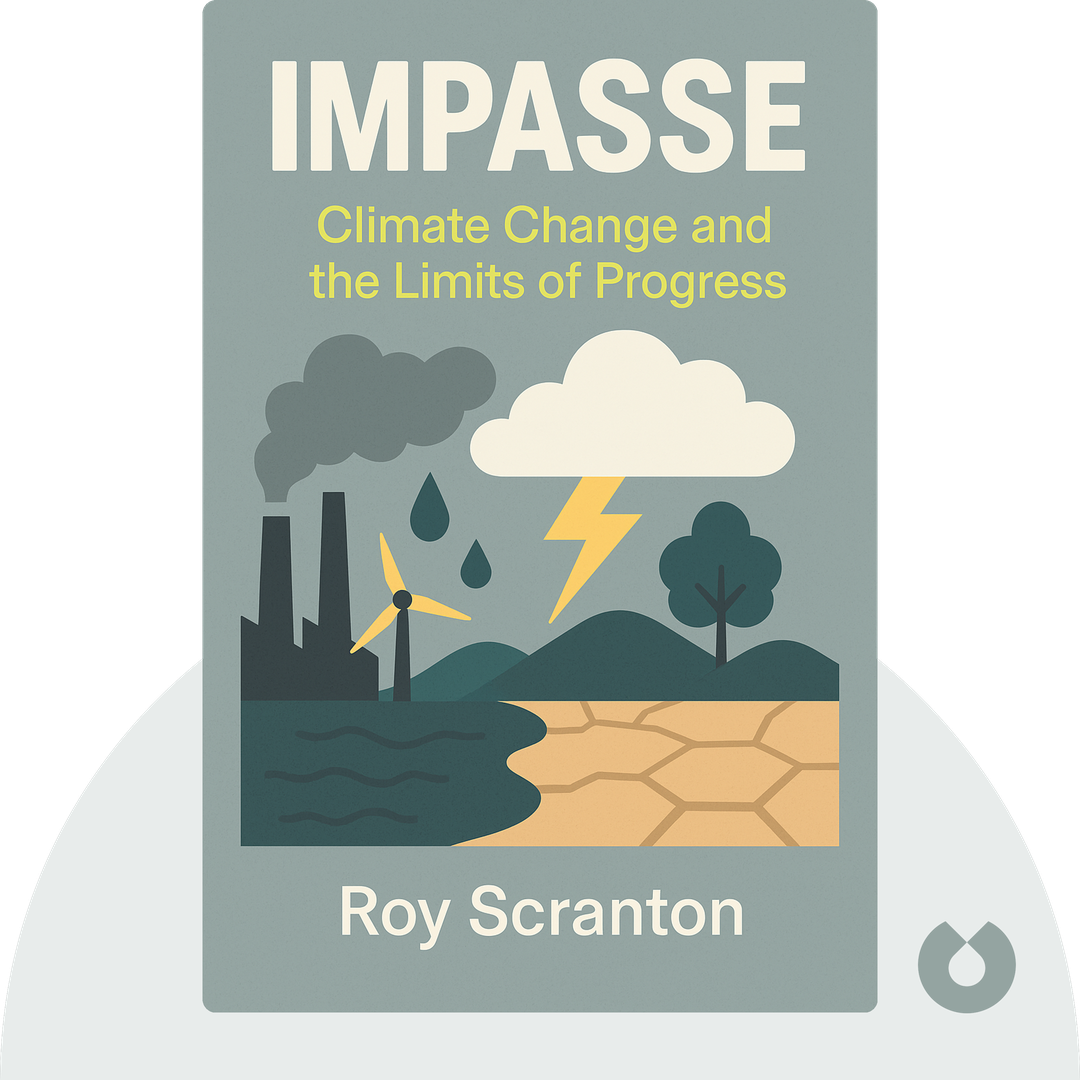
If You're Curious About These Questions...
You should listen to this audiobook
- Have you ever wondered why our deep-seated faith in "endless progress" might be the very thing preventing us from effectively facing the climate catastrophe?
- Did you know that the psychological mechanisms we use to maintain hope could actually be leaving us dangerously unprepared for the environmental reality we already inhabit?
- Are you curious about how acknowledging the true depth of our global impasse could open up a radical new path for navigating an uncertain future?
Listen to Impasse — Free Audiobook
Loading player...
Key Takeaways from Impasse
- Discover why our deeply ingrained faith in inevitable human progress blinds us to ecological limits and the harsh reality of climate change.
- Understand that the climate crisis isn't a sudden future disaster, but an ongoing 'Apocalypse 24/7' that requires us to abandon false optimism.
- Learn how traditional moral frameworks—like universal global citizenship or isolated lifeboat ethics—completely fail to address the interconnected complexity of global warming.
- Find out why forced positive messaging and our natural optimism bias create dangerous complacency, whereas realistic, fear-based warnings actually motivate action.
- Master the ability to live meaningfully and act ethically in bleak times by embracing uncertainty and letting go of the illusion of technological salvation.
Learning Tools
Reinforce what you learned from Impasse
Mind Map
Impasse
The Reality of Collapse+
Failure of Existing Frameworks+
The Danger of Optimism+
Ethical Pessimism+
Finding Meaning in Paradox+
Quiz — Test Your Understanding
Question 1 of 7
According to the text, what is the primary driver of humanity's material improvements over the past 250 years?
Question 2 of 7
How does the author describe the nature of climate change as it unfolds?
Question 3 of 7
Why do traditional moral frameworks, like those proposed by Peter Singer and Garrett Hardin, fail when applied to climate change?
Question 4 of 7
What does research indicate about the effectiveness of fear-based communication regarding climate change?
Question 5 of 7
What did the 1979 flashing green light experiment reveal about human psychology in the context of the climate crisis?
Question 6 of 7
What is the core philosophy of 'ethical pessimism' advocated in the book?
Question 7 of 7
What lesson does the author draw from Ursula K. Le Guin's story about the city of Omelas?
Impasse — Full Chapter Overview
- 1Recommendation
- 2Apocalypse, now?
- 3The collapse of global ethics
- 4Dangerous optimism
- 5Pessimism with hope
- 6How to survive the future
- 7Final summary
Impasse Summary & Overview
Impasse (2025) confronts the uncomfortable truth that humanity is utterly unprepared for climate catastrophe, despite mounting evidence of extreme weather transforming our planet. Instead of clinging to false optimism and faith in endless progress, it reveals how acknowledging the depth of the crisis might open new paths toward navigating our uncertain future.
Who Should Listen to Impasse?
- Climate activists seeking a more realistic framework for understanding our environmental crisis
- Philosophy and psychology enthusiasts interested in how cognitive biases and human limitations shape our response to existential challenges
- Critical thinkers questioning progress narratives who are skeptical of techno-optimism
Books Similar to Impasse
Readers who enjoyed this also liked these titles.