If You're Curious About These Questions...
You should listen to this audiobook
- What if you could peek into two drastically different versions of the year 2050 to see exactly how our daily lives will change based on the choices we make today?
- Have you ever wondered how adopting a specific type of “stubborn optimism” could be more effective at fighting climate change than any technological breakthrough?
- Are you curious about the three essential mindsets and ten concrete actions that can transform a global environmental crisis into a future where humanity truly prospers?
Listen to The Future We Choose — Free Audiobook
Loading player...
Key Takeaways from The Future We Choose
- Understand the critical timeline for climate action, which requires humanity to reduce global emissions by at least 50 percent by 2030 and achieve net-zero by 2050.
- Discover the dire consequences of climate inaction, including a deeply unlivable 2050 plagued by deadly 140-degree Fahrenheit heatwaves, unbreathable air, and irreversible environmental tipping points.
- Explore the profound lifestyle and infrastructure shifts needed to build a sustainable future, from entirely abandoning fossil fuels to adopting community-based food networks and plant-based diets.
- Learn why cultivating an optimistic mindset is essential to solving the climate crisis, and how giving in to pessimism is both based on false assumptions and completely irresponsible.
- Recognize the importance of celebrating existing climate victories, such as Costa Rica's shift to 100 percent clean energy, to inspire ongoing individual and collective action.
Learning Tools
Reinforce what you learned from The Future We Choose
Mind Map
The Future We Choose
The Urgent Choice+
Essential Mindsets+
Required Actions+
Quiz — Test Your Understanding
Question 1 of 10
What are the critical global emission reduction targets outlined for 2030 and 2050?
Question 2 of 10
According to the authors, what specific mindset is absolutely essential to successfully solve the climate crisis?
Question 3 of 10
What does the example of Tucson, Arizona's water supply illustrate about human behavior and resources?
Question 4 of 10
What is recommended as the first step toward adopting a 'regenerative' mindset?
Question 5 of 10
Which powerful emotional force do the authors identify as a major obstacle that prevents society from letting go of old habits and embracing a sustainable future?
Question 6 of 10
How can Artificial Intelligence specifically aid the transition to renewable energy, according to the text?
Question 7 of 10
Which industry is highlighted as having an enormous carbon footprint, second only to the oil industry?
Question 8 of 10
Based on historical data mentioned in the text, what percentage of a population needs to join a non-violent protest to successfully inspire political change?
Question 9 of 10
Why do the authors suggest voting for women leaders as a strategy to fight climate change?
Question 10 of 10
What specific, actionable advice is given to individuals wanting to slowly transition to a more climate-friendly lifestyle?
The Future We Choose — Full Chapter Overview
- 1Recommendation
- 2Unless we act now, we’re headed toward an unlivable world.
- 3We can build a sustainable future, but it will require major changes in how we do almost everything.
- 4To solve the climate crisis, we must truly believe it’s a problem we can fix.
- 5By adopting a mindset of abundance and collaboration, we can see there is often enough for everyone.
- 6It’s not too late to restore the world’s natural resources, but we must embrace a regenerative way of life.
- 7To create a livable world, we must take bold steps forward and leave the past behind.
- 8Technology can be a major benefit — perhaps even essential to ending the climate crisis — but we must use it responsibly.
- 9It’s time to rethink your consumption patterns.
- 10We must seek the truth to fight climate change through political action.
- 11Final summary
The Future We Choose Summary & Overview
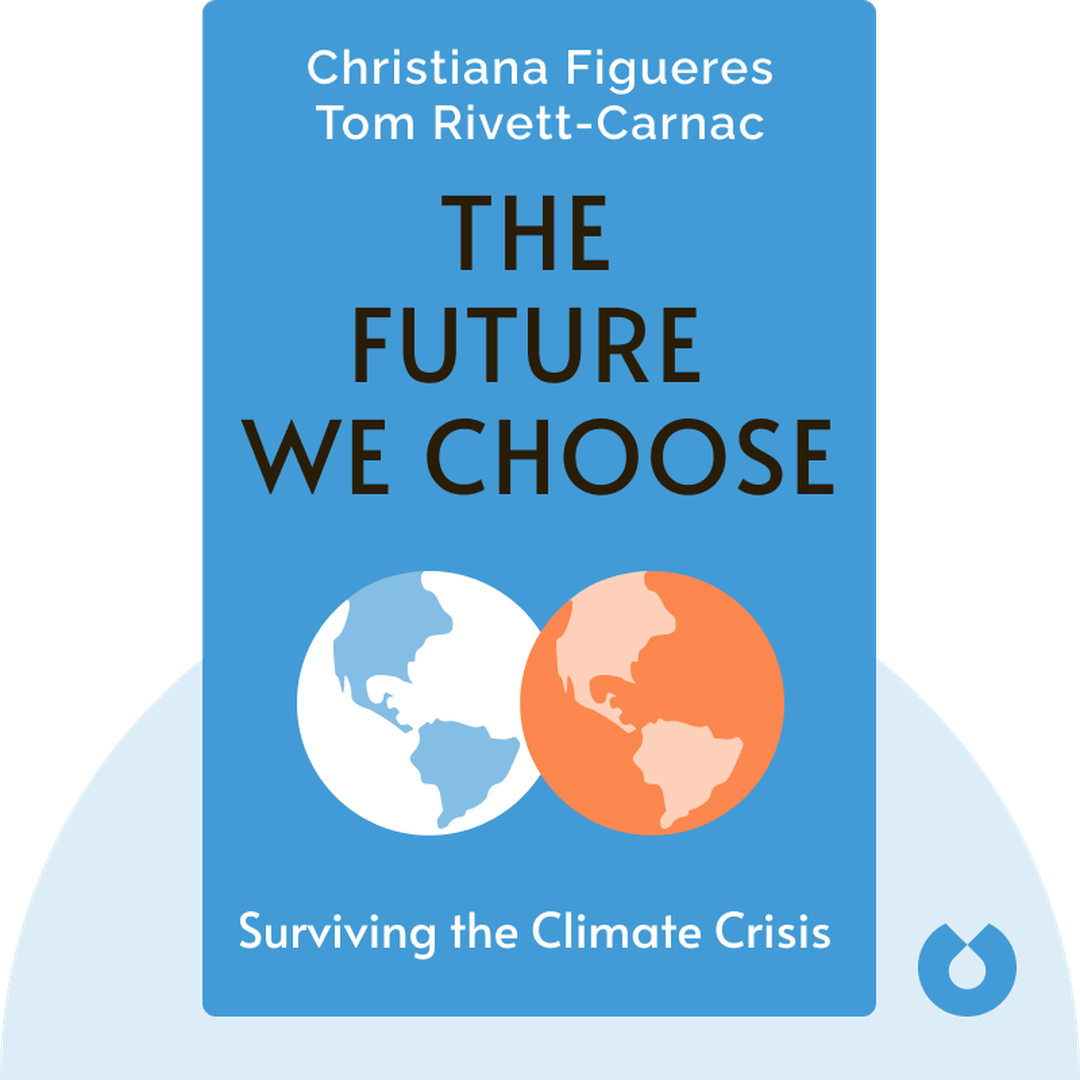
The Future We Choose (2020) presents us with two potential visions of life on earth: one of sweltering heat, diminishing biodiversity, and severely declining quality of life, and one where the planet’s temperature has stabilized, life flourishes, and humanity prospers. The world we choose will depend on the actions we take now, in what is a critical decade in the fight against climate change. While the prospect may seem daunting, it’s time to rise to the challenge and determine our future.
Who Should Listen to The Future We Choose?
- Climate crusaders feeling hopeless about their cause
- Anyone who wants to know how they can contribute to a sustainable world
- Those worried about the future
Books Similar to The Future We Choose
Readers who enjoyed this also liked these titles.