If You're Curious About These Questions...
You should listen to this audiobook
- Have you ever wondered why so many common myths about the female body still persist, and what’s actually happening behind the scenes of your menstrual cycle?
- Did you know that there are essential questions about vaginal health and fertility you’ve likely been too shy to ask, but have answers that could change how you treat your body?
- What if you could finally decode the complex signals your body sends you every day and become a true expert on your own reproductive health?
Listen to The Gynae Geek — Cinematic Audio Edition
Loading player...
Key Takeaways from The Gynae Geek
- Understand the crucial differences between external anatomy, like the vulva, and internal organs, like the vagina, to better communicate health concerns to your doctor.
- Discover why period 'blood' is actually a mixture of blood, mucus, and uterine cells, and why it is completely normal for it to range in color from red to dark brown or black.
- Learn how lifestyle factors like severe stress, overexercising, or undereating can cause irregular periods by forcing your body to prioritize basic survival over reproduction.
- Find out why gynecologists consider vaginal discharge a 'natural antibiotic,' and learn to identify when changes in its color or consistency signal an infection like thrush.
- Explore the various hormonal and nonhormonal contraception methods available, understanding exactly how they work to either prevent ovulation or create physical barriers against sperm.
Learning Tools
Reinforce what you learned from The Gynae Geek
Mind Map
The Gynae Geek
Anatomy Basics+
Menstrual Cycle+
Discharge & Contraception+
STI Prevention+
Fertility Planning+
Lifestyle & Health+
Quiz — Test Your Understanding
Question 1 of 8
According to the text, what is the anatomical relationship between the ovaries and the fallopian tubes?
Question 2 of 8
Why might high levels of stress or undereating lead to absent or irregular periods?
Question 3 of 8
Why do gynecologists refer to vaginal discharge as a 'natural antibiotic'?
Question 4 of 8
What is a severe potential consequence of leaving STIs like chlamydia and gonorrhea untreated?
Question 5 of 8
Which of the following is a key fact about fertility mentioned in the book?
Question 6 of 8
How do lifestyle factors like stress and diet impact gynecological health?
Question 7 of 8
What is the primary purpose of a pap smear (smear test)?
Question 8 of 8
What is the primary benefit of performing Kegel exercises as recommended in the book's summary?
The Gynae Geek — Full Chapter Overview
- 1Recommendation
- 2An anatomical lesson
- 3Clarifying your period
- 4Avoiding – or encouraging – pregnancy
- 5Avoiding STIs
- 6Preparing for fertility
- 7Your habits, your body
The Gynae Geek Summary & Overview
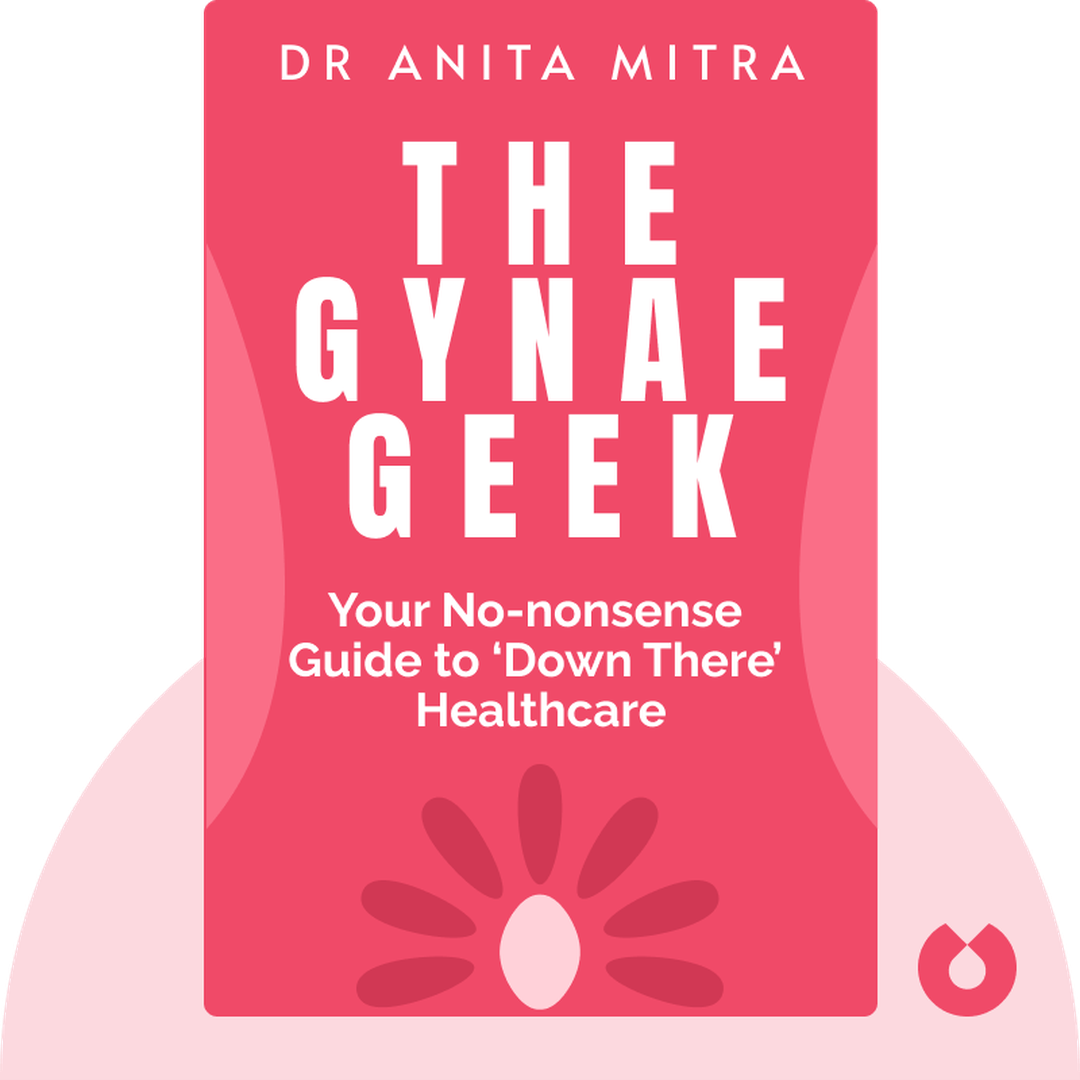
The Gynae Geek (2019) is a straight-talking guide to women’s health, led by gynecologist Dr. Anita Mitra. You’ll learn the answers to all the questions you never asked about anatomy, periods, sexual health, and fertility.
Who Should Listen to The Gynae Geek?
- People with uteruses looking to understand their bodies better
- Men who want to educate themselves on female anatomy
- Shy people looking for answers to questions about the vagina and its functions
Books Similar to The Gynae Geek
Readers who enjoyed this also liked these titles.