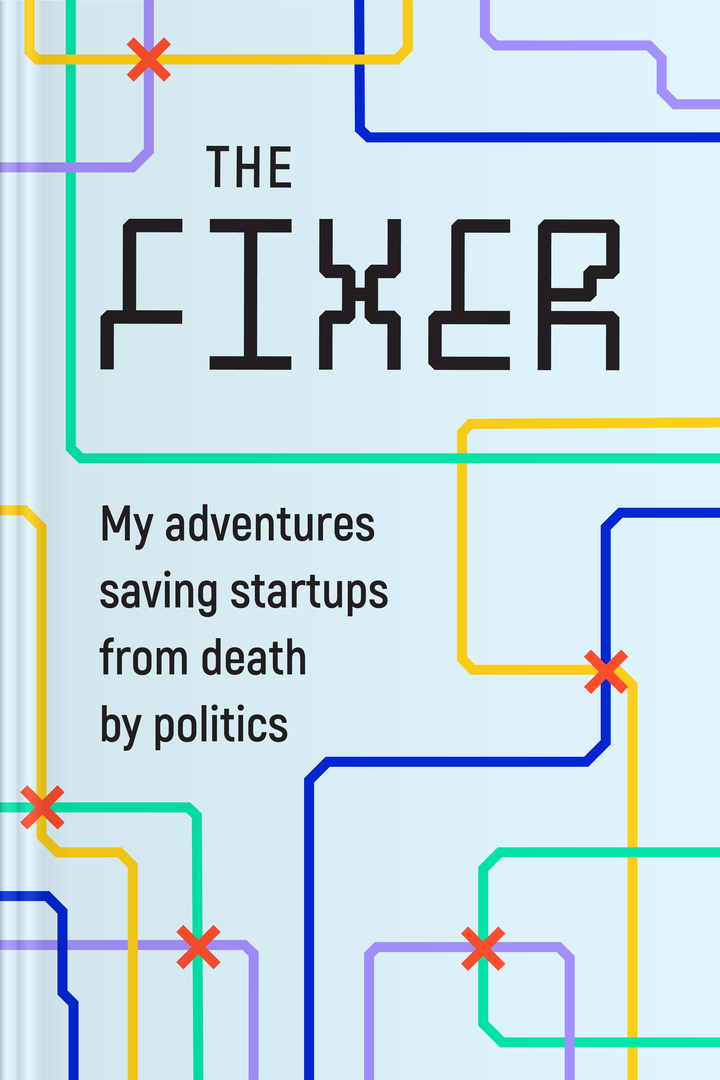
The Fixer audiobook cover - Disruptive technology rarely loses because it isn’t smart enough—it struggles because politics and regulation protect the old system, and this guide shows how startups can tell a better story, mobilize supporters, and survive the pushback.

The Fixer

Disruptive technology rarely loses because it isn’t smart enough—it struggles because politics and regulation protect the old system, and this guide shows how startups can tell a better story, mobilize supporters, and survive the pushback.

Bradley Tusk

4.2 / 5(5 ratings)

If You're Curious About These Questions...

You should listen to this audiobook

Listen to The Fixer — Free Audiobook

Loading player...

Key Takeaways from The Fixer

Learning Tools

Reinforce what you learned from The Fixer

Mind Map

The Fixer
Mastering Political PR+
Ruthless Campaigning+
Beating Entrenched Interests+
The Cost of Ignoring Politics+
Forcing Regulatory Change+
Unconventional Strategy+
Startup Political Playbook+

Quiz — Test Your Understanding

Question 1 of 9
What did Bradley Tusk learn is the primary motivation for politicians outside of election cycles?
  • A. Passing comprehensive public policy
  • B. Securing constant attention and validation through publicity
  • C. Building long-term alliances with corporate lobbyists
  • D. Managing the budgets of their respective departments
Question 2 of 9
How did Tusk successfully eliminate Anthony Weiner as a threat to Michael Bloomberg's third mayoral run?
  • A. By outspending Weiner on statewide television advertisements
  • B. By engaging Weiner in a series of highly publicized debates
  • C. By fighting dirty and intimidating Weiner so much that he chose not to run
  • D. By convincing the Democratic party to endorse Bloomberg instead
Question 3 of 9
What was Tusk's primary strategy for helping Uber defeat hostile legislation in cities like Washington DC and New York?
  • A. Bribing city council members with company stock options
  • B. Mobilizing massive numbers of users to contact politicians directly
  • C. Filing federal antitrust lawsuits against the local taxi commissions
  • D. Agreeing to unionize Uber drivers in exchange for operating licenses
Question 4 of 9
How did Tusk specifically undermine Mayor Bill de Blasio's progressive brand during Uber's regulatory fight in New York?
  • A. By highlighting how Uber primarily benefited Wall Street executives
  • B. By running ads showing that minorities and low-income earners relied on Uber when yellow cabs ignored them
  • C. By proving that de Blasio had never actually ridden in a taxi or an Uber
  • D. By organizing a massive strike of all public transit workers in the city
Question 5 of 9
Why did labor unions and Democratic politicians oppose Handy's proposal to create a portable benefits fund for independent contractors?
  • A. The unions feared that independent contractors could not be organized or charged membership dues.
  • B. The benefits proposed by Handy were significantly worse than the legal minimum wage requirements.
  • C. Democratic politicians wanted to completely ban the sharing economy in New York.
  • D. Handy refused to hire workers who had previously been part of a labor union.
Question 6 of 9
What critical mistake did daily fantasy sports companies FanDuel and DraftKings make during their early rapid growth?
  • A. They failed to secure enough venture capital to sustain their advertising budgets.
  • B. They were so focused on competing with each other that they completely ignored political risks and shared enemies.
  • C. They accidentally classified their users as independent contractors, leading to massive IRS fines.
  • D. They aggressively lobbied casinos instead of building a loyal customer base.
Question 7 of 9
When the New York Department of Financial Services refused to grant Lemonade an insurance license, what strategy did Tusk use?
  • A. He altered Lemonade's business model to exactly match traditional insurance companies.
  • B. He organized a boycott of all traditional insurance companies in New York State.
  • C. He applied political pressure on the governor by threatening that the startup would relocate to London.
  • D. He sued the Department of Financial Services in the Supreme Court.
Question 8 of 9
Why did Michael Bloomberg ultimately decide not to run for President in 2016 despite Tusk's innovative campaign plans?
  • A. He realized he could not self-finance a nationwide campaign.
  • B. Polling indicated his run would likely harm Hillary Clinton and increase the chances of Donald Trump winning.
  • C. Uber refused to partner with him to provide free rides to polling stations.
  • D. He was unable to recruit high-profile figures like Bill Gates or Elon Musk to his proposed cabinet.
Question 9 of 9
According to Tusk, what is a key factor startups must consider before deciding to 'beg for forgiveness' rather than 'ask for permission' from regulators?
  • A. Whether the resulting fines will be tax-deductible
  • B. Whether their competitors have already asked for permission
  • C. Whether the regulatory infringement could result in jail time rather than just an irritated regulator
  • D. Whether the media will write a positive story about their rebellion

The Fixer — Full Chapter Overview

The Fixer Summary & Overview

When a startup challenges an industry that’s been comfortable for decades, the fight isn’t only about product and market fit. It quickly becomes a contest of influence—where regulators, politicians, donors, unions, and legacy competitors all have incentives to slow change down. Bradley Tusk argues that innovation often dies not from bad technology, but from ignoring the political battlefield.

Through real-world stories—from ride-sharing to insurance to elections—this summary explores how companies can shape public narratives, apply pressure where it matters, and choose battles wisely. The tone isn’t cynical for its own sake; it’s practical. If a business wants to improve people’s lives at scale, it may also need the skills to navigate power, perception, and regulation with clarity and care.

Who Should Listen to The Fixer?

  • Founders and startup teams entering regulated industries like transportation, finance, insurance, health, housing, or education
  • Operators, product leaders, and investors who want a realistic view of how policy, lobbying, and public opinion affect growth
  • Anyone curious about how political incentives shape regulation—and how modern companies respond

About the Author: Bradley Tusk

Bradley Tusk is a political strategist and consultant known for helping startups navigate government regulation and public policy challenges. He has worked on major political campaigns and advised high-growth technology companies facing political resistance in heavily regulated markets.

🎧
Listen in the AppOffline playback & background play
Get App