If You're Curious About These Questions...
You should listen to this audiobook
- Have you ever wondered how the concept of an "endless frontier" was used for centuries to distract from America’s deepest internal conflicts?
- Did you know that the modern obsession with building a border wall might actually signal the death of a myth that has defined the American identity for over 200 years?
- Are you curious about the hidden connection between the history of U.S. expansion and the nation's ongoing struggle with systemic inequality?
Listen to The End of the Myth — Free Audiobook
Loading player...
Key Takeaways from The End of the Myth
- Learn how the end of the American frontier myth paved the way for modern political movements like Trumpism, which thrive on the idea of limited prosperity.
- Understand why Founding Father James Madison viewed continuous territorial expansion as a necessary stabilizing force to keep a diverse nation from fracturing.
- Discover how early Americans justified the violent seizure of Native American lands through the belief that the frontier was a divine gift meant for those who could exploit it.
- Explore how Andrew Jackson's presidency redefined the American way by prioritizing aggressive individual freedoms and small government while forcibly removing indigenous populations.
- Find out how the US military and foreign wars acted as a societal safety valve to release domestic tension and unite a deeply divided nineteenth-century America.
Learning Tools
Reinforce what you learned from The End of the Myth
Mind Map
The End of the Myth
Early Expansion+
Jacksonian Era+
The Safety Valve+
Turner's Frontier Thesis+
Social Democracy Attempts+
Vietnam & Reagan+
Border Violence+
NAFTA & Extremism+
The End of the Myth+
Quiz — Test Your Understanding
Question 1 of 10
According to the text, what core idea of Trumpism is directly linked to the end of the American frontier myth?
Question 2 of 10
How did Founding Father James Madison view the vastness and expansion of the early United States?
Question 3 of 10
Which of the following best describes Andrew Jackson's approach to government and the frontier?
Question 4 of 10
In the nineteenth century, what became the ultimate 'safety valve' used to alleviate internal tensions and unite a divided American public?
Question 5 of 10
What was a deliberate misrepresentation in Frederick Jackson Turner’s famous 'Frontier Thesis'?
Question 6 of 10
How did President Franklin D. Roosevelt adapt the frontier concept during the Great Depression?
Question 7 of 10
According to the text, why did the Vietnam War fail to act as a 'safety valve' for American society?
Question 8 of 10
What ironic outcome resulted from Ronald Reagan's immigration policies, despite his appeal to nativist and small-government advocates?
Question 9 of 10
According to the text, what was an unintended consequence of the North American Free Trade Agreement (NAFTA) regarding immigration?
Question 10 of 10
What event does the author argue put a permanent end to the myth of the ever-expanding American frontier and the idea of expanding freedom abroad?
The End of the Myth — Full Chapter Overview
- 1Recommendation
- 2American prosperity has been tied to frontier expansion from the nation’s earliest days.
- 3Jacksonian ideals prioritized small government and individual freedom.
- 4The US military became a force for endless expansion and a way to unite a divided nation.
- 5The myth of the frontier was flawed from the beginning.
- 6America’s uneasy relationship with social democracy shifted during the Great Depression.
- 7Vietnam failed to ease national tensions or unite the country — and Reagan later reaffirmed American individualism.
- 8A new form of vigilantism emerged as violence along the Mexican border intensified.
- 9NAFTA and the war on terror failed to ease fears of a shrinking frontier.
- 10The Iraq War debacle permanently ended the myth of an ever-expanding American frontier.
- 11Final summary
The End of the Myth Summary & Overview
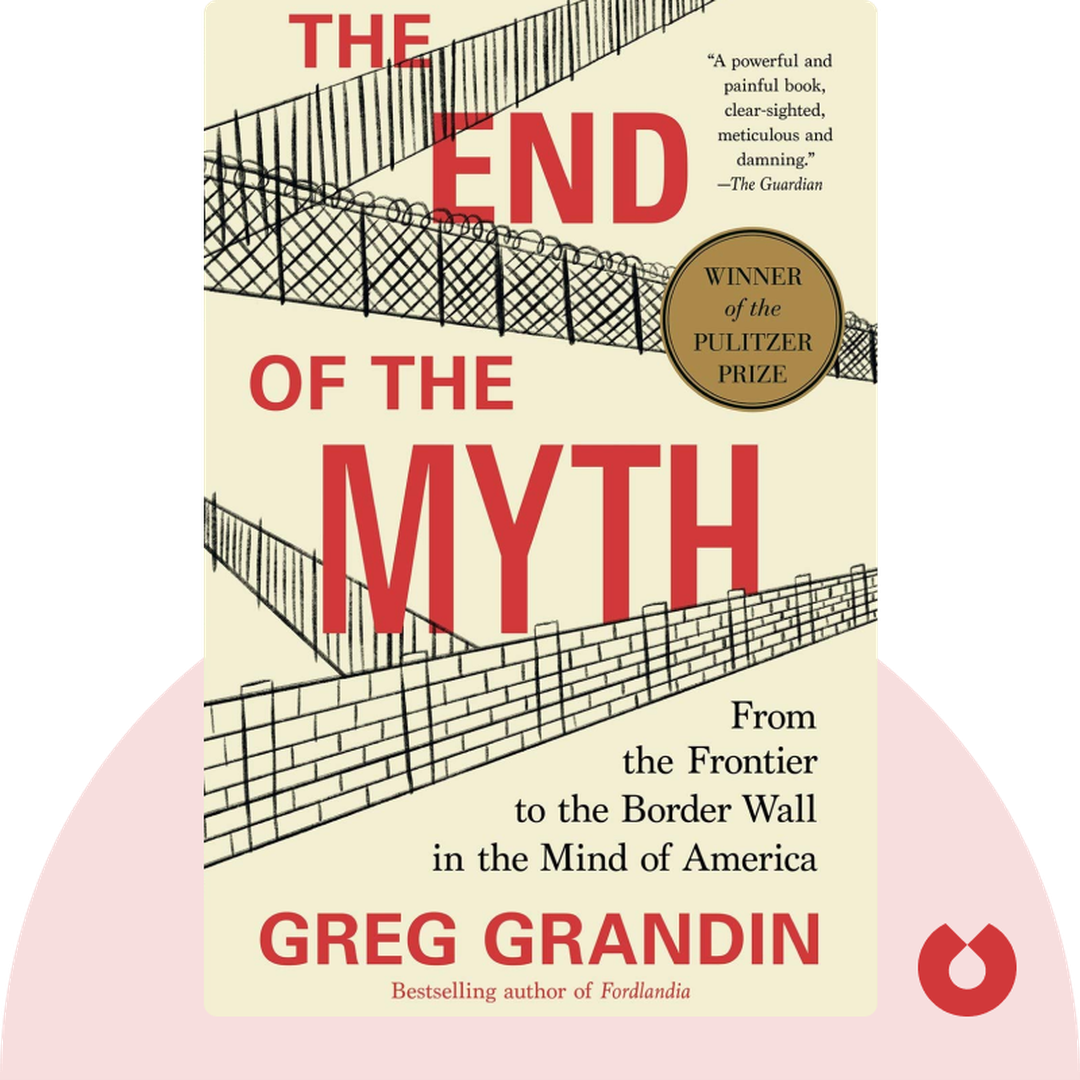
The End of the Myth (2019) offers a revealing look at how America’s frontier mind-set has guided and protected the nation through its troubled history. You’ll see how the expansion of that frontier has served to keep fundamental problems of racism and inequality from being dealt with and find out if the myth of the American frontier has finally died.
Who Should Listen to The End of the Myth?
- History buffs interested in the legacy of the United States
- Anyone outraged at the mistreatment of migrants at the Mexican border
- Students of political science and sociology
Books Similar to The End of the Myth
Readers who enjoyed this also liked these titles.