If You're Curious About These Questions...
You should listen to this audiobook
- Did you know that America’s struggle with "alternative facts" isn't a modern phenomenon, but a trait deeply embedded in the nation's DNA for over 500 years?
- Have you ever wondered why the United States is uniquely prone to extreme conspiracy theories and magical thinking compared to the rest of the developed world?
- Are you curious about how the American dream of individual freedom evolved into a culture where everyone is entitled to their own version of reality?
Listen to Fantasyland — Free Audiobook
Loading player...
Key Takeaways from Fantasyland
- Understand how America's current era of 'alternative facts' and political delusion is actually rooted in a centuries-old cultural habit of choosing fantasy over reality.
- Discover how the early English colonization of North America was driven by deadly, baseless fantasies of finding immense gold rather than practical planning.
- Learn how the rapid rise of Mormonism in the 1830s highlights the deep-seated American eagerness to embrace religious narratives that frame their nation as a sacred land.
- Uncover the disturbing historical trend of using delusional theme parks and theatrical groups like the Ku Klux Klan to rewrite history and romanticize racial oppression.
- Explore how the massive cultural shifts and widespread recreational drug use of the 1960s counterculture further disconnected Americans from objective reality.
Learning Tools
Reinforce what you learned from Fantasyland
Mind Map
Fantasyland
Core Thesis+
Early Colonist Delusions+
Religious Fantasies+
Racial & Historical Delusions+
1960s Counterculture+
Perpetual Adolescence+
The Gun Fantasy+
Quiz — Test Your Understanding
Question 1 of 7
According to Kurt Andersen, what does Donald Trump represent in the context of American history?
Question 2 of 7
What was the primary motivation behind the early English expeditions to North America commissioned by Queen Elizabeth I?
Question 3 of 7
How does the author view the rapid rise of Mormonism in the 19th century?
Question 4 of 7
How did Nate Salsbury's 1895 theme park reflect the American tendency toward delusion?
Question 5 of 7
What was a significant cultural consequence of the widespread use of psychedelic drugs in the 1960s and 1970s, according to the text?
Question 6 of 7
What shift in American culture does the author identify as occurring during the 1980s and 1990s?
Question 7 of 7
What paradox does the author highlight regarding modern American gun ownership?
Fantasyland — Full Chapter Overview
- 1Recommendation
- 2Jealous of Spain’s newfound wealth, early English colonists dreamed of finding gold in North America.
- 3Mormonism’s origins tapped into America’s tendency toward fantasy.
- 4Troubling fantasies of benevolent slavery and white supremacy shaped the turn of the twentieth century.
- 5In the 1960s, young Americans experimented with mind-bending drugs and the occult.
- 6In recent decades, American adults have become more childlike.
- 7Americans are buying more guns, even with fewer reasons to do so.
- 8Final summary
Fantasyland Summary & Overview
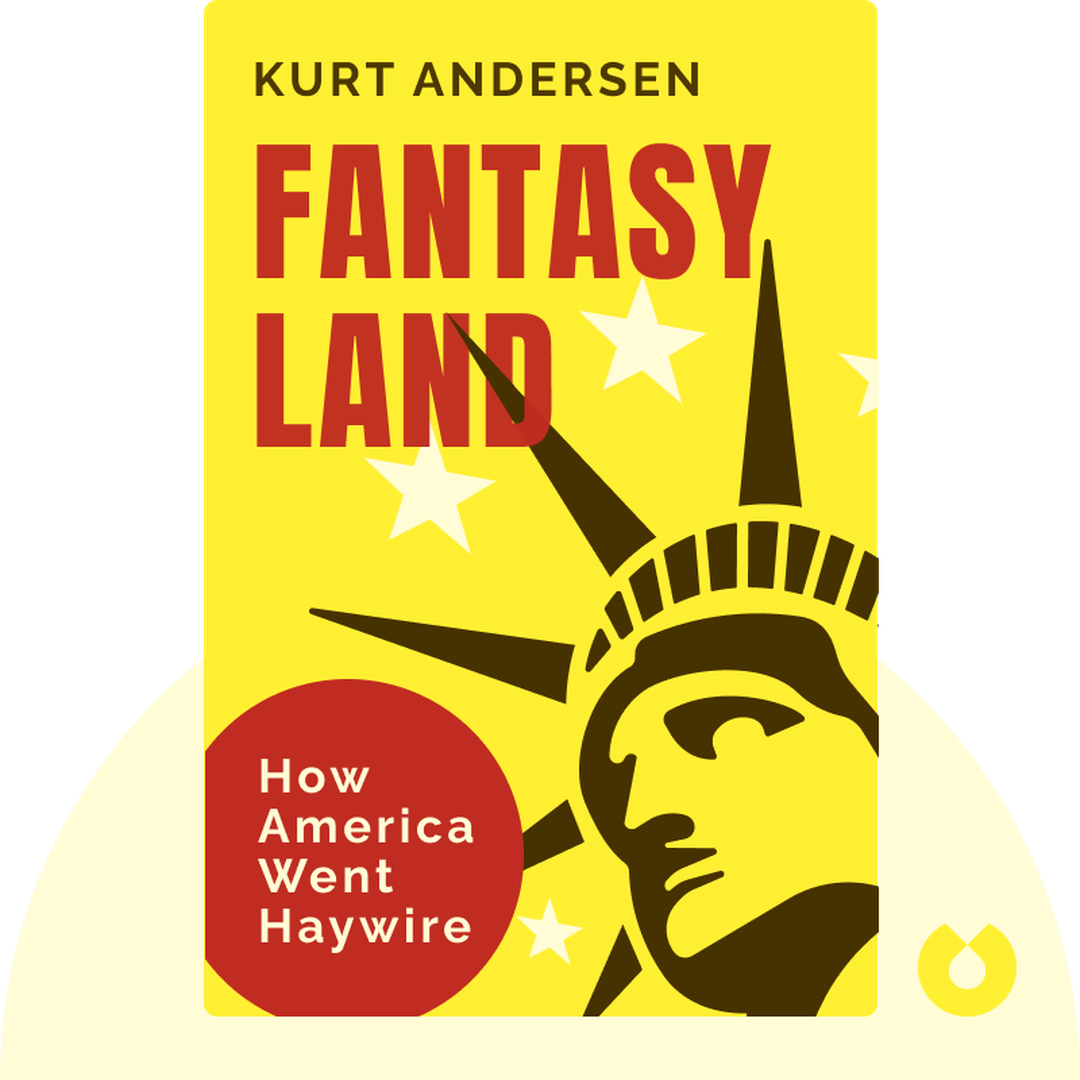
Fantasyland (2017) takes readers on a journey through the past 500 years of American history to show just how often this land has been home to people with a bewildering take on reality. Through a wealth of examples, Andersen tells us how Americans have indulged in some far-fetched fantasies in their excuses for gun ownership, slavery and new religions.
Who Should Listen to Fantasyland?
- Students of American history
- Readers interested in politics or current affairs
- Anyone skeptical of American culture
Books Similar to Fantasyland
Readers who enjoyed this also liked these titles.