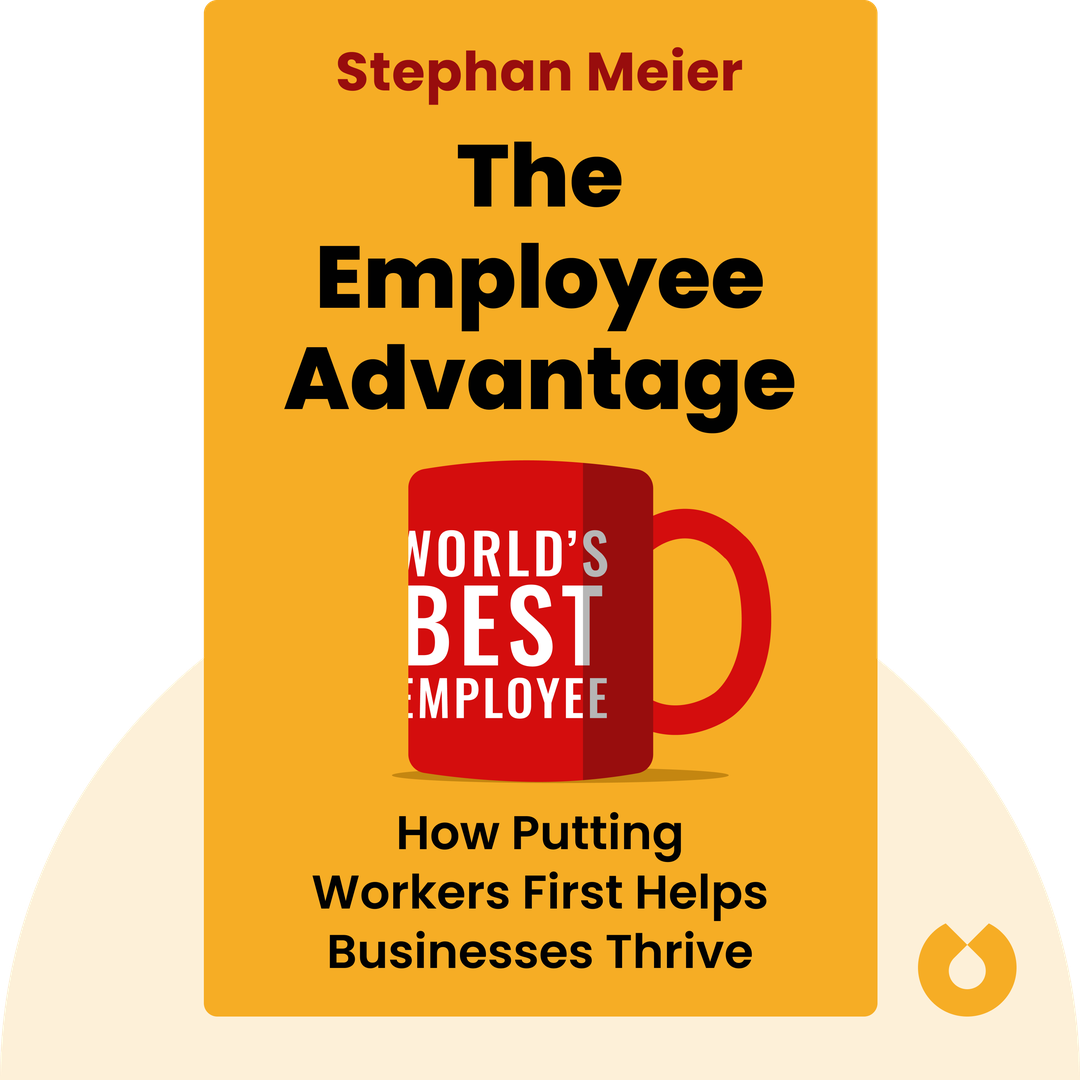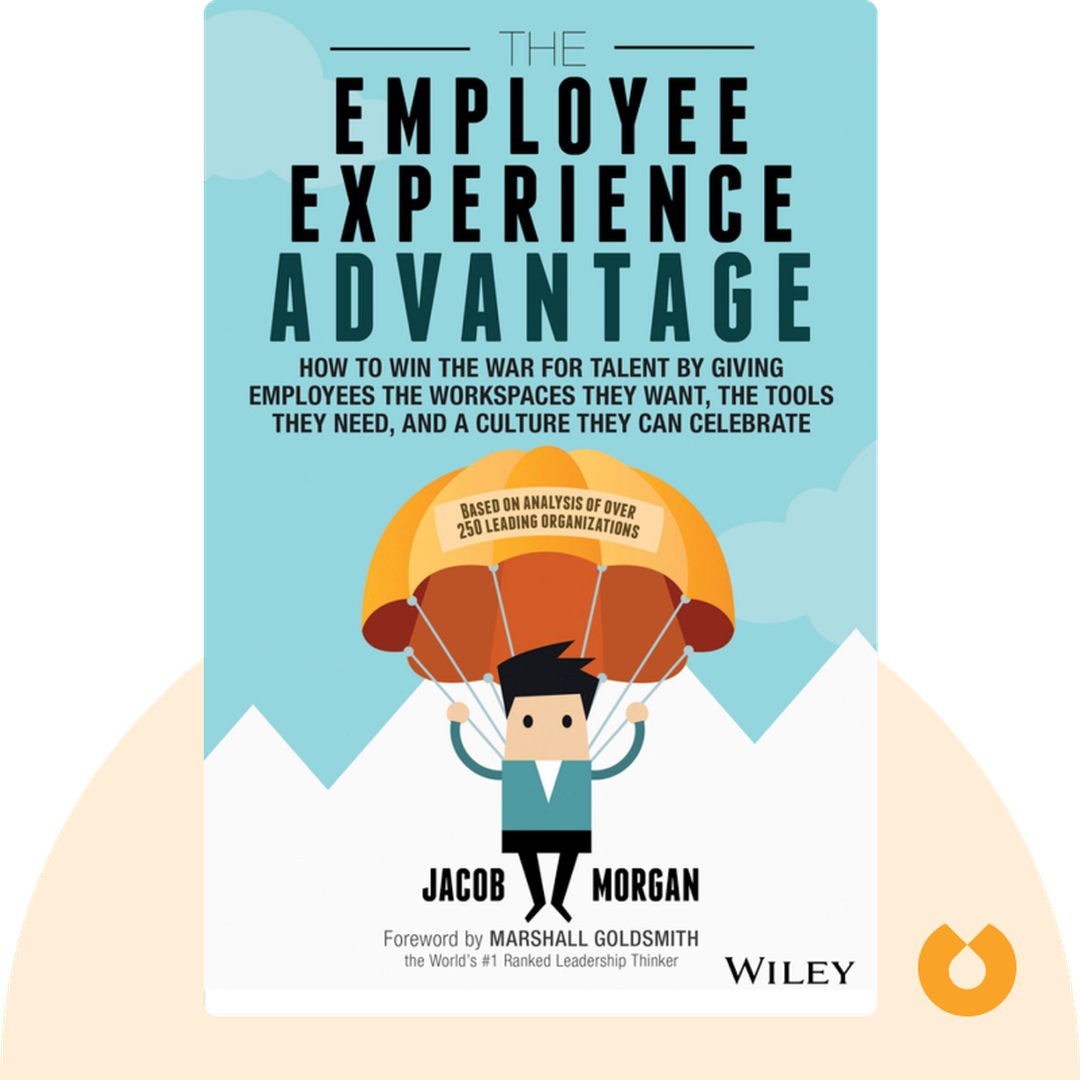
The Employee Experience Advantage
Start ListeningDownload Try free on iPhoneScan to start in 5 seconds
Categories:
If You're Curious About These Questions...
You should listen to this audiobook
- Did you know that companies focusing on 'employee experience' outperform the S&P 500 by more than double, and what is the secret formula they use to achieve such massive growth?
- Have you ever wondered why traditional perks like free snacks often fail to boost morale, while a specific combination of three workplace 'environments' creates truly unstoppable teams?
- What if you could transform your organization from a place where people 'need' to show up into a place where they actually 'want' to show up every single day?
Listen to The Employee Experience Advantage — Free Audiobook
Loading player...
Key Takeaways from The Employee Experience Advantage
- Understand the crucial difference between short-term employee engagement perks and a long-term, holistic redesign of your company's physical, technological, and cultural environments.
- Learn how to build an authentic physical workspace that actively reflects your company's core values, ensuring your day-to-day operations match the principles you preach.
- Discover why work/life integration has replaced traditional schedules, making flexible working conditions and multi-purpose office spaces just as important as a competitive salary.
- Master the strategy of designing your organization's layout directly with your employees, rather than for them, to meet their unique needs instead of blindly copying tech giants.
- Find out how to cultivate a frictionless technological environment by prioritizing intuitive, consumer-grade tools over clunky and frustrating internal IT systems.
Learning Tools
Reinforce what you learned from The Employee Experience Advantage
Mind Map
The Employee Experience Advantage
Experience vs. Engagement+
The Three Key Environments+
Strategic Frameworks+
Execution & ROI+
Quiz — Test Your Understanding
Question 1 of 10
What is the primary difference between traditional employee engagement initiatives and focusing on the employee experience?
Question 2 of 10
According to the book, what are the three main components that make up the 'engine' of an organization's employee experience?
Question 3 of 10
How should modern experiential organizations approach the design of their physical workspaces?
Question 4 of 10
When upgrading an organization's technological environment, what type of tools should companies prioritize?
Question 5 of 10
What did the Stanford University puzzle experiment reveal about workplace motivation and the cultural environment?
Question 6 of 10
How does an experiential organization's 'reason for being' differ from a traditional mission statement?
Question 7 of 10
What is the primary purpose of implementing an 'infinite design loop' in an organization?
Question 8 of 10
The author suggests replacing the outdated concept of the 'employee life cycle' with which of the following approaches?
Question 9 of 10
According to the text, how should an experiential organization view its operations and approach to new ideas?
Question 10 of 10
According to data cited in the text, what is a demonstrable financial outcome of being an experiential organization?
The Employee Experience Advantage — Full Chapter Overview
- 1Recommendation
- 2By prioritizing the employee experience, you can build a physical workplace that genuinely meets all your workers’ needs.
- 3Experiential companies craft physical spaces that spark creativity.
- 4Build a tech environment that makes all your employees’ lives much easier.
- 5Increase your employees’ motivation by nurturing a team-focused, purpose-led cultural environment.
- 6Experiential organizations are superior workplaces and consistently achieve greater financial success than their rivals overall.
- 7Organizations aiming to craft an outstanding employee experience must begin with a compelling reason for being.
- 8Enhance your organization’s three core environments by adopting an infinite design loop.
- 9Swap the outdated notion of an employee life cycle for the idea of moments that matter.
- 10Make certain employee experience is championed by everyone in your organization.
The Employee Experience Advantage Summary & Overview
The Employee Experience Advantage (2017) explores how and why organizations that focus on employee experience far outperform those that don’t. Utilizing recent research, it identifies the key dimensions and features of a workplace that creates an optimal employee experience. It also provides practical suggestions for how you too can create such a workplace, which enables employees to feel inspired, motivated and eager to do their jobs.
Who Should Listen to The Employee Experience Advantage?
- Business leaders and employers
- Entrepreneurs
- Workers unhappy with their jobs
Books Similar to The Employee Experience Advantage
Readers who enjoyed this also liked these titles.