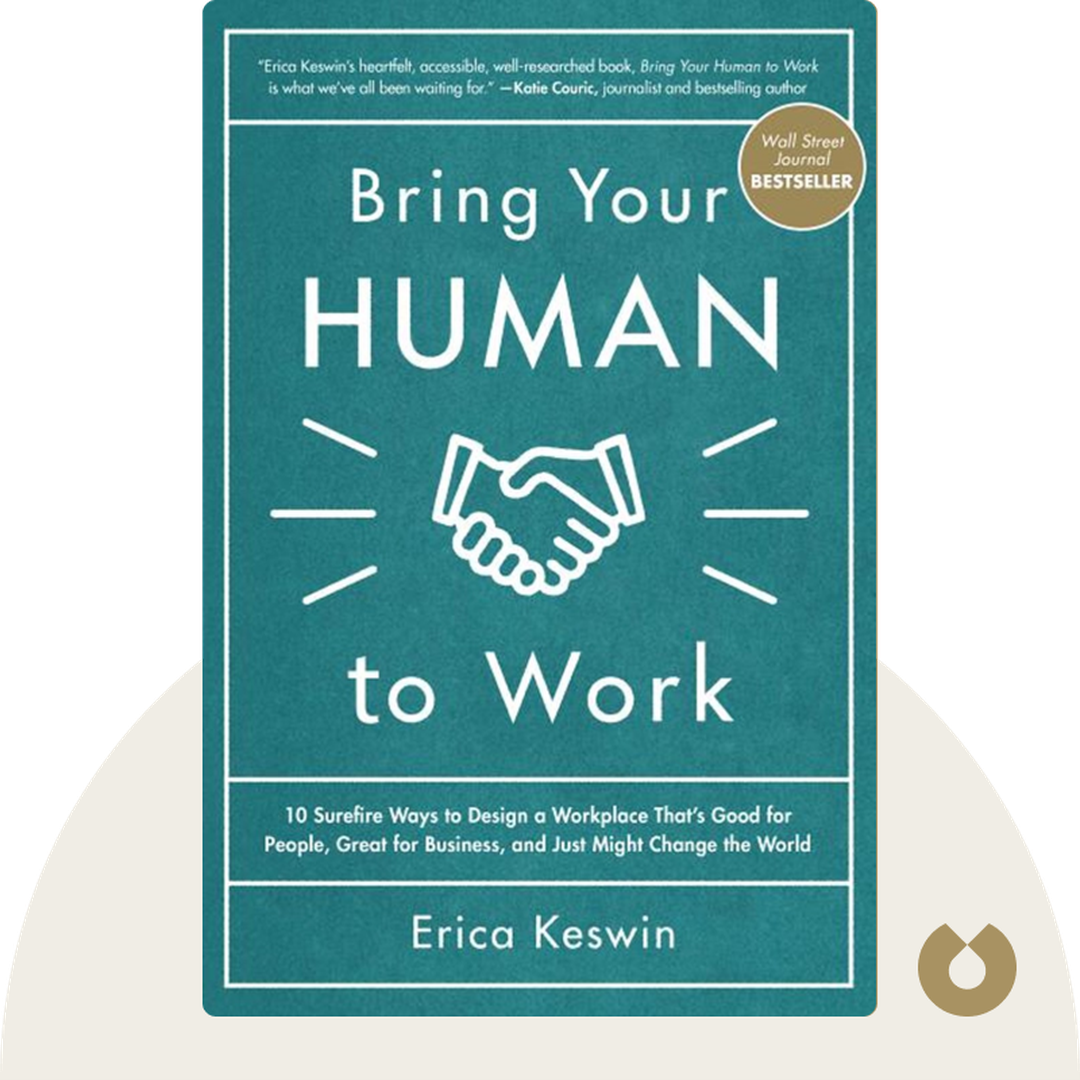
Bring Your Human to Work
Start ListeningDownload Try free on iPhoneScan to start in 5 seconds
Categories:
If You're Curious About These Questions...
You should listen to this audiobook
- Did you know that putting human connection at the heart of your business can actually be your greatest competitive advantage?
- Have you ever wondered why certain small, daily rituals can significantly improve your team's performance and job satisfaction?
- What if you could create a workplace where productivity and deep personal connection aren't just compatible, but actually drive each other?
Listen to Bring Your Human to Work — Free Audiobook
Loading player...
Key Takeaways from Bring Your Human to Work
- Discover why encouraging employees to bring their authentic selves to work boosts both staff retention and customer satisfaction.
- Learn how to use authentic storytelling to clearly communicate your brand's core values to new hires and showcase your company's human side.
- Understand how using technology to automate repetitive tasks actually frees your employees to have more meaningful, tailored interactions with customers.
- Find out how to design purpose-driven meetings that eliminate wasted time by directly aligning with your organization's core values.
- Master the art of inclusive meetings by rethinking your physical workspace, such as using round tables, to prevent a few individuals from dominating the conversation.
Learning Tools
Reinforce what you learned from Bring Your Human to Work
Mind Map
Bring Your Human to Work
Authenticity & Identity+
Technology & Human Touch+
Purposeful Meetings+
Holistic Employee Wellness+
Community & Giving Back+
Rest & Disconnection+
Gratitude & Office Relationships+
Quiz — Test Your Understanding
Question 1 of 8
What is a primary benefit of encouraging employees to bring their authentic selves to work, according to Harvard Business School research?
Question 2 of 8
How does the book suggest companies should best utilize modern technology to improve customer service?
Question 3 of 8
Which of the following is a recommended strategy for making team meetings more productive and inclusive?
Question 4 of 8
What unique approach did the health-care consulting firm Vynamic take to support the mental and social well-being of its employees?
Question 5 of 8
Why did Brian Berger, founder of Mack Weldon, wait five years before launching a philanthropy initiative?
Question 6 of 8
According to the text, what is a surprising professional benefit of taking vacations and stepping back from everyday work routines?
Question 7 of 8
How does the fitness company SoulCycle encourage its employees to show appreciation for one another?
Question 8 of 8
What actionable advice does the author give regarding office seating plans to foster deeper human connections?
Bring Your Human to Work — Full Chapter Overview
- 1Recommendation
- 2Bringing your authentic self to work benefits both you and your company.
- 3Maintaining a human touch matters in the brave new world of technology.
- 4Plan your meetings carefully to make them more productive.
- 5Supporting employee wellness brings a wide range of benefits.
- 6When your company supports the wider community, everyone benefits.
- 7To be truly productive, you may need to take a break from being productive.
- 8Build a connection by saying “thank you.”
- 9Final summary
Bring Your Human to Work Summary & Overview
Bring Your Human to Work (2018) explores how organizations can put human connection at the center of their business. It outlines the benefits, both financial and social, of encouraging better communication and deeper relationships between coworkers.
Who Should Listen to Bring Your Human to Work?
- Anyone seeking a greater connection with their coworkers
- Business leaders looking for fresh insights
- Managers wanting to inspire their direct reports
Books Similar to Bring Your Human to Work
Readers who enjoyed this also liked these titles.