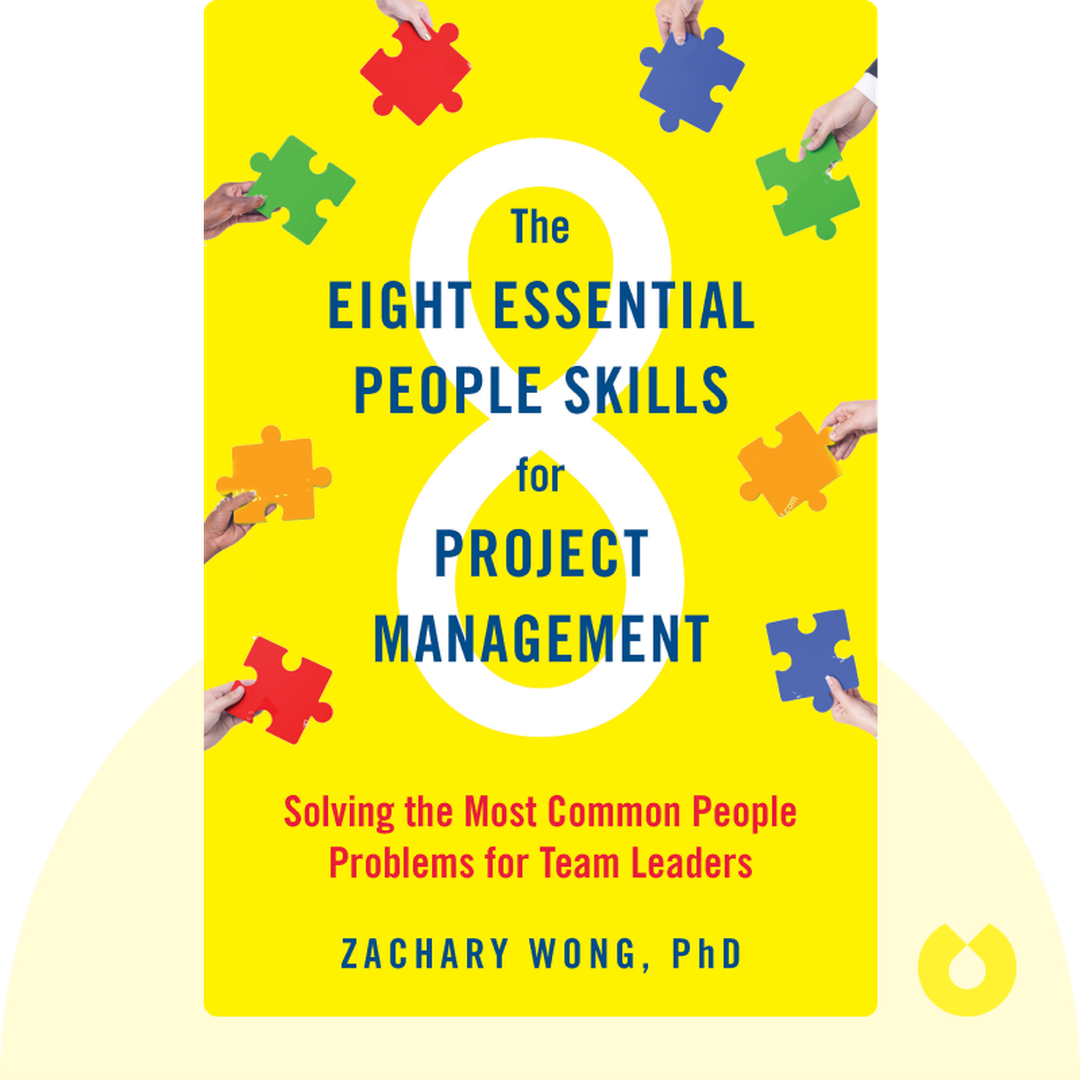
The Eight Essential People Skills for Project Management
Start ListeningDownload Try free on iPhoneScan to start in 5 seconds
Categories:
If You're Curious About These Questions...
You should listen to this audiobook
- Have you ever wondered why traditional leadership often fails in horizontal workplaces, and what specific people skills you need to bridge the gap?
- What if you could master the art of confronting underperformers and boosting motivation without creating conflict or resentment?
- What’s the secret to pushing your team through the fear of failure and turning high-pressure situations into predictable successes?
Listen to The Eight Essential People Skills for Project Management — Free Audiobook
Loading player...
Key Takeaways from The Eight Essential People Skills for Project Management
- Understand why modern businesses have shifted from a traditional top-down pyramid to a horizontal 'wedge' structure and how this impacts your leadership role.
- Learn how to use the organizational wedge model as a diagnostic tool to categorize workplace problems and know exactly when to escalate complex issues to management.
- Discover how to pinpoint the root causes of individual performance issues using the ERAM model: Expectations, Resources, Ability, and Motivation.
- Master the crucial difference between friendship and friendliness to maintain your authority and effectively handle ethical quandaries without alienating your team.
- Find out how to move past outdated command-and-control tactics to successfully align individual employee psychology with your organization's overarching strategic objectives.
Learning Tools
Reinforce what you learned from The Eight Essential People Skills for Project Management
Mind Map
The Eight Essential People Skills for Project Management
Organizational Structure & Dynamics+
Diagnosing Individual Performance+
Professional Boundaries+
Inclusiveness & Motivation+
Managing Attitudes+
Tackling Poor Performance+
Guiding Behavior & Values+
Managing Fear & Risk+
Managing Up (The Boss)+
Meeting Efficiency+
Quiz — Test Your Understanding
Question 1 of 11
How does the author describe the structural shift in modern businesses compared to traditional corporations?
Question 2 of 11
According to the wedge model, what should a project manager do when faced with a severe issue like workplace harassment?
Question 3 of 11
When diagnosing an individual employee's performance problem, the author recommends using the ERAM model. What does ERAM stand for?
Question 4 of 11
What is the key distinction the author makes regarding a manager's relationship with their team members?
Question 5 of 11
Why is keeping employees 'in the loop' considered one of the most important human factors in building successful teams?
Question 6 of 11
In the context of managing employee attitudes, what does it mean when an employee gets 'coned'?
Question 7 of 11
When using the Past-Present-Future Model to tackle poor performance, what is the manager's primary goal during the 'Present' stage?
Question 8 of 11
What leadership failure led to Marty's team bankrupting the new branch office?
Question 9 of 11
The 'Black Box Effect' describes the fear generated by uncertainty in business. Which of the following is NOT one of the three uncertainties of risk-taking mentioned in the text?
Question 10 of 11
According to the text, what is the most effective way for a team leader to 'manage up' and improve their relationship with their boss?
Question 11 of 11
What is the purpose of the '80 percent rule' recommended in the actionable advice section?
The Eight Essential People Skills for Project Management — Full Chapter Overview
- 1Recommendation
- 2Team leaders' roles have changed as companies have grown increasingly less hierarchical today.
- 3The wedge model is an excellent tool for visualizing and managing team performance.
- 4Effective team leaders know the difference between friendship and friendliness.
- 5Successful teams are defined by their emphasis on inclusion.
- 6Attitudes matter, and there’s an art to managing them.
- 7Addressing poor performance is tricky, but it can be done effectively with the Past-Present-Future Model.
- 8Ends don’t justify means, and lasting success requires focus on team behavior.
- 9Risk-takers know that you can’t defeat fear, but you can manage it.
- 10Effective team leaders grasp the importance of managing their bosses.
The Eight Essential People Skills for Project Management Summary & Overview
The Eight Essential People Skills for Project Management (2018) is a hands-on guide designed to help team leaders diagnose and solve people problems in today’s increasingly horizontal workplaces. The fruit of years of first-hand experience, Zachary Wong’s playbook for effective leadership is packed full of actionable advice on how to boost motivation, confront underperformers and push through fear of failure.
Who Should Listen to The Eight Essential People Skills for Project Management?
- Entrepreneurs
- Leaders and managers
- Anyone fascinated by workplace psychology
Books Similar to The Eight Essential People Skills for Project Management
Readers who enjoyed this also liked these titles.