If You're Curious About These Questions...
You should listen to this audiobook
- Have you ever wondered why reaching your biggest goals often leaves you feeling empty instead of satisfied?
- What if the secret to lasting happiness isn't about what you achieve, but how you align your daily actions with ancient wisdom?
- Are you curious about the one fundamental shift that turns a life of constant pressure into a life that feels truly "earned"?
Listen to The Earned Life — Cinematic Audio Edition
Loading player...
Key Takeaways from The Earned Life
- Discover why chasing future goals for happiness traps you on an endless treadmill, and learn to find true fulfillment by embracing it as a continuous process in the present moment.
- Understand the concept of impermanence and how realizing that past achievements fade can motivate you to actively re-earn your life and success every single day.
- Learn how to write a letter of gratitude to your past self to honor the hard work and choices that shaped you, without resting on your old laurels.
- Master the exercise of writing a letter to your future self to consciously identify and commit to the daily investments in health, skills, and relationships that will yield the greatest future returns.
- Find out how the 35,000 choices you make daily consume massive amounts of mental energy, and discover why asking basic questions can elicit profound answers to guide your actions.
Learning Tools
Reinforce what you learned from The Earned Life
Mind Map
The Earned Life
Core Philosophy+
Connecting with Your Selves+
Decision Making & Clarity+
Aspiration vs. Ambition+
Choosing Realistic Aspirations+
Quiz — Test Your Understanding
Question 1 of 7
According to the text, what is the primary flaw of the 'Western paradigm' of happiness?
Question 2 of 7
What does the Buddha mean by the term 'hungry ghosts'?
Question 3 of 7
In the exercise designed to help you honor your past while moving forward, what are you instructed to do?
Question 4 of 7
Why does the author recommend asking 'basic questions' like 'Where do you want to live?' instead of complex questions like 'What do I want to do with my life?'
Question 5 of 7
According to philosopher Agnes Callard, how does 'aspiration' differ from 'ambition'?
Question 6 of 7
What is the purpose of the 'dichotomy resolution' exercise mentioned in the text?
Question 7 of 7
How does the book ultimately define an 'earned life'?
The Earned Life — Full Chapter Overview
- 1Recommendation
- 2You don’t need to be Buddhist to benefit from the Buddha’s wisdom.
- 3Honor your past self, but don’t rely on past achievements.
- 4Simple questions can lead to profound answers.
- 5Aspiration brings more fulfillment than ambition.
- 6Resolving dichotomies can help you choose realistic aspirations.
- 7Final summary
The Earned Life Summary & Overview
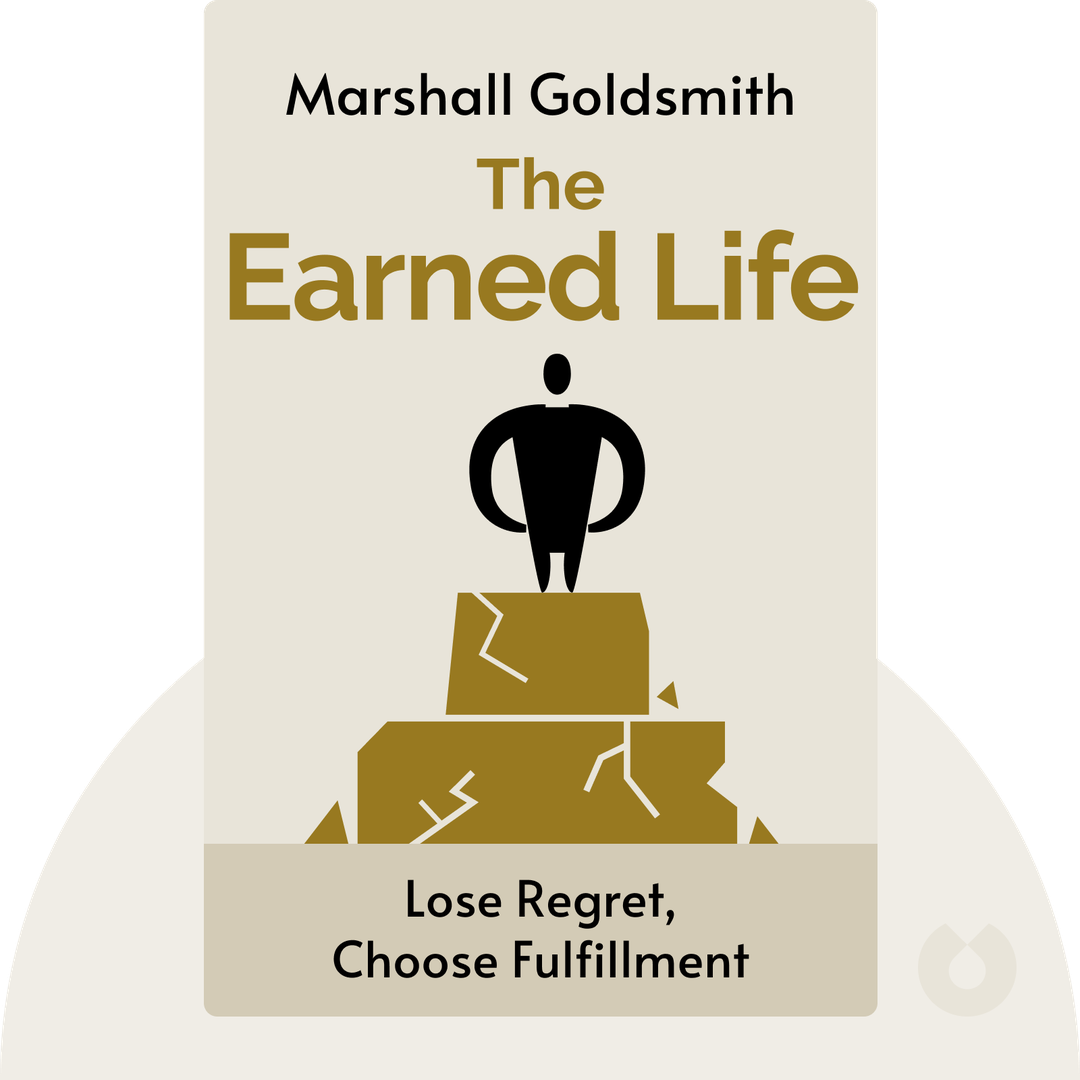
The Earned Life (2022) poses a simple yet profound question: Why does a life of constant achievement often leave us feeling empty? The answer can be found in ancient Buddhist wisdom: it’s not meeting ambitious goals but rather working on meaningful goals that really brings fulfillment and happiness.
Who Should Listen to The Earned Life?
- High achievers who feel like something’s missing
- Anyone interested in personal improvement
- Secular-minded folks interested in spirituality
Books Similar to The Earned Life
Readers who enjoyed this also liked these titles.