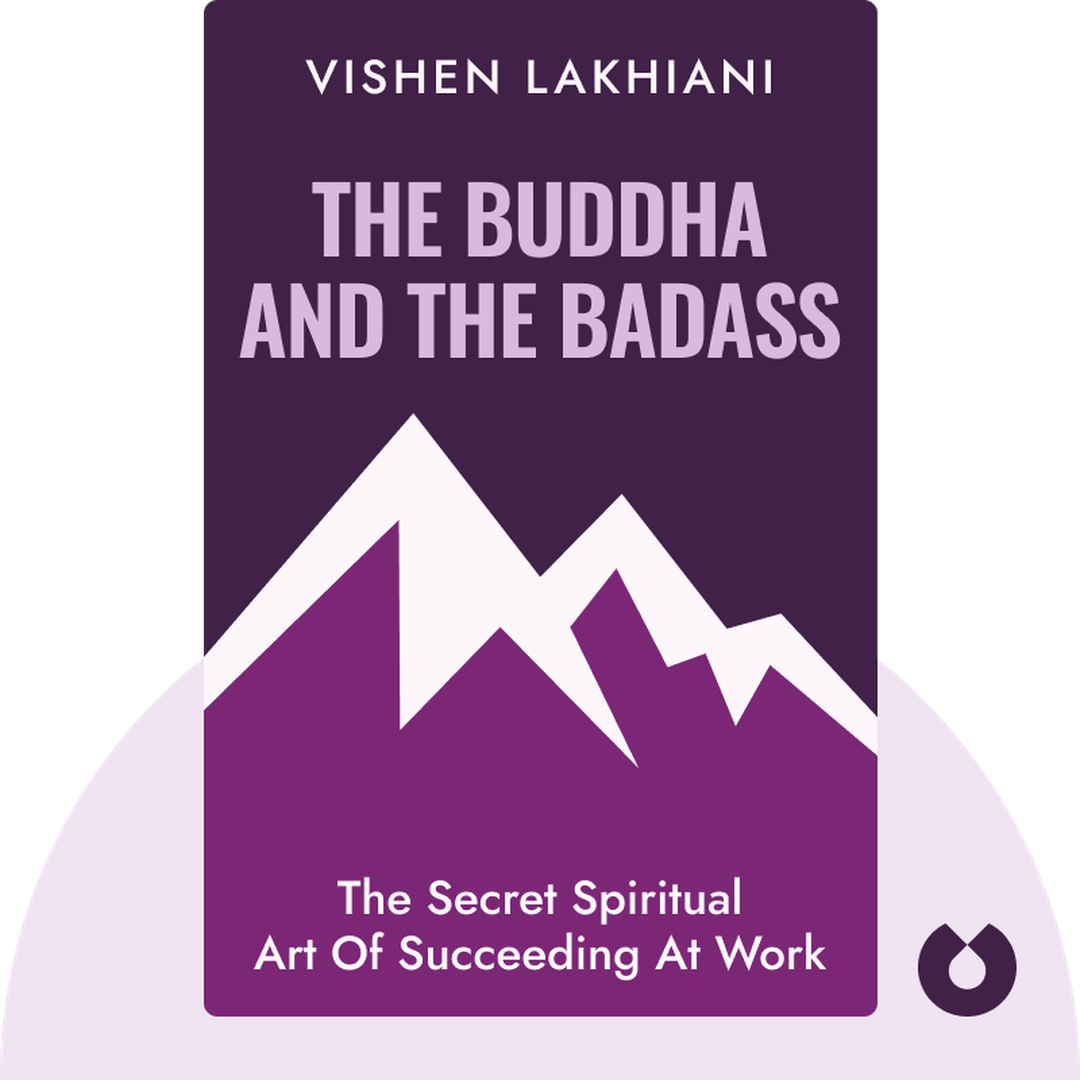
The Buddha and the Badass
Start ListeningDownload Try free on iPhoneScan to start in 5 seconds
Categories:
If You're Curious About These Questions...
You should listen to this audiobook
- What if you could combine the deep inner peace of a spiritual master with the unstoppable drive of a high-achieving disruptor?
- Have you ever wondered what the secret is to aligning your daily work with your soul’s mission to create an extraordinary impact?
- Did you know that your personal evolution is actually the single most powerful tool for transforming your professional success and inspiring your team?
Listen to The Buddha and the Badass — Free Audiobook
Loading player...
Key Takeaways from The Buddha and the Badass
- Learn how to achieve lasting success without burnout by combining the inner peace of a 'Buddha' with the disruptive, change-making attitude of a 'Badass'.
- Discover why building your business on personal 'foundational values' rather than generic corporate rules creates an authentic, uncopyable brand.
- Find out how to attract fiercely passionate talent by replacing traditional job ads with an emotional company manifesto and a clear three-year vision.
- Master the art of identifying the 'big why' behind your company to inspire your team and deeply connect with customers, even in traditional industries.
- Understand the importance of ditching rigid corporate culture to boost employee productivity through fostered friendships, supported vulnerability, and shared positivity.
Learning Tools
Reinforce what you learned from The Buddha and the Badass
Mind Map
The Buddha and the Badass
Core Philosophy+
Foundational Values+
Attracting Allies+
Workplace Social Bonds+
Humanity Plus Mission+
Bold Visions+
Unified Brain Environment+
Immunity to Setbacks+
Constant Deliberate Growth+
Identity Shifting+
Quiz — Test Your Understanding
Question 1 of 10
What do the 'Buddha' and the 'badass' represent in the context of the book?
Question 2 of 10
According to the author, how are our 'soulprints' or foundational values primarily formed?
Question 3 of 10
What is the purpose of a 'manifesto' when trying to attract the right collaborators?
Question 4 of 10
What distinguishes a 'Humanity Plus' company from a 'Humanity Minus' company?
Question 5 of 10
What psychological tactic did Richard Branson use to motivate his friend to swim both ways between two islands?
Question 6 of 10
How did Pixar successfully encourage a 'unified brain environment' where ideas could flow naturally?
Question 7 of 10
To improve the speed of decision-making, what military-inspired strategy does the author use in his company?
Question 8 of 10
According to the author, what is the crucial difference between 'learning' and 'transformation'?
Question 9 of 10
How does the 'Lofty Questions' technique differ from traditional affirmations?
Question 10 of 10
What is the first step the author recommends for becoming immune to setbacks and the need for external approval?
The Buddha and the Badass — Full Chapter Overview
- 1Recommendation
- 2Understanding your core values brings clear direction and meaning.
- 3Attract the right people by clearly sharing your deeper purpose and plan.
- 4Encouraging social bonds boosts happiness, engagement, and performance.
- 5Choose a mission that leaves the world better than you found it.
- 6Don’t fear bold visions; they help you achieve great things.
- 7Create an optimal work environment by enabling free communication and fast action.
- 8Build resilience to setbacks and pressure by knowing you’re enough and designing a life that’s uniquely yours.
- 9Pursue constant, intentional growth in every area of your life.
- 10Your identity shapes your experience. See yourself differently, and your life will change.
- 11Final summary
The Buddha and the Badass Summary & Overview
The Buddha and the Badass (2020) breaks down how to master work and life by drawing on a deep awareness of self and learning how to make an impact. These blinks provide practical steps for bringing real meaning to your work, accomplishing bold missions alongside others, and designing and living your ideal life.
Who Should Listen to The Buddha and the Badass?
- People who want their work to have meaning and impact
- Leaders who want to inspire their teams
- Anyone who wants to transform their personal and professional life
Books Similar to The Buddha and the Badass
Readers who enjoyed this also liked these titles.