If You're Curious About These Questions...
You should listen to this audiobook
- Did you know that the popular idea that "30 is the new 20" might actually be a dangerous myth that could derail your future success?
- Have you ever wondered why your 20s are the most critical years for personal growth, and how your brain is uniquely wired to change during this specific decade?
- What if the key to a fulfilling career and relationship in your 30s isn't about "waiting and seeing," but about building a specific kind of "capital" right now?
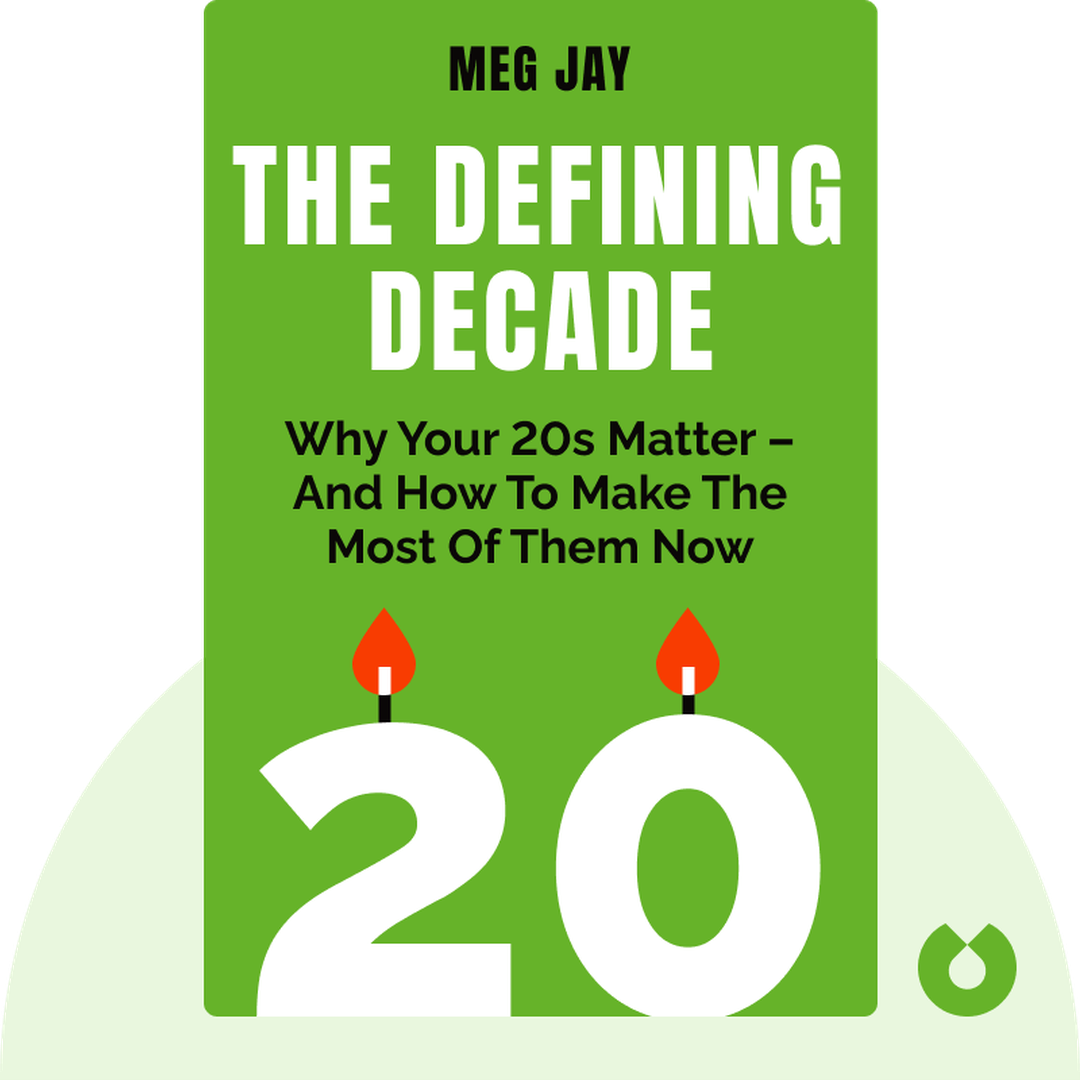
Listen to The Defining Decade — Cinematic Audio Edition
Loading player...
Key Takeaways from The Defining Decade
- Discover why taking unusual short-term jobs builds vital 'identity capital' that makes you stand out to employers more than conventional qualifications.
- Understand the urgency of starting your career immediately, as two-thirds of your lifetime wage growth will occur during your first ten working years.
- Learn how to leverage 'weak ties' outside your inner circle using the foot-in-the-door technique to unlock hidden career opportunities.
- Recognize why realizing your life options are actually limited is a powerful advantage that cures decision paralysis and helps you take action.
- Find out how to maximize your twenties by using this rare period of freedom from major commitments to figure out and confidently pursue your long-term goals.
Learning Tools
Reinforce what you learned from The Defining Decade
Mind Map
The Defining Decade
Career & Work+
Relationships & Marriage+
Brain & Personal Growth+
Family Planning+
Quiz — Test Your Understanding
Question 1 of 10
Why does Meg Jay suggest taking an unusual job, like translating comic books, over a standard job, like working in a coffee shop, during your 20s?
Question 2 of 10
According to the US Census Bureau, why is it crucial to begin working toward a serious career in your 20s rather than waiting?
Question 3 of 10
How does the book suggest you approach 'weak ties' (people outside your close personal circle) for career opportunities?
Question 4 of 10
What does the term 'unthought known' refer to in the context of a twentysomething's goals?
Question 5 of 10
What does the 'cohabitation effect' reveal about couples who choose to live together before getting married?
Question 6 of 10
When choosing a long-term partner, what does the book identify as an essential quality that helps couples navigate future changes?
Question 7 of 10
Which part of the brain, responsible for dealing with uncertainty and planning for the future, is the last to fully mature during our 20s?
Question 8 of 10
How does adopting a 'growth mind-set' benefit a twentysomething facing unfamiliar challenges?
Question 9 of 10
What is one major consequence of postponing having children until between the ages of 35 and 40, according to the text?
Question 10 of 10
What often happens as a result of the 'Age Thirty Deadline' regarding relationships?
The Defining Decade — Full Chapter Overview
- 1Recommendation
- 2The work we do in our twenties builds personal assets and valuable individual resources for the future.
- 3The work we do in our twenties shapes our long-term future earnings growth.
- 4To advance our future careers, we must also learn to value people beyond our close personal circles.
- 5People in their twenties have fewer options than they think—and that’s actually a good thing.
- 6We must learn to invest not only in our careers, but also in our relationships, too.
- 7Delaying marriage doesn’t necessarily lead to a better union.
- 8Relationships in our twenties can teach us about ourselves and clarify what we truly want in a partner.
- 9Our brain fully matures only between ages 20 and 30.
- 10Managing our emotions and consistently cultivating a growth mindset can help us become truly more successful.
- 11If you hope to have children, don’t put it off.
The Defining Decade Summary & Overview
Drawing on a wealth of personal stories and fascinating facts, The Defining Decade (2012) argues that, contrary to popular belief, 30 is not the new 20. Author Meg Jay uses her vast experience as a professional psychologist to advise twentysomethings on such issues as choosing a partner, starting a family, picking a career, and generally making the most of one’s 20s. Jay also argues that the years between 20 and 30 are the time to establish serious goals and, because the adult brain is at its most pliable then, to begin to take steps toward reaching them.
Who Should Listen to The Defining Decade?
- Twentysomethings looking for guidance
- Parents who want to understand the troubles of their twentysomething children
- Employers who want to know how to motivate their young professionals
Books Similar to The Defining Decade
Readers who enjoyed this also liked these titles.