If You're Curious About These Questions...
You should listen to this audiobook
- Have you ever wondered why the adolescent brain is uniquely wired for intensity and risk, and how that biological 'chaos' is actually a vital evolutionary advantage?
- Did you know that today’s unique digital and social pressures are reshaping the teenage mind in ways that traditional parenting and education aren’t always prepared for?
- What if you could decode the complex neuroscience behind a teen’s most baffling behaviors to transform how you support their journey into adulthood?
Listen to How We Grow Up — Free Audiobook
Loading player...
Key Takeaways from How We Grow Up
- Discover why teenage rebellion isn't a behavioral flaw, but a crucial evolutionary feature designed to test boundaries and drive societal innovation.
- Understand how modern adolescent risk-taking has shifted away from physical dangers and moved inward toward complex psychological explorations of identity and meaning.
- Learn how the overwhelming flood of information in the digital age drives teens to seek control through intense introspection, resulting in both profound self-discovery and unique mental health challenges.
- Find out why the concept of adolescence is actually a recent invention, evolving from 18th-century romantic literature rather than ancient human history.
- Explore the fascinating neuroscience of the teenage brain's dramatic biological renovation, where unused neural pathways are ruthlessly pruned to prepare for adulthood.
Learning Tools
Reinforce what you learned from How We Grow Up
Mind Map
How We Grow Up
Evolutionary Purpose+
Teen Brain Biology+
The Inward Shift+
The Modern Perfect Storm+
Social Media Impact+
Guiding the Transition+
Quiz — Test Your Understanding
Question 1 of 7
According to the text, what is the fundamental evolutionary purpose of teenage rebellion and boundary-pushing?
Question 2 of 7
How has adolescent risk-taking changed over the past two decades?
Question 3 of 7
What does the 'dual systems model' of the teenage brain explain?
Question 4 of 7
Why do teenage brains suddenly seem to stop listening to their parents, according to recent neuroscience?
Question 5 of 7
How do researchers describe the primary impact of social media on teenagers?
Question 6 of 7
According to the text, where does our contemporary image of the troubled, emotional teenager largely come from?
Question 7 of 7
What modern biological shift is creating a 'perfect storm' for today's teenagers when combined with the Information Age?
How We Grow Up — Full Chapter Overview
- 1Recommendation
- 2America, Built on Teenage Revolution
- 3Turning Inward
- 4The Not-So-Ancient Science of Adolescence
- 5Why Teens Push Away Their Parents
- 6Social Media: Villain, Savior, or Echo Chamber?
- 7Growing Up and Moving Forward
- 8Final summary
How We Grow Up Summary & Overview
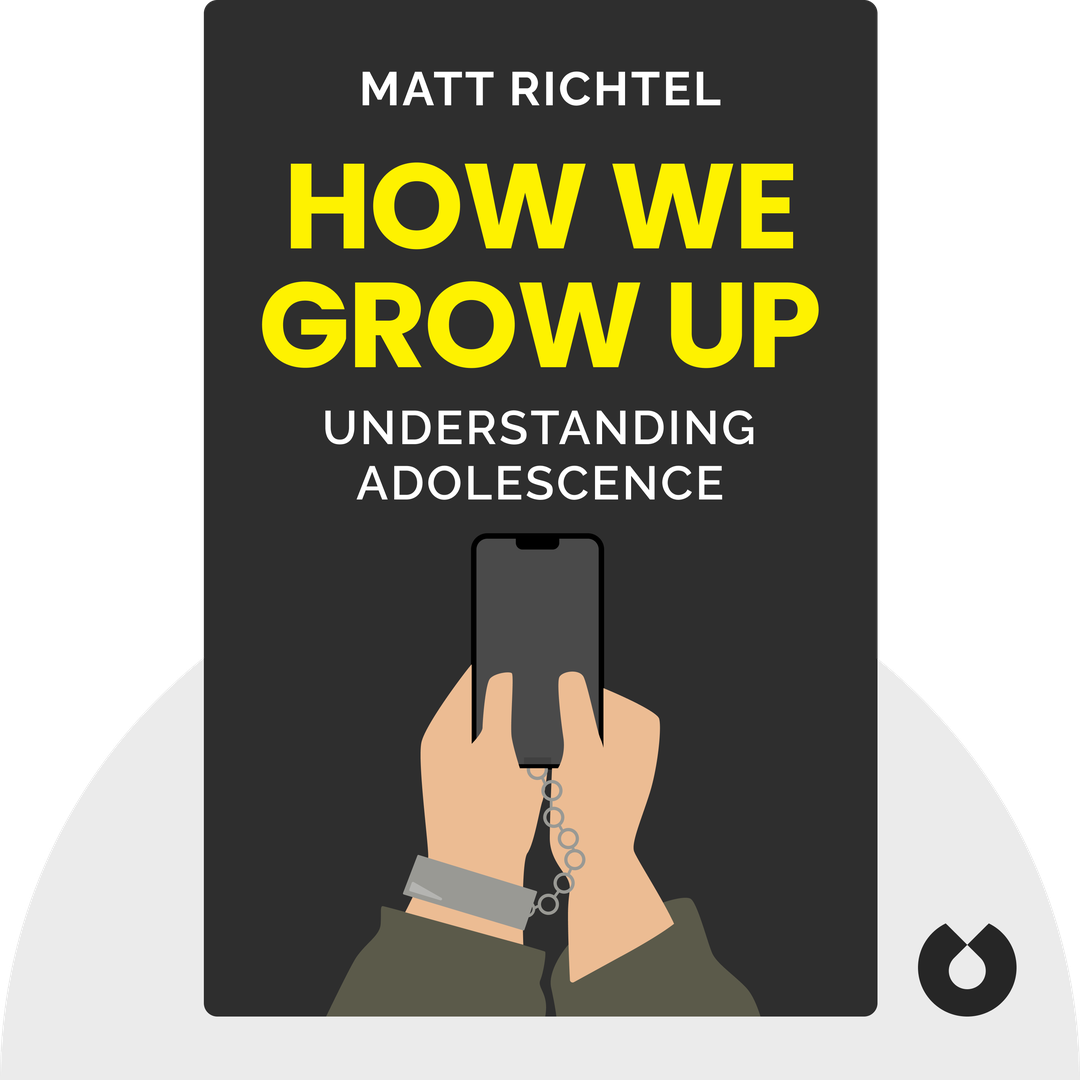
How We Grow Up (2025) examines modern adolescence in all its beauty and complexity. Blending real-life coming-of-age stories with cutting-edge neuroscience, it reveals how the adolescent brain is wired, why today’s unique pressures challenge developing minds, and how we can better support teens navigating this critical journey.
Who Should Listen to How We Grow Up?
- Parents of teens who want to understand their adolescent’s behavior and challenges
- Educators and counselors seeking science-based insights to better support students
- Psychology and neuroscience enthusiasts interested in cutting-edge research
Books Similar to How We Grow Up
Readers who enjoyed this also liked these titles.