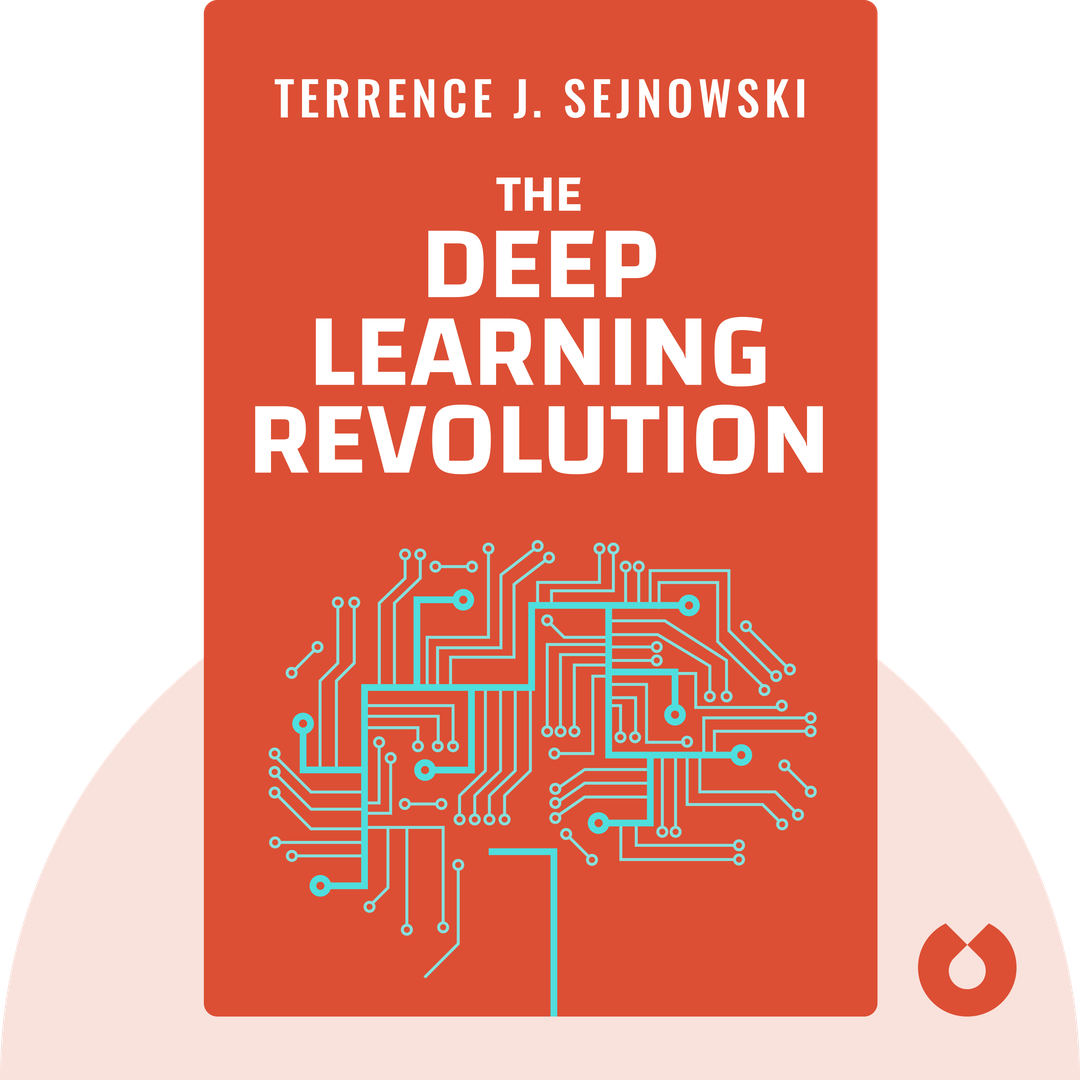
The Deep Learning Revolution
Start ListeningDownload Try free on iPhoneScan to start in 5 seconds
Categories:
If You're Curious About These Questions...
You should listen to this audiobook
- Have you ever wondered why computers struggled with simple tasks like recognizing a cat for decades, until scientists stopped teaching them rules and started mimicking the human brain?
- Did you know that the technology powering your voice assistant and self-driving cars was once dismissed as impossible by the mainstream scientific community?
- What's the secret to building an intelligence that can learn from experience just like a child, and how is this biological approach reshaping the future of work and education?
Listen to The Deep Learning Revolution — Free Audiobook
Loading player...
Key Takeaways from The Deep Learning Revolution
- Discover how the AI revolution started by abandoning rigid, rule-based programming in favor of training computers to learn organically from massive amounts of data, much like babies do.
- Understand the biological principles behind 'connectionism,' an AI approach that mimics how billions of simple neurons in the human brain build intelligence through experience rather than logic.
- Explore why introducing randomness into neural networks actually helps artificial intelligence escape bad solutions and find better ones, acting much like shaking a jar of marbles to find a stable arrangement.
- Learn how the breakthrough mechanism of backpropagation allows artificial networks to automatically adjust their connections, effectively teaching machines to learn from their own errors.
- Find out how the convergence of powerful video game processors and massive internet datasets finally gave early neural networks the raw power and fuel needed to transform modern technology.
Learning Tools
Reinforce what you learned from The Deep Learning Revolution
Mind Map
The Deep Learning Revolution
The Paradigm Shift in AI+
Mechanisms of Deep Learning+
The Breakthrough Moment+
Human vs. Artificial Intelligence+
Future Impact and Challenges+
Quiz — Test Your Understanding
Question 1 of 7
What was the radical idea proposed by the 'AI rebels' in the 1980s?
Question 2 of 7
How did researchers solve the problem of artificial neural networks making mistakes during the learning process?
Question 3 of 7
Why did researchers find that introducing randomness into artificial neural networks, such as in the Boltzmann machine, was beneficial?
Question 4 of 7
Which three factors converged to finally give neural networks the power they needed to succeed?
Question 5 of 7
According to the text, what is a primary reason current AI systems struggle with 'common sense'?
Question 6 of 7
How does the text describe the role of emotions in human intelligence?
Question 7 of 7
What is highlighted as one of the most concerning challenges brought about by the deep learning revolution?
The Deep Learning Revolution — Full Chapter Overview
- 1Recommendation
- 2The rebels of the eighties
- 3Lessons from biology
- 4The decisive breakthrough
- 5What makes humans human
- 6The revolution persists
The Deep Learning Revolution Summary & Overview
The Deep Learning Revolution (2018) tells the story of how a small group of researchers transformed artificial intelligence by studying how the human brain actually learns. It explores the shift from rule-based programming to data-driven neural networks, revealing how this biological approach created the AI technologies that now power everything from voice assistants to self-driving cars.
Who Should Listen to The Deep Learning Revolution?
- Science buffs and tech enthusiasts who want to understand the foundational principles behind AI tools
- Educators and teachers grappling with how AI is changing classroom dynamics and seeking perspective on the technology's origins and implications
- Anyone concerned about job automation or seeking to understand what makes human intelligence unique and irreplaceable
Books Similar to The Deep Learning Revolution
Readers who enjoyed this also liked these titles.