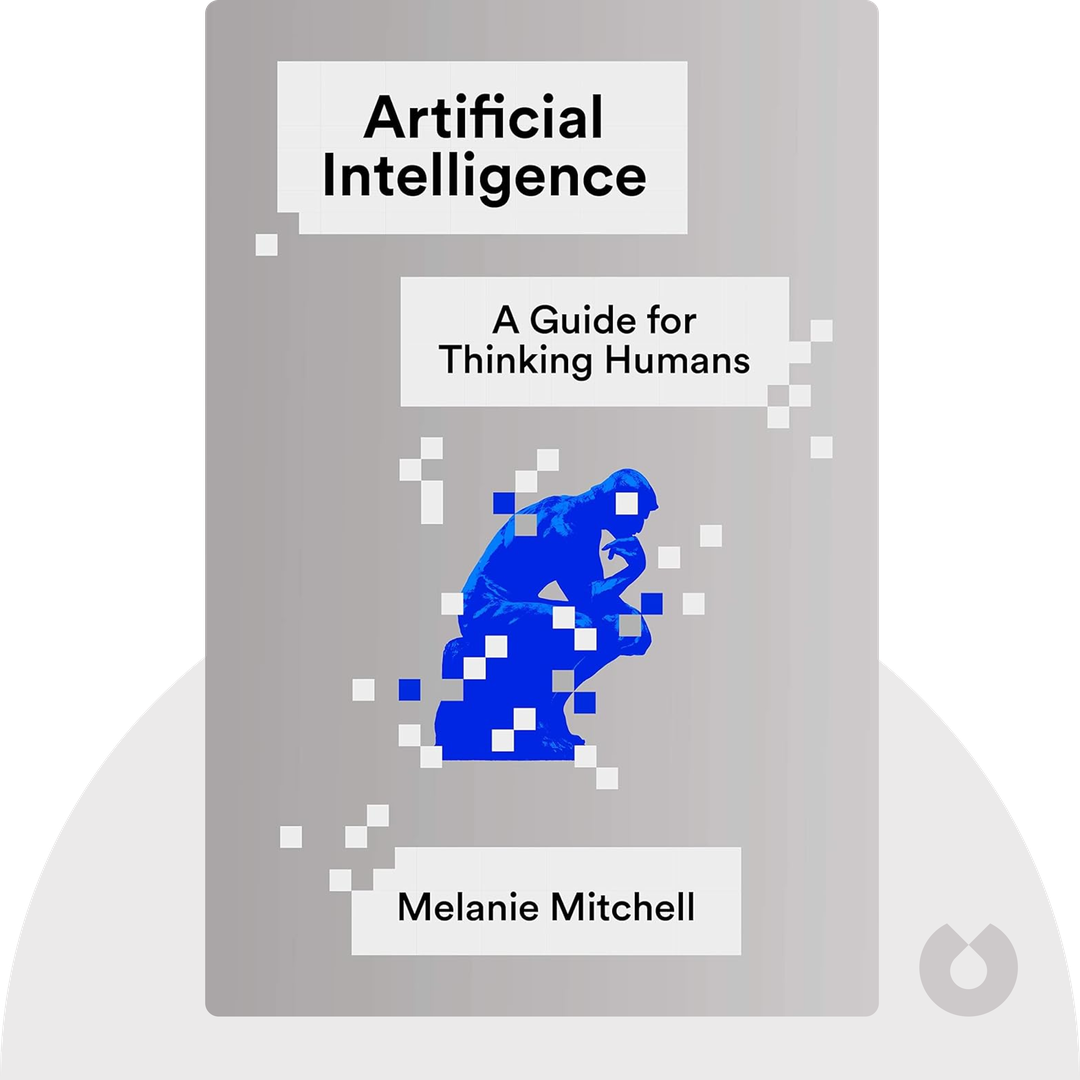
Artificial Intelligence
Start ListeningDownload Try free on iPhoneScan to start in 5 seconds
Categories:
If You're Curious About These Questions...
You should listen to this audiobook
- Have you ever wondered why an AI can master complex games like Go, yet still lacks the basic 'common sense' of a toddler?
- Did you know that many of the most sensational claims about AI’s future are based on a fundamental misunderstanding of how machines actually learn?
- Are you curious about the hidden obstacles that continue to prevent artificial intelligence from truly understanding the world the way humans do?
Listen to Artificial Intelligence — Free Audiobook
Loading player...
Key Takeaways from Artificial Intelligence
- Discover the historical evolution of artificial intelligence, tracing its journey from rudimentary 1950s models through periods of skepticism known as 'AI winters' to today's Deep Learning Revolution.
- Understand the underlying mechanics of Large Language Models like ChatGPT, which operate not by 'thinking,' but by using complex transformer networks to predict the mathematical probability of the next word.
- Grasp the staggering scale of modern generative AI by comparing its data consumption to human development; while a ten-year-old child processes 100 million words, large language models are trained on roughly 500 billion.
- Recognize the critical limitations of deep learning technologies, learning why advanced neural networks can synthesize massive databases yet still fail to understand basic visual context like a rotated image of a school bus.
- Explore the fierce debate over AI's 'emergent abilities' and find out why experts remain divided on whether machines passing bar exams are approaching true consciousness or simply acting as highly advanced autocomplete tools.
Learning Tools
Reinforce what you learned from Artificial Intelligence
Mind Map
Artificial Intelligence
Evolution & History+
Generative AI & LLMs+
The Intelligence Debate+
Rewards & Risks+
The Real Dangers+
Quiz — Test Your Understanding
Question 1 of 6
What characterized the first 'AI winter' in the 1970s?
Question 2 of 6
According to the text, what is the fundamental computational process that allows Large Language Models (LLMs) like ChatGPT to generate text?
Question 3 of 6
How does 'Moravec’s paradox' illustrate the limitations of current AI systems?
Question 4 of 6
Why might an AI system's ability to pass standardized exams not be a reliable indicator of true intelligence, according to the text?
Question 5 of 6
Which of the following is identified as a significant, real-world risk of deploying current AI technologies?
Question 6 of 6
According to economist Sendhil Mullainathan, what is the greatest actual risk associated with current AI systems?
Artificial Intelligence — Full Chapter Overview
- 1Recommendation
- 2AI’s first breakthroughs came in the 1950s
- 3Large language models may be the most complex software ever created
- 4AI excels at many difficult tasks – but it’s too soon to know if it’s truly “intelligent”
- 5The potential benefits of rolling out AI are enormous – but so are the risks
- 6AI isn’t dangerous because it’s hyperintelligent – it’s dangerous because AI systems are often surprisingly dumb
- 7Final summary
Artificial Intelligence Summary & Overview
Artificial Intelligence (2019) delves into the complex and evolving field of AI, contrasting its real-world applications with the often sensationalized portrayals in popular media. It explores the impact of AI technologies on various sectors, the profound challenges they present, and the ethical dilemmas they provoke. It also traces the historical development of AI, highlighting both groundbreaking achievements and the significant obstacles that persist in the field.
Who Should Listen to Artificial Intelligence?
- AI enthusiasts curious about its real-world impacts and future
- Readers interested in the ethical dilemmas of AI technology
- Students and professionals in AI, cognitive science, and tech
Books Similar to Artificial Intelligence
Readers who enjoyed this also liked these titles.