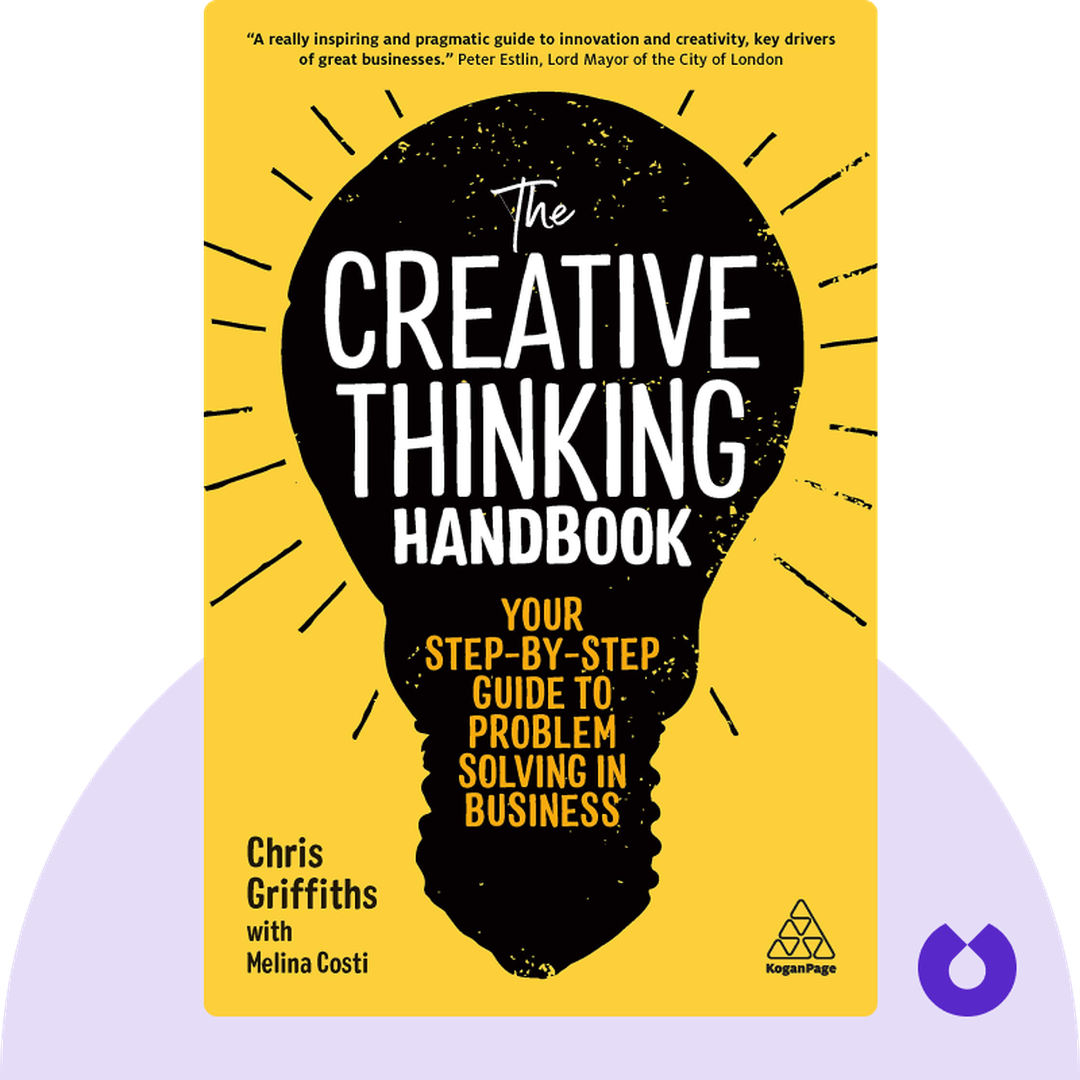
The Creative Thinking Handbook
Start ListeningDownload Try free on iPhoneScan to start in 5 seconds
Categories:
If You're Curious About These Questions...
You should listen to this audiobook
- Did you know that your most ingrained professional habits might actually be the biggest obstacles standing in the way of your next breakthrough idea?
- What’s the secret to transforming creativity from a random spark into a repeatable strategy that solves your most complex business problems?
- What if you could master a specific framework to consistently out-think the competition and thrive in an increasingly unpredictable world?
Listen to The Creative Thinking Handbook — Free Audiobook
Loading player...
Key Takeaways from The Creative Thinking Handbook
- Recognize why your brain's reliance on everyday routine thought patterns stifles innovation, and learn to strategically reprogram your thinking for creative success.
- Understand how selective, reactive, and assumptive thinking block your creativity, and discover why avoiding these mental traps keeps your business competitive.
- Learn to resist the urge to rush into quick solutions by taking the time to deeply define your challenge and separate verifiable facts from hidden assumptions.
- Master Toyota's proven problem-solving technique of asking 'why' at least five times to peel back the layers and uncover the root details of any challenge.
- Discover how borrowing wildly different perspectives—from curious children to billionaires—can completely transform your understanding of a problem and spark unconventional ideas.
Learning Tools
Reinforce what you learned from The Creative Thinking Handbook
Mind Map
The Creative Thinking Handbook
The Need for Creativity+
Overcoming Thinking Blocks+
Defining the Challenge+
Effective Brainstorming+
Selecting the Best Ideas+
Implementation & Execution+
Cultivating a Creative Environment+
Quiz — Test Your Understanding
Question 1 of 8
Why is our brain's natural tendency to recognize and store thought patterns problematic for creativity?
Question 2 of 8
According to the text, what is a major disadvantage of 'reactive thinking'?
Question 3 of 8
What technique have executives at Toyota used since the 1930s to get to the underlying details of a problem?
Question 4 of 8
How should a successful brainstorming session be structured to maximize the generation of great ideas?
Question 5 of 8
What did neuroscientist Antonio Damasio discover about the role of emotions in decision-making?
Question 6 of 8
Based on research from the Dominican University in California, what action significantly increases the chances of successfully implementing an idea?
Question 7 of 8
What method is highlighted as a proven way to increase flexible thinking and improve problem-solving in the workplace?
Question 8 of 8
What is the book's actionable advice for maximizing your creative output on a daily basis?
The Creative Thinking Handbook — Full Chapter Overview
- 1Recommendation
- 2To foster creativity, we must be strategic about our thinking every day.
- 3Selective, reactive, and assumptive thinking can stifle our creativity.
- 4Taking time to grasp your challenge is truly vital for crafting a creative solution.
- 5Creativity doesn’t simply appear; it requires both structure and freedom to thrive.
- 6Your head and heart each have crucial roles in choosing the right ideas to pursue.
- 7You need confidence, a robust plan, and continual creativity to successfully bring your idea to life for others.
- 8To keep creativity flowing, make dedicated time and cultivate an environment that consistently supports it well.
The Creative Thinking Handbook Summary & Overview
The Creative Thinking Handbook (2019) breaks down how to successfully apply creativity to solve challenges in today’s business and professional world. Starting with confronting the habits that block effective problem-solving, Chris Griffiths and Melina Costi present a strategy for kick-starting creative thinking and sustaining it throughout your project, business, and career.
Who Should Listen to The Creative Thinking Handbook?
- Anyone who wants to up their creative problem-solving skills
- Business leaders and managers who want to build a culture of creativity
- People who want to adapt and succeed in an ever-changing world
Books Similar to The Creative Thinking Handbook
Readers who enjoyed this also liked these titles.