If You're Curious About These Questions...
You should listen to this audiobook
- Have you ever wondered why hiring a team of 'all-star' creatives often fails to spark the innovation your business actually needs?
- What if the secret to a more creative workforce isn't about teaching new skills, but about dismantling the specific workplace mindsets that are currently stifling your team?
- Are you curious about which invisible barriers in your daily office culture are unknowingly killing your employees' most brilliant ideas?
Listen to Unlocking Creativity — Free Audiobook
Loading player...
Key Takeaways from Unlocking Creativity
- Discover why most leaders unintentionally sabotage workplace creativity, and identify the core mind-sets that actively block innovation.
- Learn how to counteract the restrictive linear mind-set by adopting a dynamic, iterative approach that favors continuous prototyping over rigid planning.
- Avoid the trap of the benchmarking mind-set by resisting the urge to copy competitors, a practice that ultimately leads to bland market homogenization.
- Master the strategy of 'lopsidedness' by amplifying your company's unique strengths and doing the opposite of industry norms to carve out a dominant niche.
- Steer clear of the prediction mind-set by prioritizing present product quality instead of demanding unrealistic profit forecasts that kill promising ideas before they can grow.
Learning Tools
Reinforce what you learned from Unlocking Creativity
Mind Map
Unlocking Creativity
The Creativity Paradox+
The Linear Mind-set+
The Benchmarking Mind-set+
The Prediction Mind-set+
The Structural Mind-set+
The Focus Mind-set+
The Naysayer Mind-set+
Actionable Advice+
Quiz — Test Your Understanding
Question 1 of 8
Why do many companies fail to achieve creative greatness despite their leaders valuing creativity?
Question 2 of 8
According to the text, why did six-year-olds outperform business school graduates in the spaghetti and marshmallow tower challenge?
Question 3 of 8
How does the chainsaw manufacturer Stihl successfully avoid the 'benchmarking mind-set'?
Question 4 of 8
What is a major negative consequence of the 'prediction mind-set' in business?
Question 5 of 8
What did Google’s People’s Analytics team discover was the most important quality of high-performing teams?
Question 6 of 8
How does the text suggest overcoming the 'focus mind-set,' as demonstrated by Mark Twain's writing process?
Question 7 of 8
How can teams effectively use a 'devil's advocate' without falling into the 'naysayer mind-set'?
Question 8 of 8
What actionable technique from improvisational comedy does the author recommend to foster creativity?
Unlocking Creativity — Full Chapter Overview
- 1Recommendation
- 2Counter the linear mindset by adopting an iterative method for product development.
- 3Sidestep the benchmarking mindset by aiming to differ more from your rivals.
- 4Steer away from the prediction mindset by prioritizing present product quality over projections and profits.
- 5Within a company, psychological safety matters more than the organizational structure.
- 6You can escape the focus mindset by pausing periodically to concentrate on other projects.
- 7Naysayers are most effective in pairs when they ask encouraging questions, not pushing a particular agenda at all.
Unlocking Creativity Summary & Overview
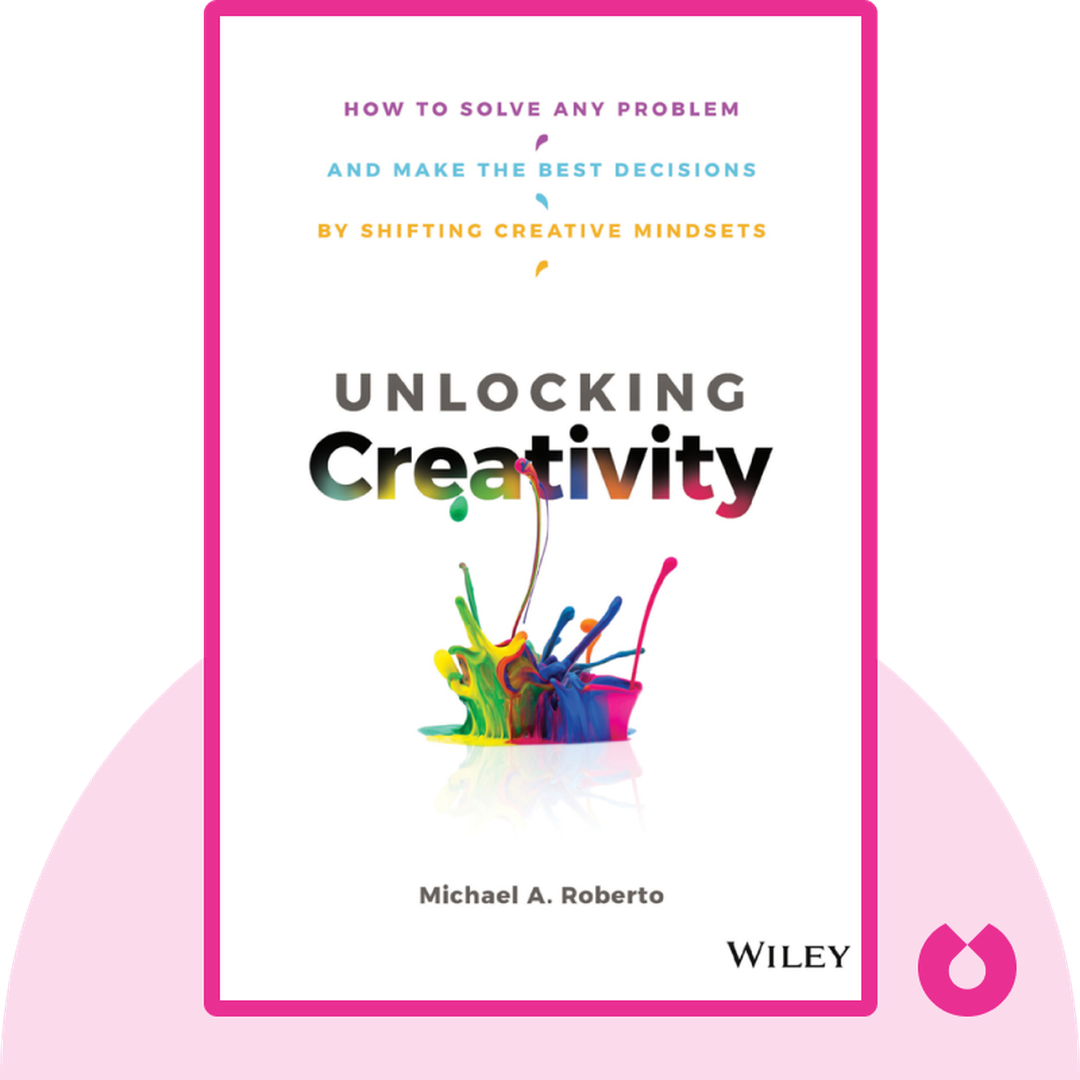
Unlocking Creativity (2019) is a guide to unleashing creativity in the workplace. Starting with the premise that all people are innately creative, it argues that the best way to unlock employee creativity isn’t to hire all-star creatives or restructure your businesses. Instead, the key is to dismantle the workplace mind-sets that are stifling the creativity of the people already in your midst.
Who Should Listen to Unlocking Creativity?
- Leaders striving to boost employee creativity
- Workers wondering how to become more creative
- Creatives who want to empower their coworkers
Books Similar to Unlocking Creativity
Readers who enjoyed this also liked these titles.